
Democrats Signal Crackdown on AI Infrastructure and Data Centers Following Midterm Election Gains
Following a formidable showing in the United States midterm elections, congressional Democrats and newly elected state leaders are quickly signaling their intent to confront the rapid expansion of artificial intelligence infrastructure, placing a sharp legislative bullseye on the massive data centers fueling the tech boom.
The political shift comes in the wake of election night victories where voters across multiple states approved local restrictions on data center construction. The developments have already begun to send shockwaves through Wall Street, triggering a sharp sell-off in chip stocks and tech-linked equities as investors grapple with the possibility of a coordinated regulatory pushback against Big Tech.
The rising political friction over AI infrastructure was thrust into the national spotlight on Tuesday, when voters went to the polls. According to the CNBC Voter Poll, 56% of voters reported that artificial intelligence and the proliferation of data centers were crucial or major factors in shaping their decisions at the ballot box. Demonstrating a clear partisan alignment on the issue, 65% of those voters indicated they cast their ballots for a Democratic candidate for Congress.
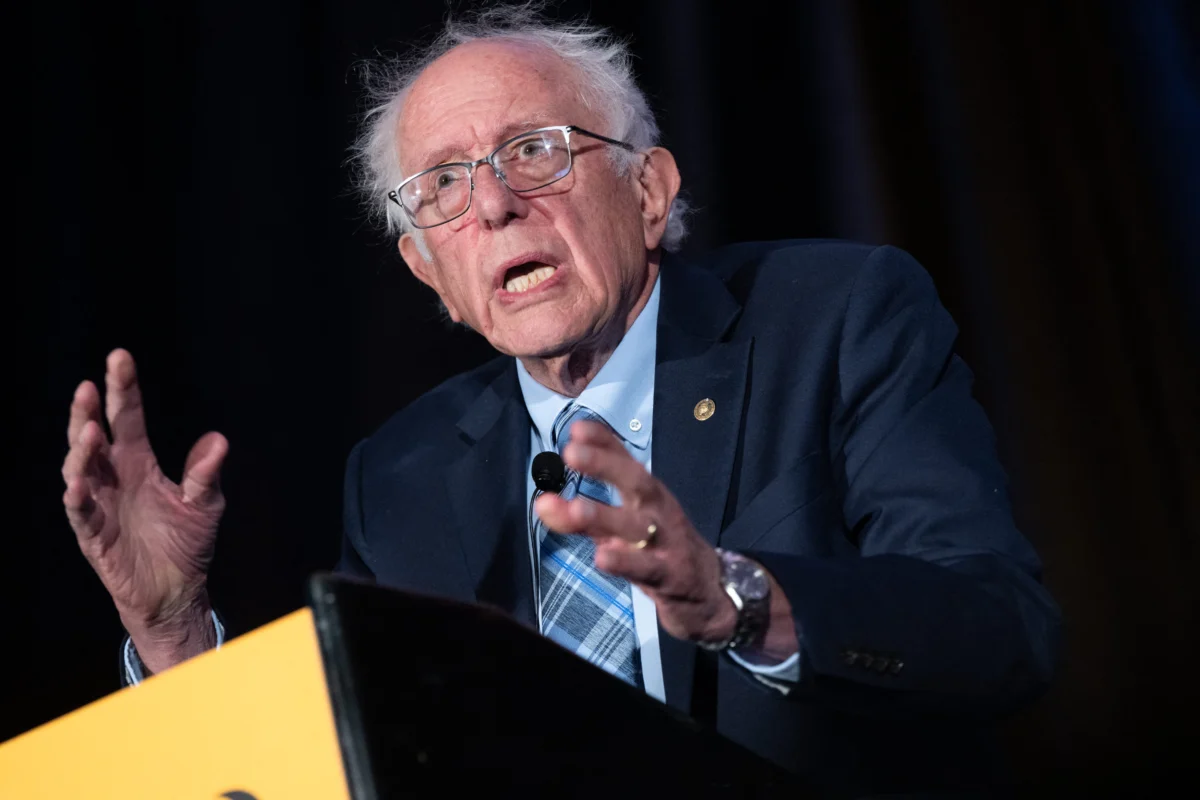
Seizing on the momentum, prominent progressive lawmakers took to social media to demand immediate federal action. Senator Bernie Sanders, an independent from Vermont who caucuses with the Democrats, highlighted local referendums where communities successfully pushed back against infrastructure projects. In a post on X, Sanders argued that the message sent by voters to political leaders nationwide could not be misinterpreted.
"National data center moratorium now," Sanders wrote. "Americans don’t want Big Tech oligarchs wrecking the environment, gutting jobs and threatening humanity’s future."
The sentiment was echoed in the House of Representatives. Representative Yassamin Ansari, an Arizona Democrat, posted that pausing artificial intelligence development needs to be treated as a top-tier legislative priority for the newly empowered Democratic majority on Day 1. Representative Greg Casar of Texas, who serves as the chair of the Congressional Progressive Caucus, amplified Ansari’s call with a direct statement of support.
The legislative warnings began to weigh heavily on financial markets immediately following the election. While stocks linked to the broader artificial intelligence build-out dipped slightly on Wednesday, the sell-off intensified significantly on Thursday as Wall Street analysts digested the potential legislative roadblocks facing data center construction.
Hardware manufacturers and semiconductor producers bore the brunt of the market downturn. The iShares Semiconductor ETF (SOXX) tumbled nearly 9% on Tuesday alone. Individual tech giants faced steep corrections, with Nvidia declining 8% and Advanced Micro Devices plunging by more than 14% as investors reassessed the long-term growth trajectory of the AI infrastructure boom.
The political backlash against data centers was not confined to Washington; it played a decisive role in several high-profile congressional and gubernatorial races where Democratic challengers flipped critical seats.
In South Carolina, Democrat Annie Andrews successfully flipped a Senate seat. During her aggressive campaign, Andrews launched a specialized website that branded her Republican opponent, Senator Darline Graham, with the moniker "data center Darline" to draw attention to the environmental and resource pressures tied to unchecked tech development.
In her victory speech on Tuesday evening, Andrews emphasized that voters had chosen a path distinct from the interests of large technology firms. She told supporters that they had selected a South Carolina "where decisions about communities are made by the people who live in our communities, not the billionaires or data center companies in Washington D.C."
Similarly, in Ohio, veteran Democratic politician Sherrod Brown secured a return to the Senate after defeating incumbent Republican Senator Jon Husted. In his address to supporters following his victory, Brown delivered a blunt message regarding corporate influence, stating plainly, "I do not work for data centers."
Democratic governors also used their platform on election night to take direct aim at the infrastructure demands of the artificial intelligence sector. Pennsylvania Governor Josh Shapiro, who previously signed an executive order in August designed to intentionally slow down the pace of data center development across the commonwealth, reiterated his stance that major technology corporations should not dictate the futures of local residents. "Instead, the folks in our local communities get the final say," Shapiro told the crowd.
Perhaps the highest-stakes battleground for the future of the data center build-out is Texas. According to industry data compiled by Wells Fargo, the Lone Star State currently accounts for a staggering 27% of all planned data center capacity in the United States, making it the epicenter of the physical expansion required to train and run modern artificial intelligence models.
In one of the most notable upsets of the election cycle, Democrat Gina Hinojosa ousted incumbent Republican Governor Greg Abbott. While Hinojosa did not explicitly center her victory speech on the topic, the issue of infrastructure expansion and resource consumption served as a foundational pillar of her electoral strategy.
Late in the campaign, Hinojosa outlined her specific regulatory intentions in a video posted to her social media accounts, promising immediate executive action upon taking office.
"When I am governor, I will issue a moratorium, a ban, on all data center approvals until laws can be passed by the legislature to protect Texans," she said in the late October video message. "This is about one fight. Is this going to be a Texas that is by and for the people, or is this the billionaire’s world and we just live here? Data centers are part of that fight."
| Source | : | Finance Poetry |
| Author | : | rifanmuazin |
| Editor | : | Finance Poetry Editorial Team |