
Axiom Math Formalizes the Massive Stacks Project Using AI Agents in a Milestone for Mathematical Verification
It feels like artificial intelligence is cracking a new mathematical problem almost every week, pushing the boundaries of what automated systems can achieve. OpenAI recently released hundreds of manuscripts claiming solutions to some of the field’s most notoriously difficult problems. Yet, even the sophisticated computer-checking mechanisms meant to confirm those results can occasionally slip up. Following years of low-quality AI outputs, commonly referred to as slop, observers are naturally wondering whether mathematics is the next domain to face an influx of unverified, chaotic machine-generated text.
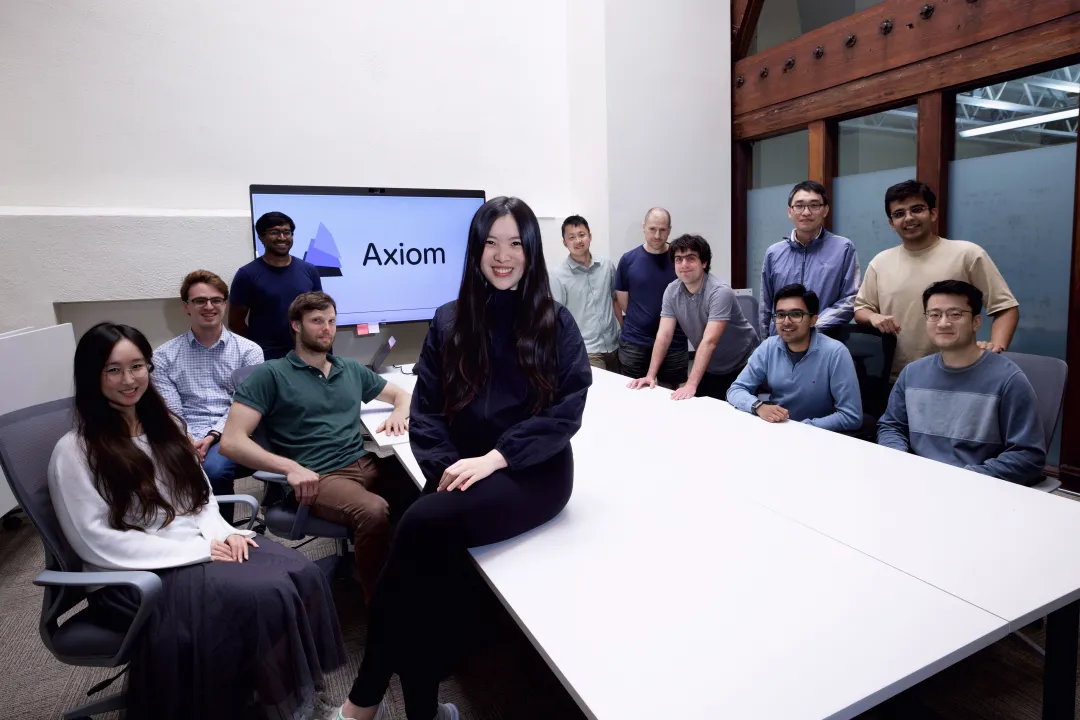
Axiom Math is heavily betting that mathematics can avoid that fate, not by slowing down its adoption of technology, but by establishing itself on much firmer ground. Valued at $1.6 billion, the ambitious startup wants to build a rigorously verified foundation that future AI agents can safely rely on to write complex software and, eventually, conduct groundbreaking scientific research.
The company announced that it has formally verified the Stacks Project, standing as one of the largest and most complex bodies of mathematics ever written by humans. Mathematicians frequently hold the Stacks Project in rare regard. Columbia University mathematician Peter Woit has previously claimed that there is nothing else truly comparable to it, comparing the monumental undertaking to the famous Bourbaki books, a legendary series of texts that systematically rebuilt mathematics from its fundamental axioms during the 20th century.
Woit’s colleague at Columbia, Johan de Jong, originally launched the Stacks Project back in 2005 as an open-source reference guide. Ever since its inception, mathematicians from around the globe have contributed to its expansion, building out intricate results ranging from college-level abstract algebra all the way up to the field’s most advanced concepts spanning algebra, geometry, and number theory.
To accomplish this massive verification feat, Axiom Math deployed a specialized fleet of AI agents designed to translate the library’s roughly 7,654 pages of human-written text into an astonishing 16 million lines of computer-checked code.
Formalizing mathematics in this manner serves as a definitive way of ensuring that the underlying structural logic is entirely sound. In this process, mathematicians or automated systems rewrite a mathematical proof as precise code within a specialized programming language called Lean. Following that translation, a dedicated program known as a proof assistant meticulously checks the code line by line. If the proof successfully passes all checks, mathematicians can rest assured that the argument is logically airtight.
Engineers routinely use this exact concept, widely known in the tech industry as formal verification, to confirm that their complex semiconductor chip designs actually work without flaws. Meanwhile, scientific researchers in France have successfully utilized similar formal verification techniques to catch critical hidden bugs in software programs responsible for calculating family welfare benefits.
When dealing with a massive interconnected library like the Stacks Project, verifying each individual theorem independently is only a fraction of the challenge. The theorems and definitions contained within Stacks are deeply interconnected, with each new concept building directly upon the ones that came before it. Much like a sprawling family tree, a vast number of results in the Stacks library trace their logical lineage back through generations of prior mathematical discoveries.
That extreme level of interconnectedness initially made the team at Axiom Math deeply unsure whether the project would even succeed. The engineering and research team had to ensure that every single logical connection remained entirely intact across approximately 16 million lines of Lean code.
Things that are big and things that are delicate in life just do not go together, Axiom CEO Carina Hong noted, explaining the daunting nature of the task. The Stacks Project represents a collection of mathematical results that forms a core part of the foundation of modern mathematics. Researchers naturally want these theorems to be fully consistent and entirely free from paradoxes, ensuring that the foundational definitions do not conflict with one another.
Carina Hong, a 25-year-old executive, previously dropped out of a Stanford mathematics PhD program to found the startup in March 2025. Demonstrating strong investor confidence in her vision, Axiom raised a substantial $200 million Series A funding round led by Menlo Ventures.
The team was initially skeptical about whether casual AI generation approaches, sometimes colloquially called vibe coding, could successfully preserve the intrinsic beauty and rigor of the Stacks Project, Hong explained.
To pull off the monumental undertaking without collapsing under its own weight, the Axiom team provided its AI agents with a loose overarching structure and allowed them to operate largely in parallel. With the Stacks codebase, the company imposed a high-level hierarchy, but it was not a rigid, dictating structure that micromanaged every single action taken by every individual agent, according to Ashvin Swaminathan, a member of Axiom’s technical staff. Instead, the autonomous agents actively discovered tasks for themselves and intelligently identified components they could work on simultaneously.
In addition to this parallel workflow, Axiom trained its own proprietary models to excel specifically at advanced mathematics, an approach Hong points out that most other software verification startups have largely overlooked. In the early stages of the project, the team relied heavily on an in-house Lean programming expert to teach the AI agents a human sense of mathematical taste and style. Over time, however, Hong observed that the agents naturally picked up this refined taste on their own through continuous iteration.
The successful completion of this project successfully fills one of the most glaring historical gaps in the world of formalized mathematics. When looking at what has historically been formalized in the field, there has always been a massive black hole, and that black hole famously covers the complex domain of algebraic geometry, Swaminathan explained.
Until now, researchers and academics who wanted to check their cutting-edge work in algebraic geometry using the Lean language had very little existing infrastructure to build upon. With Axiom’s latest milestone, that situation has completely changed.
Axiom strongly argues that every newly verified result functions as a durable building block, allowing future mathematical proofs to lean securely on pre-checked math rather than forcing researchers to start entirely from scratch. Terence Tao, the renowned UCLA mathematician and Fields Medal laureate, has previously articulated this compounding benefit more simply, noting that the more formalized proofs you have at your disposal, the more formalized proofs you can successfully create.
Mathematicians, however, are not the sole intended audience for Axiom’s verification technology. Software developers have long struggled to find reliable ways to guarantee that their production code is completely free of dangerous bugs and critical security vulnerabilities. This persistent engineering problem grows exponentially worse as AI agents take on the responsibility of writing an increasingly large share of the world’s commercial software.
Axiom is betting that the mission-critical software of the future will fundamentally need to rest on thoroughly verified foundations, mirroring how the Stacks Project now securely rests on its Lean code base.
The company believes that mathematics is the ideal domain to start building these rigorous verification systems because it represents a deeply transferable skill, Swaminathan said. Future AI agents can read Axiom’s verified code, fully understand its structure, and safely construct new technical infrastructure on top of it. The company’s Lean formalization now serves as a reliable substrate upon which autonomous agents can build.
The collaborative way Axiom’s AI agents successfully constructed the Stacks verification—working autonomously in parallel and selecting their own targeted tasks—previewes how Hong expects much of the future of artificial intelligence development to unfold. She argues that future AI agents will require well-built, highly reusable bodies of verified knowledge to prevent them from producing endless streams of digital slop.
Developers want autonomous agents to have a robust, reusable library of knowledge to build upon so they can continue pushing technical frontiers, Hong said. If a development team introduces bad engineering choices and unverified code early in the process, it becomes exceedingly difficult for subsequent systems to safely expand that boundary.
Displaying profound confidence in her company’s methodology, Hong issued a direct challenge to the broader tech industry, stating that she openly challenges all major coding companies to tackle software formalization at this massive scale.
| Source | : | Finance Poetry |
| Author | : | rifanmuazin |
| Editor | : | Finance Poetry Editorial Team |