
Oil Prices Fall as Strait of Hormuz Shipments Recover Amid Shifting Market Sentiment
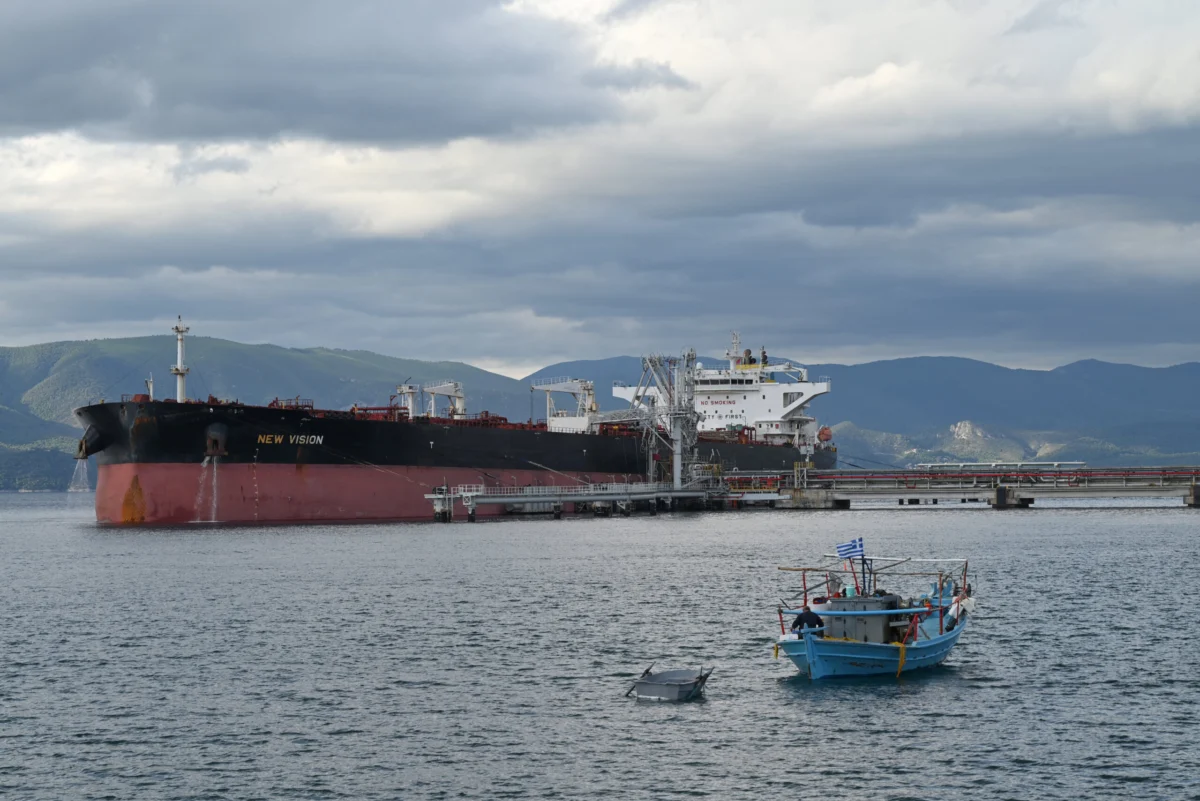
Oil prices fell on Monday, slipping from earlier highs as the global energy market wrestled with conflicting signals regarding geopolitical tensions in the Middle East and a rapidly shifting supply-and-demand outlook. The market swung between lingering concerns over ongoing attacks on shipping lanes in the critical Strait of Hormuz and growing relief as regional crude shipments began to recover. Despite the persistent geopolitical friction, the broader macroeconomic narrative has begun to pivot decisively toward expectations of a well-supplied market in the coming years.
On Monday, international benchmark Brent crude fell 3.55% to settle at $92.44 per barrel. Concurrently, U.S. benchmark West Texas Intermediate (WTI) crude futures dropped 3.58%, finishing the session down at $85.39 a barrel. These sharp declines came on the heels of a volatile trading period that saw prices fluctuate wildly as traders tried to price in the complex interplay of military conflict, maritime security, and macroeconomic forecasts. The downward movement marked a notable retreat from session highs, reflecting a growing sentiment among commodities traders that physical supply disruptions in the Middle East may not be as permanent or devastating as initially feared.
The changing market psychology was further reinforced by fresh forecasts from key international energy bodies. The International Energy Agency (IEA) released a report on Friday stating that it now expects global oil supply to exceed demand by more than 1.7 million barrels a day in the fourth quarter of 2026. This projection represents a significant reversal from the agency’s earlier forecasts, which had anticipated a persistent market deficit. According to the IEA, this surplus is expected to materialize as Middle East exports recover at a pace that outstrips global demand growth, even as isolated shipping attacks continue to pose localized logistical challenges in vital regional waterways.
The normalization of trade routes through the Strait of Hormuz has played a pivotal role in easing market jitters. For months, traders had priced in a persistent risk premium due to the constant threat of attacks on commercial tankers navigating the narrow chokepoint, through which a massive share of the world’s petroleum passes daily. However, as naval escorts, adaptive shipping protocols, and gradual de-escalation efforts have allowed shipments to resume more reliably, the immediate fear of an acute supply shock has begun to recede. This stabilization in maritime logistics has allowed fundamental supply and demand metrics to reassert themselves as the primary drivers of oil market valuation.
Adding to the shifting supply dynamics, major oil producers outside the immediate Middle Eastern theater are also ramping up output. According to data from the IEA, Russia’s crude oil production climbed to 8.73 million barrels a day in October. This marked a substantial surge of 210,000 barrels per day month-over-month, demonstrating the resilience and adaptability of Moscow’s extraction operations in the face of international sanctions and logistical hurdles. This unexpected increase in Russian output contributes further to the growing volume of petroleum flowing into international markets, reinforcing the trajectory toward a global surplus.
Financial institutions and major Wall Street banks are adjusting their long-term forecasts to align with these emerging supply trends. In a note to clients on Sunday, Goldman Sachs outlined a decidedly bearish long-term outlook for crude prices as the market transitions toward surplus conditions. The investment bank stated that it expects Brent crude to average $88 per barrel throughout 2027. Furthermore, Goldman Sachs projected that prices will slide further to $78 per barrel by December 2027 as global production capacity outpaces consumption growth.
The banking giant’s analysis points to specific operational adaptations within the Middle East that are bolstering regional output despite physical infrastructure risks and geopolitical stalemates. Goldman Sachs noted that Middle East supply is expected to rise above its 2025 average levels as regional producers increasingly rely on adaptive export mechanisms. These include the expanded use of ship-to-ship transfers to bypass vulnerable chokepoints and the continuous addition of new pipeline capacity designed to route petroleum safely around traditional flashpoints.
As the energy market digests these competing forces—balancing the ongoing diplomatic and military stalemate between the United States and Iran against concrete evidence of recovering exports and rising global production—traders remain on high alert. While
sudden geopolitical flare-ups retain the potential to spark sharp, temporary intraday rallies, the overarching trajectory, as indicated by both the IEA and major financial institutions, points firmly toward a heavily supplied global oil market in the years ahead.
| Source | : | Finance Poetry |
| Author | : | rifanmuazin |
| Editor | : | Finance Poetry Editorial Team |