
West Virginia State Auditor Mark Hunt Indicted in Federal Scheme Involving Tax-Delinquent Properties and Landlord Ties
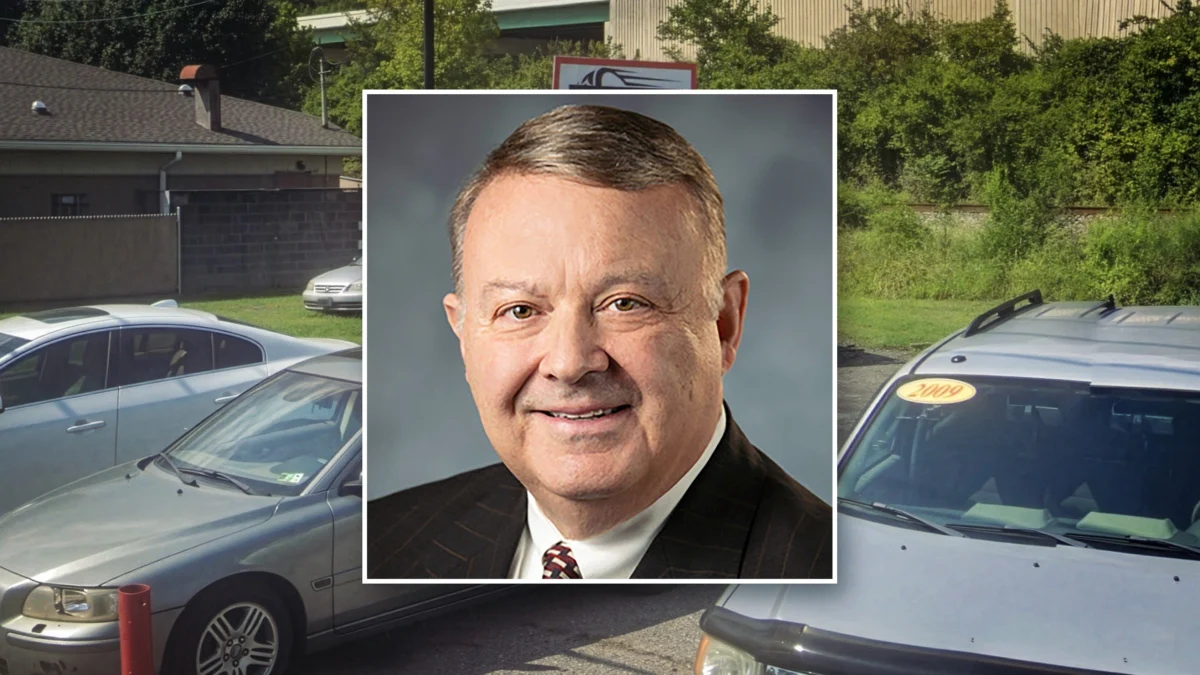
CHARLESTON, W.Va. — West Virginia State Auditor Mark Hunt has been indicted by a federal grand jury alongside four other individuals, including key members of his office and a longtime business associate, in connection with an alleged conspiracy to unlawfully transfer ownership of tax-delinquent properties.
Federal prosecutors announced the multi-count indictment, detailing allegations that Hunt utilized his official state position to bypass established legal requirements and transfer properties to a real estate company owned by the wife of his longtime friend and landlord, Charleston attorney Robert Johns. The sweeping federal case brings severe legal peril to the state official, compounding mounting local pressure, business scrutiny, and bipartisan calls for his immediate resignation.
U.S. Attorney Moore Capito outlined the gravity of the charges during a press briefing, emphasizing the foundational expectation of public office. Public officials are entrusted to serve the citizens rather than leverage their institutional authority for personal or professional gain, Capito noted, asserting that the federal office will follow the factual record and enforce the law regardless of an individual’s title or official position.
The unfolding legal controversy traces back to an investigative report published by West Virginia Watch, which originally brought to light questions surrounding property deeds signed by Hunt and his underlying financial and operational connections to Johns.
At the center of the federal indictment are nine specific properties located across Kanawha and Boone counties. The owners of these parcels had fallen behind on their local property taxes, placing the real estate into a legal category governed by strict statutory guidelines. Under West Virginia law, tax-delinquent properties can eventually be transferred under specific, regulated conditions to qualified investors or entities who meet rigorous statutory requirements and deadlines.
According to federal prosecutors, however, those legal prerequisites were bypassed entirely. A real estate entity named MAPA Inc., owned by Patricia Johns, the wife of attorney Robert Johns, sought to acquire the properties. Prosecutors allege that the purchasing entity failed to execute the required payments and neglected to submit necessary documentation within the strict deadlines mandated by state law.
Despite these statutory failures, career employees within the West Virginia State Auditor’s Office identified the discrepancies and formally warned Hunt that the properties were entirely ineligible for deed transfers. Internal staff cautioned that completing the transactions would directly violate state law.
Despite these clear administrative warnings, Hunt allegedly moved forward. Prosecutors state that Hunt signed official state deeds for eight of the properties on March 28, 2025, followed by the ninth property on June 6, 2025. By pushing the transactions through, the state auditor effectively stripped the properties from their rightful owners, according to the federal indictment.
The cascading fallout from the property transfers quickly drew wider scrutiny regarding the personal and professional relationship shared between Hunt and Johns. Investigative reporting revealed that Hunt’s private business venture, a used car dealership named After Hours Used Auto, operated on a physical lot owned by Johns’ company, NAJ LLC. The dealership property is situated less than a mile away from the West Virginia State Capitol in Charleston.
Hunt established the small used-car enterprise in July 2024, just months before winning election to the State Auditor’s Office. Furthermore, Johns briefly served the state in an official capacity as special counsel within the Auditor’s Office during 2025.
While acknowledging a multi-year friendship with Johns, Hunt has strongly denied that their landlord-tenant dynamic influenced his handling of the disputed tax deeds. In previous remarks to West Virginia Watch, Hunt downplayed the connection, characterizing the real estate as vacant lots, hillsides, and rights-of-way rather than high-value assets, and attributing the shared arrangement to mere coincidence.
The overlapping business and political relationships, however, immediately alarmed state lawmakers. Questions intensified regarding whether Hunt received favorable, below-market rental terms for his car dealership property as a direct quid pro quo for executing the disputed deeds.
Republican Delegate Tristan Leavitt voiced sharp criticism following the initial reports, arguing that the financial ties exposed deep-seated cronyism within the office. Leavitt questioned whether the dealership was paying fair market rent or if the lease arrangement represented payback for official favors, maintaining that Hunt’s actions warranted an immediate resignation.
The legal and regulatory pressure extended beyond federal prosecutors and state lawmakers. West Virginia Governor Patrick Morrisey revealed that the state Division of Motor Vehicles launched an independent investigation into After Hours Used Auto following a consumer complaint. That monthlong state inquiry reportedly uncovered significant and unexplained anomalies in the dealership’s operational paperwork, pointing toward potential violations of state and federal DMV regulations and tax laws.
Based on those findings, DMV Commissioner Everett Frazier suspended the dealership’s business license. Governor Morrisey subsequently referred the state’s discoveries to the U.S. Attorney’s Office to support potential civil and criminal proceedings. The governor stated that the combination of federal indictments and state-level regulatory breaches provides sufficient grounds for the West Virginia House of Delegates to actively consider articles of impeachment.
While prosecutors have not formally alleged that Hunt received discounted rent in exchange for the property transfers, Hunt noted that his dealership has since closed its doors after sustaining approximately $40,000 in financial losses.
The federal indictment names multiple defendants alongside the state auditor. Hunt and Robert Johns each face nine counts of theft of property. Two senior officials inside the State Auditor’s Office—Deputy Chief of Staff David Cole and General Counsel Frederic Caudill—have been charged with identical counts for their alleged assistance in issuing the unlawful deeds. Furthermore, Cole and Caudill face federal charges accusing them of lying to federal investigators during the course of the probe. Patricia Johns, whose company allegedly benefited from the disputed transfers, has not been named as a defendant in the federal criminal case.
In a separate aspect of the federal investigation, Hunt, Cole, and another state employee, Marie Ann Hoffmann, face bank fraud-related accusations. Prosecutors allege that Hoffmann collected government wages from her public position while simultaneously performing private work for Hunt’s private law firm.
The breadth of the charges has generated a powerful bipartisan backlash, with leaders from across the political spectrum demanding that Hunt step down from his statewide office. West Virginia House Speaker Roger Hanshaw addressed the media, calling directly for the auditor’s departure.
Auditor Hunt should immediately resign from his office, Hanshaw stated during a press conference, adding that if Hunt chooses to remain in his position, the House of Delegates will take swift legislative action in January to restore institutional integrity to the Office of the West Virginia State Auditor.
Despite the mounting legal charges, regulatory fallout, and widespread political pressure to vacate his post, Hunt has maintained his innocence and rejected calls for his resignation. In a public statement shared via social media, the state auditor vowed to fight the allegations.
I am innocent of these charges, Hunt wrote, describing the federal indictment as an insult to foundational American principles. Emphasizing his legal right to the presumption of innocence, Hunt stated that he intends to remain in office and vigorously defend himself against the prosecution’s claims.
| Source | : | Finance Poetry |
| Author | : | rifanmuazin |
| Editor | : | Finance Poetry Editorial Team |