
Natural Gas Cash Prices Plunge as Appalachia and Northeast Lead Friday Retreat
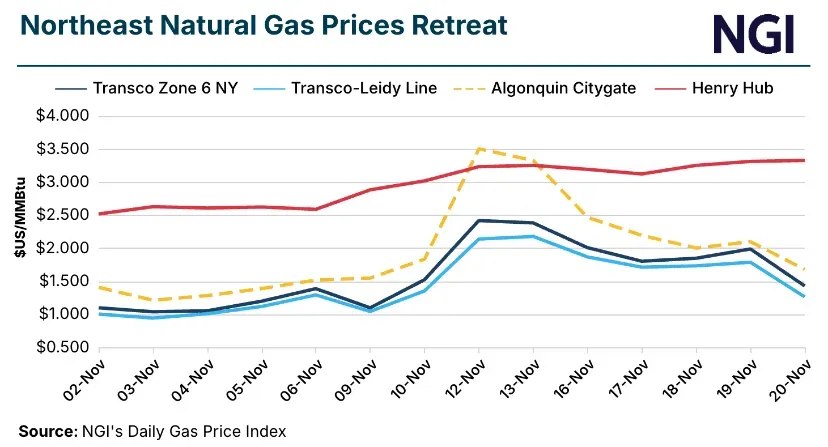
Natural gas cash prices tumbled on Friday, closing out the trading week with a sharp downward correction. According to the latest market reports from the Daily Gas Price Index, the retreat was heavily concentrated in the nation’s key northeastern supply hubs and Appalachian production basins. As market participants wrapped up their positions heading into the weekend, a confluence of bearish macroeconomic and meteorological factors exerted intense downward pressure on regional valuations.
The broad-based market sell-off was driven primarily by a notable softening in overall domestic demand, alongside a steady and reliable recovery in natural gas production output. Compounding these fundamental headwinds, updated weather forecast models pointed toward increasingly mild conditions over the medium-to-longer range outlook. With heating requirements expected to remain subdued in the immediate future, buyers pulled back from aggressive bidding, leaving spot prices vulnerable to significant declines across multiple trading points.
At a Glance: Regional Pressures and Market Drivers
The downward momentum on Friday underscored a volatile transition period for regional gas markets as they navigate changing seasonal dynamics. Traders and analysts pointed to several intersecting pressures that converged to accelerate the late-week retreat, particularly in areas heavily reliant on regional pipeline constraints and weather-driven heating loads.
In the Northeast, benchmark pricing locations such as Transco Zone 6 NY, the Transco-Leidy Line, and the Algonquin Citygate experienced pronounced downward adjustments. These hubs, which frequently act as regional barometers for winter weather sensitivity, suffered as the combination of recovering pipeline receipts and a lack of immediate cold weather threats removed the urgency from spot market purchases. Suppliers looking to clear weekend volume found themselves facing a soft market with limited buying interest, forcing sellers to adjust price expectations downward to move volumes.
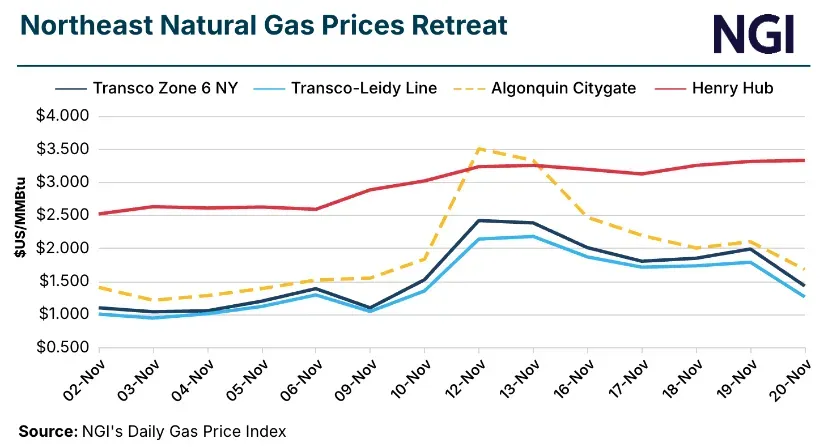
Appalachian production areas experienced a similarly defensive trading session. As one of the most prolific natural gas-producing regions in the United States, Appalachian supply centers are acutely sensitive to shifts in takeaway capacity and regional balance. On Friday, robust output levels from the basin met with a temporary lull in regional consumption, leaving excess gas searching for a home. Without strong outward flows or immediate spikes in domestic demand to absorb the surplus, local cash prices retreated quickly.
Market observers note that the broader macroeconomic environment for natural gas has been contending with persistent inventory dynamics and shifting weather expectations. While seasonal transitions typically introduce heightened price volatility due to the unpredictability of early-season weather patterns, the recent runs of mild forecast data have repeatedly undermined bullish sentiment. When combined with production figures that continue to rebound following prior maintenance events or freeze-offs, the fundamental balance has tilted firmly in favor of buyers in the short-term cash markets.
The Friday retreat also highlights the delicate balance between pipeline utilization and regional demand centers. As pipeline operators manage the flow of gas from high-yield production zones like Appalachia toward high-demand metropolitan markets in the Northeast, any sudden drop in consumption creates immediate localized surplus conditions. Without strong pull from downstream utilities or power generation facilities—which often face lower cooling and heating demands during mild shoulder-period weather—regional basis differentials widen, pulling spot cash prices lower.
As market participants look ahead to the next trading cycle, attention will likely remain fixed on updated meteorological forecasts and early-winter weather modeling. Until a sustained cold weather pattern materializes to drive robust space-heating demand, cash markets across Appalachia and the Northeast may continue to experience sensitivity to even minor fluctuations in supply availability and daily consumption forecasts.
| Source | : | Finance Poetry |
| Author | : | rifanmuazin |
| Editor | : | Finance Poetry Editorial Team |