
Natural Gas Futures Stage Dramatic Reversal to Rally on Dip-Buying and Tight Storage Dynamics
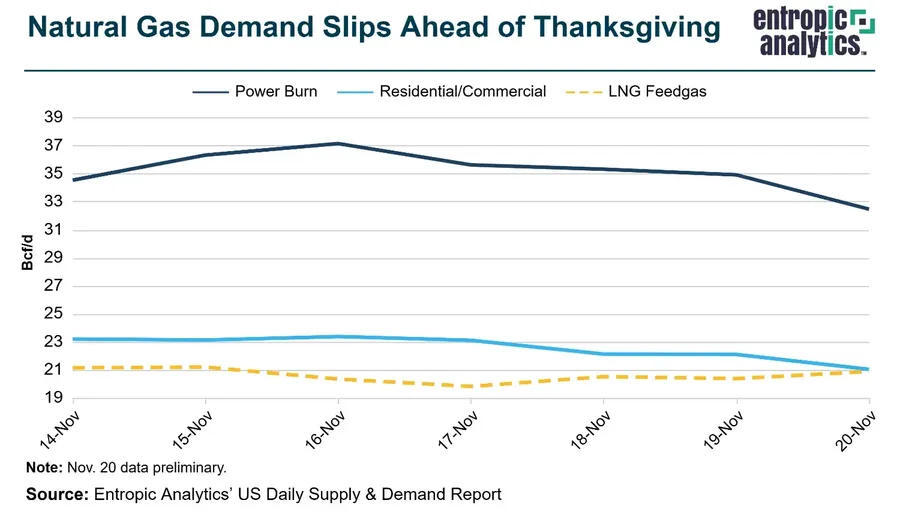
Natural gas futures staged a dramatic and unexpected market reversal on Friday, successfully shaking off steep early-session losses to rally firmly into positive territory. The recovery materialized despite growing forecasts for warmer-than-normal weather across the upcoming Thanksgiving holiday period and signs of a broader softening in domestic demand
. Market participants pointed to aggressive dip-buying behavior and renewed, focused attention on the previous day’s storage report—which revealed a smaller-than-expected injection—as the primary catalysts fueling broad gains across the entire winter strip.
The turnaround highlights the persistent volatility and complex balancing act currently characterizing North American energy markets. Traders and analysts are continually forced to weigh bearish near-term weather fundamentals against lingering structural supports, such as robust export demand and tighter-than-anticipated inventory builds heading into the peak heating season.
Market Dynamics and the Friday Turnaround
Early trading on Friday had pointed toward a continuation of downward momentum. Weather models continued to project milder-than-average temperatures for late November, a development that typically depresses residential and commercial heating demand just as the winter withdrawal season approaches. Domestic power burn and localized heating requirements had shown noticeable softening during the middle of November, giving early bears ample reason to push prices lower during the morning hours.
However, selling pressure quickly exhausted itself as key technical support levels were tested. As the session progressed, systematic dip-buying emerged, drawing in institutional investors and commercial hedgers looking to secure positions ahead of the winter months. This renewed buying interest found additional conviction in the data released by the U.S. Energy Information Administration (EIA) on Thursday.
Thursday’s storage report had shocked some market participants by revealing a smaller-than-expected injection of natural gas into underground caverns and salt domes. While injections are standard for this shoulder period of the year, the modest volume underscored a tighter underlying supply-demand balance than many bears had previously assumed. This realization prompted a rapid reassessment of the winter strip, turning early-morning losses into a resilient afternoon rally.
Demand Trends and Infrastructure Support
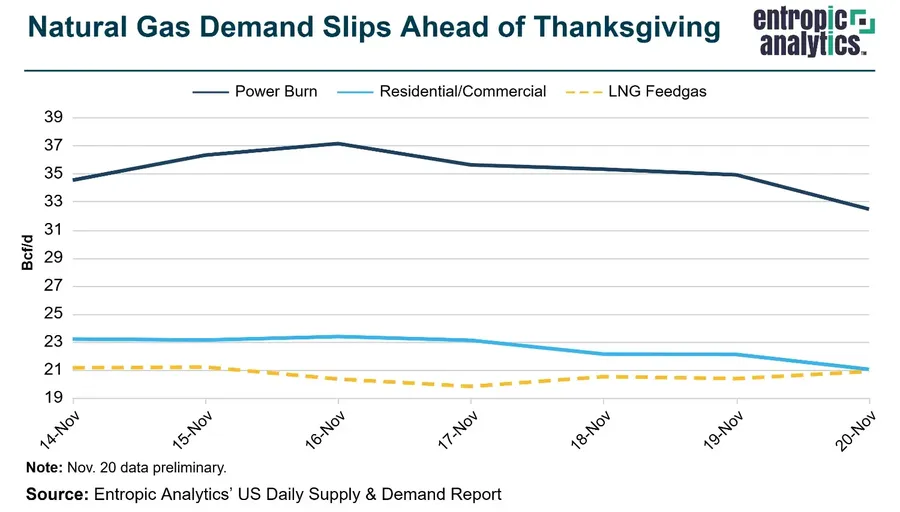
Underlying the volatile price action are shifting patterns in domestic consumption and export activity. Recent data highlights a notable decline in U.S. natural gas power burn and residential-commercial demand through mid-November. As seasonal weather patterns fluctuate and shoulder-season mildness lingers in key population centers, domestic consumption has predictably retreated from earlier autumn peaks.
At the same time, however, export facilities continue to provide a crucial floor for the market. Liquefied natural gas (LNG) feedgas demand has remained remarkably robust, hovering near the 21 billion cubic feet per day mark. This steady, high-volume draw from domestic pipelines to coastal export terminals ensures that excess domestic supply is consistently absorbed, mitigating the bearish impact of temporary domestic demand lulls and warmer weather forecasts.
The interplay between weakening domestic heating load and strong international export demand has created a tug-of-war environment for natural gas futures. While mild weather threatens to keep storage inventories comfortably padded in the short term, the sustained strength of LNG feedgas reminds the market of the structural demand base that underpins long-term valuations.
Industry Context and Outlook
The recent market behavior underscores the sensitivity of natural gas traders to both fundamental data releases and macroeconomic shifts. With the winter heating season now on the horizon, market participants remain hyper-focused on weekly storage reports, updated weather forecasting models, and any disruptions to production or pipeline flows.
Friday’s price action demonstrates that despite prevailing bearish headlines regarding warmer Thanksgiving projections and slipping domestic demand, the market retains significant upward elasticity. Traders are clearly hesitant to press short positions too aggressively in the face of tighter-than-expected inventory injections and robust global demand for U.S. LNG. As the market looks toward the core winter months, this delicate equilibrium between weather-driven demand fluctuations and structural export strength is expected to drive continued volatility across the energy complex.
| Source | : | Finance Poetry |
| Author | : | rifanmuazin |
| Editor | : | Finance Poetry Editorial Team |