
Iran Escalates Attacks on US Bases and Gulf Tankers as Regional Conflict Threatens Global Energy Supplies
The Islamic Revolutionary Guard Corps (IRGC) has claimed responsibility for a series of coordinated strikes targeting radar and military infrastructure at a United States military base in Bahrain. This high-profile operation marks a sharp intensification of hostilities over the past week, a period that has also seen a barrage of attacks hitting oil tankers in the Strait of Hormuz—one of the world’s most
vital energy chokepoints—and the downing of multiple US drones across the region.
At least 25 commercial tankers have been struck in and around the Strait of Hormuz over the past seven days. Approximately one-fifth of global oil and gas supplies transit through this narrow waterway, making the sudden drop in Gulf oil flow a matter of intense international alarm.
These escalating military maneuvers coincide with statements from Iranian President Masoud Pezeshkian, who asserted that his country is currently enduring a "silent economic war" driven by relentless US economic sanctions and an active naval blockade.
The unfolding crisis raises urgent questions regarding the underlying triggers for Tehran’s latest military escalation. Analysts and global markets are closely watching to see whether the current surge in violence will ignite a wider regional conflict between Tehran and Washington, or alternatively, force both administrations back to the negotiating table to resolve a confrontation that is rapidly precipitating a global energy crisis.
Where have the latest attacks been?
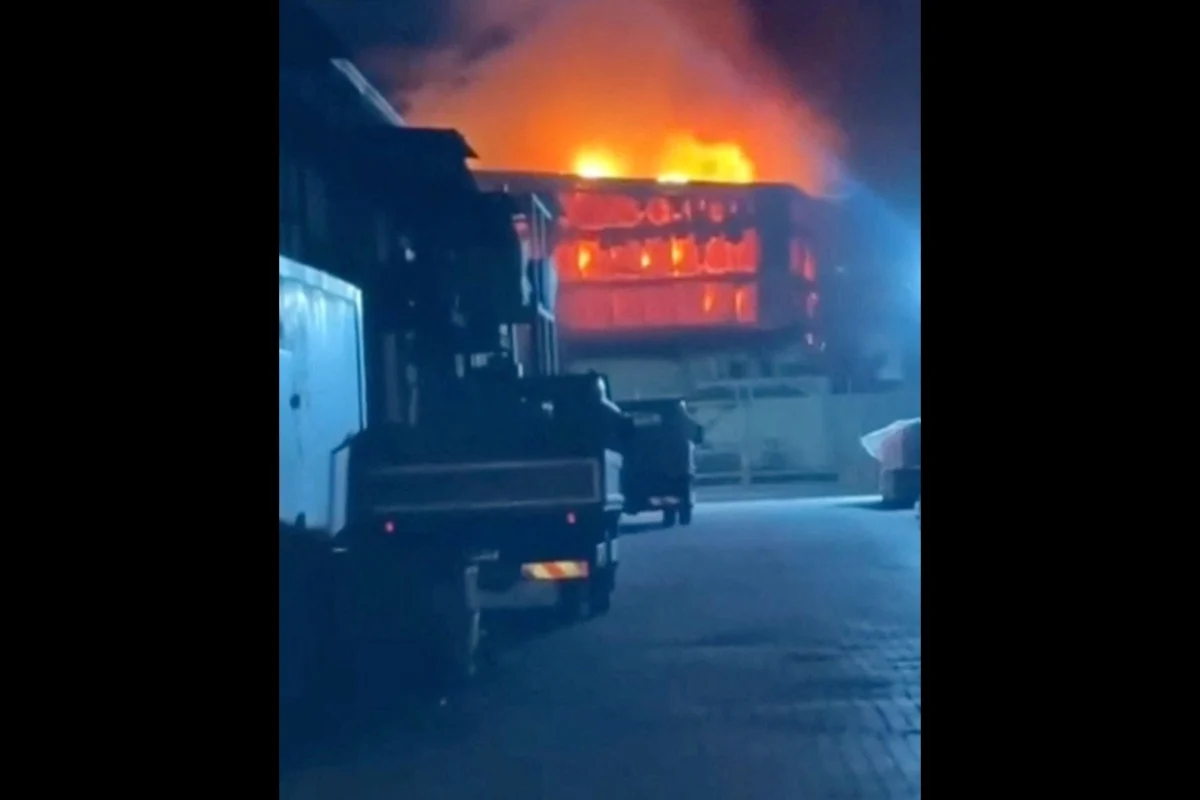
Bahrain has borne the heaviest brunt of Iran’s military responses in recent days. On Saturday, authorities in Manama reported that an Iranian strike successfully hit a civilian industrial facility, igniting a significant fire even as air defense systems managed to intercept and thwart several other incoming projectiles earlier that day.
Concurrently, the IRGC announced that it had executed a combined missile and drone operation aimed specifically at US military positions situated at the al-Riffa and Awali bases in Bahrain. The Iranian military wing claimed the strikes successfully destroyed two US Patriot air defense radars stationed at these facilities.
Adding to the chaos, Iranian state media reported that an interceptor missile, launched from the sprawling US Fifth Fleet base located in Bahrain, malfunctioned or crashed on Sitra Island near the capital of Manama, triggering a massive secondary fire.
The IRGC defended the operation as direct retaliation for a recent US strike that targeted a sensitive radar installation on Iran’s Hengam Island. Tehran has repeatedly justified its aerial and missile actions as a necessary response to continuous violations of its sovereign airspace, pointing explicitly to the deployment of US MQ-1 and MQ-9 reconnaissance and combat drones.
Overall, Bahrain has been subjected to three distinct waves of drone attacks over the past several days, ending what had been a relative lull in active combat operations for several weeks.
The theater of conflict has expanded beyond land bases. Iran’s military announced on Saturday that its domestic air defense units successfully fired a missile at a US F-16 fighter jet operating over the Persian Gulf the previous evening, causing structural damage to the aircraft, according to the official Islamic Republic News Agency (IRNA). However, US Central Command (CENTCOM) quickly and firmly denied the assertion, releasing a statement maintaining that all US fighter jets deployed across the Middle East remain safe and fully accounted for.
Iranian forces followed up these claims on Sunday by announcing the downing of yet another MQ-1 drone east of the Strait of Hormuz. The IRGC asserted that this marked the 20th US drone of this specific classification to be shot down since the broader conflict erupted in late February, and the fourth such loss within a compressed 24-hour window.
Meanwhile, British maritime security authorities reported two separate incidents involving commercial tankers struck by unidentified projectiles while transiting the Strait of Hormuz near Oman. Al Jazeera correspondent Resul Serdar, reporting from Tehran, noted that maritime incidents involving commercial shipping vessels have escalated sharply over the past week, bringing the total number of damaged tankers to roughly 25 since November 14.
These maritime strikes follow an earlier announcement last week by the Iranian army, which stated it had successfully targeted US drone and missile installations located at Kuwait’s Ali Al Salem air base. That specific strike occurred in the immediate wake of a US military attack targeting Qeshm Island, a strategic location situated within the Strait of Hormuz that remains under effective Iranian control.
How are attacks affecting oil exports through Hormuz?
The continuous, nearly daily barrage of attacks has severely disrupted the flow of petroleum products and liquefied natural gas through the Strait of Hormuz, resulting in a dramatic reduction in regional export volumes.
Data compiled by the UK Maritime Trade Operations (UKMTO) reveals that 263 commercial ships navigated through the vital maritime chokepoint between November 12 and November 18. This figure represents a 15 percent decline compared to the preceding week, and a 20 percent drop when measured against the week prior to that.
Of those traversing vessels, only 37 were confirmed oil tankers, marking a noticeable decrease from the 52 tankers recorded during the previous week, according to the UKMTO’s Friday report. Industry analysts note that these official figures could potentially understate the true volume of disruption, given that numerous vessels navigating the region as part of secretive "shadow fleets" operate without formal registry or transponder data. Prior to the outbreak of the war in February, an average of approximately 135 ships passed through the strait on a daily basis.
The geopolitical tension has immediately translated into economic penalties. Last week, the US maritime agency issued a formal warning indicating that the ongoing Iranian naval blockade was heavily compounding risk premiums for maritime commerce in the Persian Gulf. Insurance rates for vessels operating in the zone have skyrocketed from a pre-war baseline of 0.10 to 0.25 percent up to a prohibitive 3.5 to 7.5 percent.
Global commodity markets have responded violently to the supply threats. Crude oil prices spiked above the $100 per barrel threshold before stabilizing somewhat around $83 a barrel—a figure still sitting more than $15 higher than pre-conflict valuations.
According to assessments released by the International Energy Agency (IEA) on Thursday, the cumulative losses stemming from the protracted conflict have reached staggering proportions, accounting for 2.8 billion barrels of oil and 60 billion cubic meters of natural gas supplies withheld from global markets. The IEA cautioned, however, that the severe energy shock might ultimately accelerate structural changes, projecting that sustained high prices could cut world oil demand by more than 4 percent by 2035 if governments aggressively fast-track electrification, efficiency standards, and fuel-switching initiatives.
Why is Iran escalating attacks?
As Tehran has ramped up its military operations, senior Iranian officials have publicly framed the current confrontation around a stark ultimatum, pressing the United States to choose between facing continued missile strikes or returning to substantive diplomacy.
The calculated sequence of attacks demonstrates that Iran is actively deploying its strategic leverage in the region, telegraphing a clear message: unless the overarching war is brought to a halt, Washington’s regional allies will continue to bear the immediate consequences.
According to Rami Khouri, a public policy fellow at the American University of Beirut, the military campaign is deliberately designed to degrade US military capabilities across the Middle East while simultaneously widening the economic and security costs of the war. Khouri told Al Jazeera that the strategy aims to distribute the pain of the conflict across the entire Gulf region and, by extension, impact the global economy through inflated shipping costs and constrained access to essential commodities.
The primary engine behind this escalatory doctrine, Khouri explained, is Tehran’s firm determination to ensure it no longer shoulders the full weight of economic and military pressure from US-led campaigns alone. By exposing the vulnerability of American installations and those of its Arab neighbors, Tehran hopes to shake Washington’s confidence and convince regional Arab governments to exert intense diplomatic pressure on US President Donald Trump to terminate the conflict.
Concurrently, Iranian Deputy Foreign Minister Kazem Gharibabadi communicated a hardline stance to domestic media outlets, categorizing the strict economic blockade imposed by the United States as an outright act of war.
"We consider the economic siege a hostile act, and we will take any necessary measures to break this economic siege," Gharibabadi declared to Iranian reporters.
The combination of a persistent US naval blockade, disruptions to overland trade routes, and a fresh wave of severe economic sanctions implemented in August under the banner of "Operation Economic Outcast" has undeniably placed heavy pressure on the Iranian domestic economy. US Treasury Secretary Scott Bessent, who has spearheaded Washington’s aggressive financial sanctions regime against Tehran, has publicly projected that the ongoing embargo will ultimately cause a 25 percent contraction of the Iranian economy by the fiscal year ending in March 2027.
Despite these grim economic forecasts, Iranian authorities maintain that the nation possesses the institutional and structural resilience required to withstand external financial strangulation. The recent military strikes against Western and allied interests in the Persian Gulf are thus interpreted as a defiant rejection of Washington’s pressure campaign, even as mounting evidence suggests that ordinary Iranian citizens are enduring severe hardships under current wartime conditions.
Could there be renewed military confrontation?
Faced with a rapidly deteriorating security environment, President Trump may ultimately opt to declare a form of political victory and disengage from the military campaign against Iran rather than pursue a negotiated diplomatic settlement. However, analysts warn that maintaining the ongoing naval blockade against Tehran inherently risks triggering even deeper military escalation.
Trita Parsi, executive vice president of the Quincy Institute for Responsible Statecraft, noted in an interview with Al Jazeera that President Trump remains unlikely to accept any diplomatic arrangement that could be perceived domestically in Washington as a tacit admission that the military intervention has failed.
"If he continues the blockade, there will be escalation," Parsi cautioned, emphasizing that Tehran has demonstrated it will not hesitate to retaliate against sustained economic strangulation. Parsi argued that if Washington wishes to gracefully withdraw from the confrontation without plunging into renewed, large-scale combat, the administration would need to quietly and incrementally dismantle the naval blockade and roll back key sanctions.
Hassan Ahmadian, a professor at the University of Tehran, observed that Iran is effectively forcing Washington into a strict binary choice. If the United States permits commercial oil tankers to pass unmolested through the waterway, the American blockade "ends without an agreement or war," Ahmadian wrote on social media. Conversely, should the US military opt to actively engage and attack Iranian vessels or coastal positions, it risks triggering an asymmetric response that President Trump will find exceedingly difficult to manage or avoid.
Addressing the broader strategic horizon, President Trump remarked on Saturday that he harbors intentions of forging a "permanent" deal with Iran designed to permanently bar the nation from acquiring a nuclear weapon. Furthermore, in an interview with US broadcaster Fox News, Trump stated that he was never deeply invested in pursuing regime change within Iran, while describing the country’s current leadership collective as being "more rational" in their calculations.
| Source | : | Finance Poetry |
| Author | : | rifanmuazin |
| Editor | : | Finance Poetry Editorial Team |