
Why is GTA VI so expensive to play?
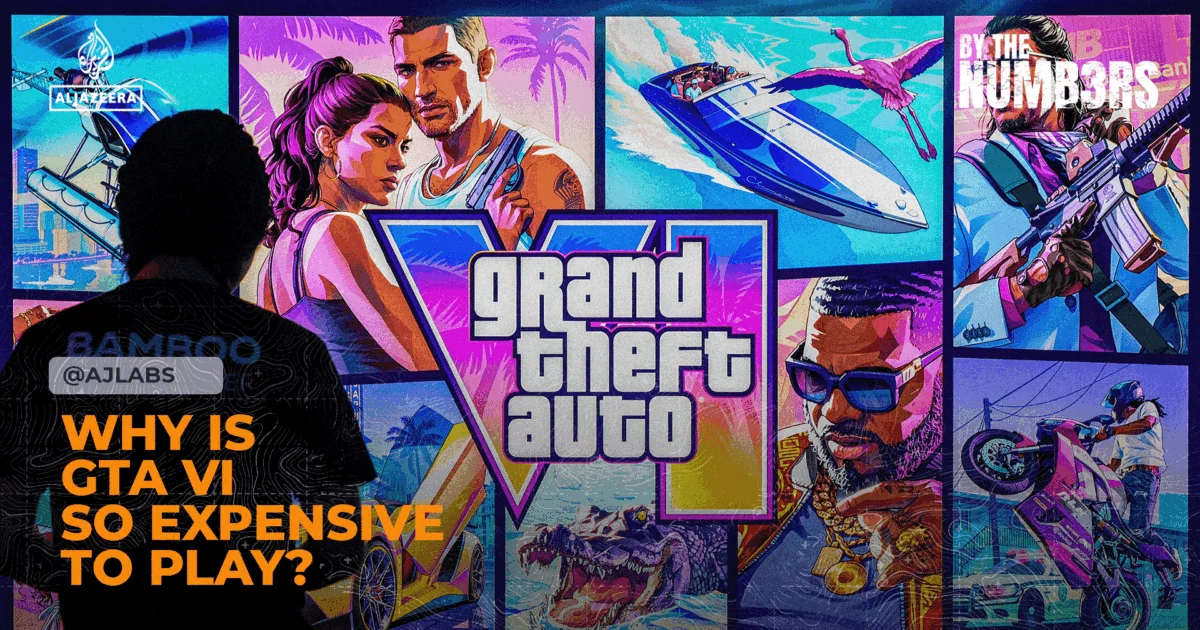
As the gaming industry looks ahead to one of the most anticipated entertainment releases in history, players and industry analysts alike are confronting a complex financial reality regarding the true cost of experiencing Grand Theft Auto VI. Published on November 21, 2026, the ongoing discussion surrounding Rockstar Games’ upcoming blockbuster centers not just on its headline-grabbing retail price tag, but on the comprehensive financial ecosystem required to fully access and enjoy the title at its technological peak. The question of why GTA VI commands such a high cost to play touches on modern hardware limitations, shifting economic pressures within the video game industry, and the ever-expanding scope of AAA game development.
To understand the financial barrier to entry, one must first look at the baseline cost of the software itself. Grand Theft Auto VI arrives after more than a decade of development following its predecessor, GTA V, which launched in 2013 and went on to become one of the most financially lucrative media products of all time. Over the course of that thirteen-year gap, the standard pricing model for premier video games has undergone a fundamental shift. While baseline prices for major releases remained largely static for years, inflation, soaring development costs, and the unprecedented scale of modern open-world design have pushed software pricing into new territory. For a title that required hundreds of millions of dollars and thousands of developer hours to bring to life, the initial software purchase is merely the opening financial hurdle for consumers.
However, the conversation surrounding the expense of GTA VI extends far beyond the price of the game disc or digital download. The more profound financial investment lies in the hardware required to run the game as intended. Modern open-world titles of this magnitude demand immense processing power, advanced graphical rendering capabilities, and lightning-fast data streaming technologies to handle hyper-detailed urban environments, complex physics engines, and dense non-player character populations. For millions of players currently using older generation consoles or mid-tier personal computers, jumping into GTA VI requires a substantial hardware upgrade.
This hardware dependency creates a cascading financial effect. Players looking to experience the game at optimal performance settings find themselves facing the choice of purchasing current-generation home consoles or investing in high-end PC components, such as advanced graphics processing units and high-speed solid-state storage. Because Rockstar Games prioritizes pushing technological boundaries with every major release, past iterations of the franchise have historically acted as catalysts for hardware sales, forcing consumers to re-evaluate their entire gaming setups. The cost of playing GTA VI is therefore intrinsically linked to the broader economics of consumer electronics, where supply chain variables, inflation, and component shortages have historically inflated the price of gaming hardware.
Furthermore, the modern gaming landscape has transformed how players interact with ongoing content, particularly within the Grand Theft Auto ecosystem. The immense financial success of GTA Online demonstrated that a game of this scale does not end at the credits roll; rather, it serves as a continuous, living service platform. While the base game offers a sprawling single-player campaign, the long-term engagement heavily relies on online multiplayer environments that frequently encourage microtransactions and digital currency purchases to access premium content, vehicles, properties, and progression milestones. While these optional purchases are not mandatory to finish the story, they represent an ongoing financial commitment for a significant portion of the player base who wish to fully participate in the community and online economy.
Industry observers note that the soaring costs associated with GTA VI reflect a broader trend within the entertainment sector. As consumer expectations for graphical fidelity, cinematic storytelling, and seamless open-world exploration reach unprecedented heights, the financial risk borne by publishers has scaled exponentially. To recoup these massive investments, companies must navigate a delicate balance between setting accessible retail prices and accounting for the reality that high-end gaming is becoming an increasingly expensive hobby. For consumers, the decision to invest time and money into GTA VI is no longer a simple casual purchase, but a calculated financial commitment that encompasses software, hardware upgrades, and potential long-term digital spending.
As the release date continues to be a focal point of discussion across gaming media and financial markets, the core question remains whether the industry’s current economic model is sustainable for the average player. With hardware and software costs continuing to climb in tandem with production values, GTA VI stands as the ultimate test of what consumers are willing to pay for cutting-edge interactive entertainment. Whether through the direct purchase of the title, the necessary hardware upgrades to run it, or the subsequent online ecosystem, the financial footprint of Rockstar’s latest masterpiece underscores a new era for high-budget video game development and consumer accessibility.
| Source | : | Finance Poetry |
| Author | : | rifanmuazin |
| Editor | : | Finance Poetry Editorial Team |