
Historic Milestone in Jeopardy: Historic Nor’easter Forces First-Ever Postponement of the 100th Macy’s Thanksgiving Day Parade
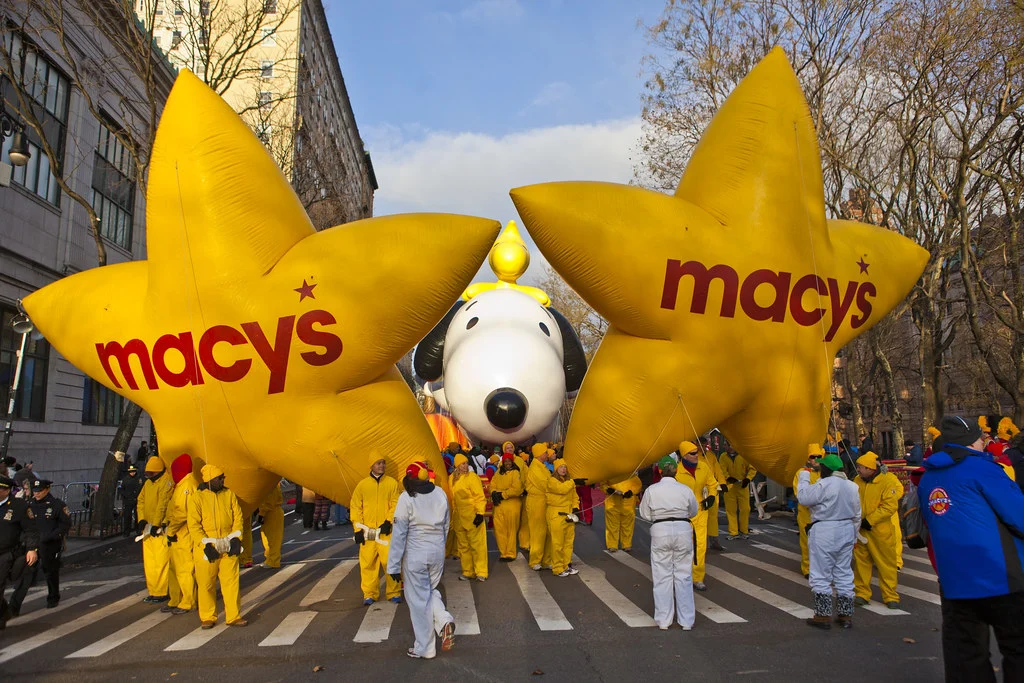
NEW YORK CITY — The milestone 100th Macy’s Thanksgiving Day Parade, a beloved holiday tradition that has captivated generations of spectators on the streets of Manhattan and millions of television viewers nationwide, faced an unprecedented disruption this week as a severe East Coast nor’easter bore down on the region. What was expected to be a historic celebration of a century of holiday pageantry was dramatically altered when organizers made the monumental decision to reschedule the event, underscoring the formidable power of severe weather against even the most deeply entrenched cultural traditions.
On Wednesday afternoon, officials with Macy’s announced that the iconic Thanksgiving Day Parade in New York City has been postponed to Saturday, November 28, 2026, with festivities now slated to kick off at 8:30 a.m. Eastern Time. The decision came in direct response to a powerful and severe nor’easter forecasted to slam the East Coast on Thanksgiving Day itself, bringing with it a dangerous combination of gusty winds and periods of heavy rain. This scheduling shift marks a momentous turning point in the history of the holiday classic, representing the first time the parade has ever been postponed due to weather conditions since its inception.
For months, anticipation had been building around the centennial march. The parade, which first stepped off in 1924, has weathered economic depressions, political shifts, and global conflicts, yet it had never before been forced to alter its calendar date because of meteorological threats. However, the severity of the incoming storm system left organizers with little choice but to prioritize public safety over historical timing.
Ahead of the official postponement announcement, meteorological experts had already been warning that the holiday weather window would present severe operational challenges, particularly regarding the parade’s signature giant character balloons. Katie Bachli, a meteorologist at the University at Albany’s State Weather Risk Communication Center, pointed to strong wind gusts as the primary hazard threatening the integrity of the aerial spectacles.
“While we are not anticipating snow in New York City, gusty winds and rain are likely,” Bachli said as weather models solidified earlier in the week. “At a minimum, handlers will likely need to fly the giant character balloons at a lower altitude. However, given the current wind forecast, there is a distinct possibility that all character balloons will have to be grounded.”
Had the parade proceeded on Thursday as originally scheduled under the threatening skies and winds, the grounding of the giant inflatables would have marked only the second time in the parade’s storied history that the character balloons were entirely sidelined. The only prior instance occurred nearly half a century ago in 1971, when a combination of heavy rain and sustained winds exceeding 45 miles per hour damaged several balloons immediately after inflation, forcing organizers to keep them out of the skies to protect the crowds below.
The concern over wind speeds is far from arbitrary; it is governed by strict, legally binding safety regulations established in the wake of past near-disasters. Under New York City safety rules implemented by municipal authorities and parade organizers, 34 miles per hour is established as the maximum wind gust limit for flying giant balloons at the Thanksgiving Day Parade. Additionally, a strict 23-mile-per-hour sustained wind cap is enforced.
These stringent safety thresholds were established in direct response to a terrifying incident during the 1997 parade. On that fateful Thanksgiving morning, sudden, powerful wind gusts exceeding 40 miles per hour slammed the beloved Cat in the Hat balloon violently into a lamppost on Central Park West. The impact sheared the heavy metal light fixture from its mounting, sending it crashing down directly into the crowd of spectators lining the route. Four people sustained injuries in the chaos, and one woman was left in a medically induced coma, prompting an immediate and thorough overhaul of the parade’s safety protocols and wind-monitoring procedures.
In the decades since those rules were codified, wind monitoring has become an exact science, though one constantly challenged by the unique geography of Manhattan. Near-threshold gusts in subsequent years—most notably in 2006, 2019, and 2025—frequently forced handlers to exercise extreme caution, flying the towering characters much closer to the pavement than usual to prevent loss of control.
Meteorologists emphasize that predicting wind behavior in the urban core of Manhattan is uniquely complex. While modern atmospheric models utilize advanced physics and massive supercomputing power to forecast regional weather patterns, the city’s dense grid of towering skyscrapers creates micro-scale "urban canyon" effects. These localized wind tunnels, eddies, and accelerated gusts are phenomena that standard regional weather models cannot fully resolve, making real-time assessments on the morning of the event critical.
Despite the severe disruptions caused by the approaching nor’easter, Bachli noted that a full cancellation of the parade itself was never truly on the table, even before the rescheduling decision was reached. A complete weather-related cancellation has never occurred in the century-long history of the tradition. Aside from a three-year suspension between 1942 and 1944 due to wartime rubber and helium shortages during World War II, the parade has marched through rain, sleet, and economic turmoil.
The Macy’s team expressed immense dedication to honoring the centennial milestone, emphasizing that every precaution was being evaluated to ensure the safety of performers, staff, and the millions of spectators who line the streets or tune in from home. Speaking to the cultural significance of the event prior to the rescheduling announcement, organizers noted that they were fully prepared to monitor the weather dynamically, relying on real-time data from meteorologists stationed throughout the city to make final determinations regarding balloon flights and operational adjustments.
As the revised date of Saturday, November 28, 2026, approaches, city agencies, participants, and spectators are adjusting their plans to accommodate the historic shift. The rescheduling ensures that when the 100th Macy’s Thanksgiving Day Parade finally steps off at 8:30 a.m. Eastern Time, it will do so under safer skies, allowing the monumental anniversary to be celebrated with all the wonder, spectacle, and safety that the historic institution demands.
| Source | : | Finance Poetry |
| Author | : | rifanmuazin |
| Editor | : | Finance Poetry Editorial Team |