
**US
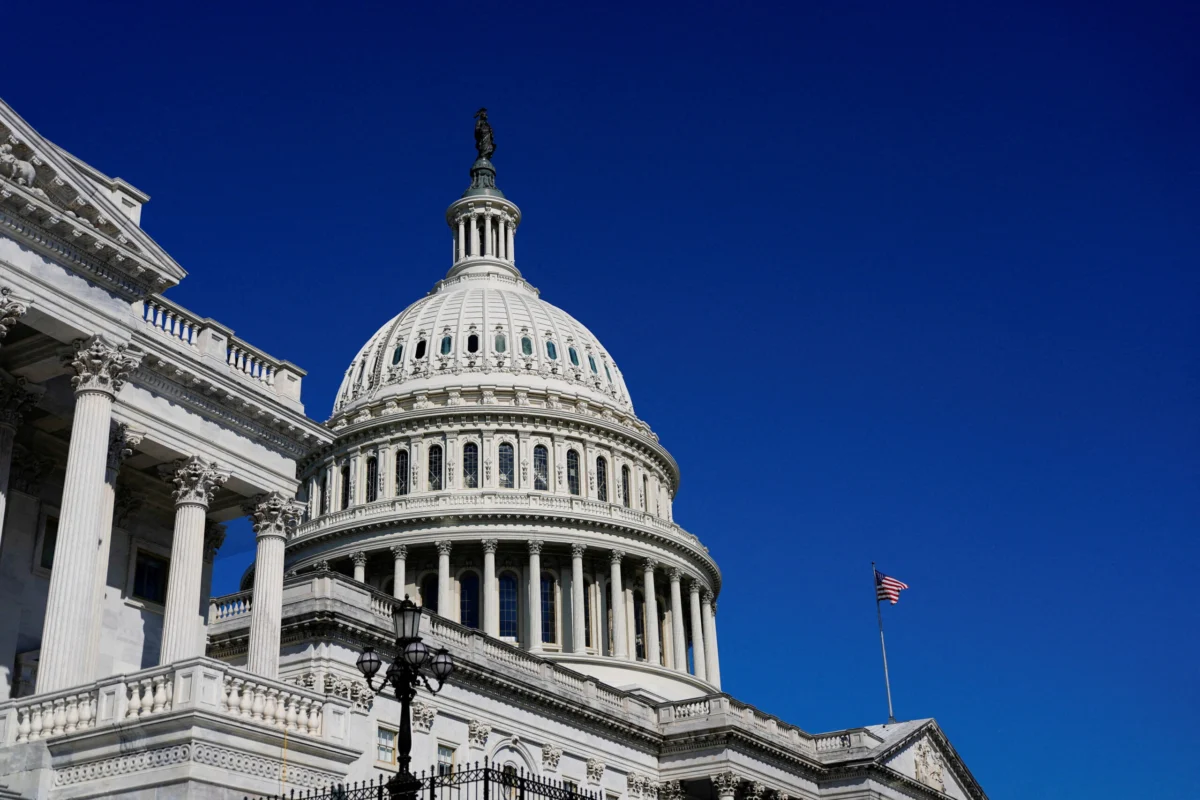
Democrats Eye December Funding Deadline to Force End to Costly War on Iran**
As the United States prepares for a significant shift in political power on Capitol Hill, the intensifying debate over the nine-month war on Iran has taken center stage in Washington. With congressional Democrats poised to assume control of both the House of Representatives and the Senate in January following decisive victories in the midterm elections, lawmakers are scrambling to utilize every legislative mechanism at their disposal to halt a conflict that has severely strained the American economy, triggered soaring food and fuel prices, and pushed diplomatic relations to a dangerous precipice.
For months, legislative efforts spearheaded by Democrats to bring a halt to the ongoing hostilities have met with stiff resistance. Now, as the US military remains locked in a tense and volatile deadlock with Iranian forces in the strategically vital Strait of Hormuz, anxiety is mounting within the party ranks. Lawmakers fear that President Donald Trump could ultimately opt to restart a fresh wave of military strikes against Iran, a move that foreign policy experts warn would almost certainly ignite widespread retaliatory attacks across the wider Gulf region, imperiling regional stability and global energy supplies alike.
Amid these mounting geopolitical tensions, a critical new federal budget bill is currently being formulated in Congress. Democratic leaders view this impending legislation as a vital pressure tactic that could be leveraged against the White House by explicitly restricting the flow of federal financing for offensive military operations. As the deadline for government funding fast approaches, Washington is bracing for a high-stakes showdown between the executive branch and a newly emboldened legislative opposition.
Can Democrats Use the Funding Bill to End the War on Iran?
With federal funding officially set to expire on December 11, Republican and Democratic legislators are locked in intense negotiations to forge a bipartisan agreement for the next round of government appropriations. Reaching this consensus is imperative not only to avert a potentially crippling government shutdown but also to ensure that essential federal agencies, civil services, and ongoing military operations can continue uninterrupted.
Last week, congressional representatives Yassamin Ansari and Ro Khanna stepped forward to publicly urge their Democratic colleagues to seize the impending December deadline as leverage to pressure the White House into concluding the protracted military campaign.
"Ahead of the December 11 government funding deadline, Congress faces the task of approving a funding package to maintain government operations," their joint statement read. "Congress must use its constitutional power of the purse to ensure that not another cent of taxpayer money goes towards prolonging this war. We will oppose any funding package that does not explicitly prohibit funds from being used for offensive operations in Iran. Passing such a measure would defy the demands of Americans who want this war to end – now."
This legislative push aligns closely with public sentiment. According to the most recent polling data published by Reuters and Ipsos, an overwhelming 71 percent of American citizens indicate that they want the incoming Congress to take decisive action to bring the war on Iran to a close.
Andreas Krieg, an associate professor at King’s College London, noted that the impending budget bill represents a watershed moment for executive oversight. He described the legislation as "potentially the first serious institutional constraint on Trump’s freedom to wage war against Iran."
"Until now, Washington’s military strategy has been largely insulated from congressional opposition," Krieg told Al Jazeera. "The Democrats are trying to change that by making continued offensive operations conditional on congressional authorisation."
What Is the Main Obstacle?
Despite the clear political goals of congressional Democrats, lawmakers remain deeply divided over whether forcing an immediate end to the conflict is worth the severe domestic fallout associated with a potential government shutdown. Memories remain fresh of the bruising fiscal battles of the previous year, when the US federal government experienced a grueling 43-day shutdown spanning from October 1 to November 12 because Congress failed to pass timely appropriations for fiscal year 2026.
"The American people don’t need another government shutdown," Senate Majority Leader John Thune told reporters this week. "I think that would be a colossal mistake and a real disservice to the people of this country."
Senator Peter Welch, a Democrat from Vermont, echoed the complexity of the legislative dilemma in an interview with Reuters, framing the core challenge succinctly: "The big obstacle is that we don’t want to fund the war, we don’t want to shut down, how do you solve that?"
Passing a new bipartisan funding package will require securing at least 60 votes in the 100-seat Senate. Until the newly elected class of lawmakers is officially sworn in during January, the current Senate alignment stands at 53 Republicans and 45 Democrats. Once the new senators take office, that partisan balance will flip to 44 Republicans and 54 Democrats, significantly altering the legislative landscape.
Furthermore, policy analysts caution that cutting off funding may not serve as a magic bullet capable of immediately ending the complex hostilities. Krieg pointed out that restricting offensive spending alone does not automatically resolve the underlying geopolitical crisis.
"Restricting offensive spending does not end the war," Krieg said. "The American blockade remains in place, Iran continues challenging maritime navigation, and neither side has resolved the fundamental disputes over nuclear inspections, sanctions and Hormuz. The legislation is still a proposal, and its effectiveness will depend on the final wording and whether Trump signs it."
Could Trump Veto a Bill That Cuts All Military Spending?
The short answer is yes. Even though Democrats achieved notable gains in the recent midterm elections, President Trump retains formidable executive authority explicitly enshrined in the United States Constitution, which grants the president the power to reject legislation passed by both chambers of Congress.
Overturning a presidential veto is an exceptionally high legislative hurdle, requiring a two-thirds supermajority vote in both the House of Representatives and the Senate. Currently, Democrats do not possess the numbers required to override a presidential veto without substantial, bipartisan backing from Republican lawmakers—a prospect that remains highly uncertain given deep partisan divides.
However, deploying a presidential veto could prove to be a double-edged sword for the administration regarding military administration. If Trump chooses to use his veto power to block a budget bill that denies him funding for the Iran campaign, the resulting government shutdown would simultaneously freeze paychecks for military personnel and civilian defense workers, generating immense political blowback.
Another potential scenario involves a compromise where the military retains funding strictly for defensive purposes. While such a carve-out might prevent a complete government shutdown, it could ultimately allow the underlying conflict and the ongoing naval blockade of Iranian ports to drag on indefinitely.
What Happens If a Democrat Bill Isn’t Vetoed? Would That End the War?
Even in the event that a restrictive finance bill successfully navigates the legislative process and avoids a presidential veto, experts warn that the immediate operational impact on the ground might be limited. Krieg noted that Trump could conceivably continue active military operations using existing Department of Defense resources for "some time" following the enactment of funding restrictions.
"The Pentagon has considerable operational capacity in theatre and the absence of additional funding does not immediately prevent the president from ordering another round of strikes," Krieg explained.
At the same time, he highlighted a crucial distinction between possessing the raw military capability to escalate a conflict and having the financial resources necessary to sustain a prolonged military campaign.
"American expenditure is already approaching $50bn, while shortages of precision munitions and air-defence interceptors are becoming an increasingly serious concern. The decisive question is whether Congress simply refuses additional funding or explicitly prohibits offensive operations using money already appropriated," he said.
Is There a Precedent for Congress Using Funding to End Wars?
The strategy of utilizing congressional control over the federal budget to rein in presidential war-making powers has deep historical precedents in American politics, though its track record of success is mixed.
During the Vietnam War, Congress passed the Gulf of Tonkin Resolution in 1964, granting then-President Lyndon B. Johnson sweeping authority to deploy military forces to Southeast Asia without a formal declaration of war. However, as the protracted conflict claimed thousands of lives, sapped troop morale, and steadily lost public support, legislative pressure mounted. In 1973, Congress ultimately repealed the resolution and mandated the withdrawal of US forces.
A similar legislative battle played out decades later in 2007, when congressional Democrats made repeated attempts to force an end to the Iraq War by linking a strict troop withdrawal timetable directly to essential military funding bills. Then-President George W. Bush responded by vetoing the legislation, sparking a prolonged standoff between the White House and Capitol Hill. Ultimately, facing the prospect of prolonged gridlock, Democratic leaders relented and removed the withdrawal conditions from the final spending measures.
According to Krieg, the ability to withhold or condition appropriations remains the most potent constitutional tool available to Democrats as they seek to shape the trajectory of the current conflict.
"The 11 December funding deadline gives Democrats leverage to negotiate restrictions before they assume control of Congress in January," Krieg said. "The emerging discussion about replenishing US munitions stockpiles in exchange for restrictions on offensive operations is particularly important."
At the same time, he cautioned that legislative maneuvers alone cannot completely bypass the executive branch. "Trump retains his veto, so Democratic majorities alone cannot guarantee that new restrictions become law. Ultimately, I think the greatest consequence of congressional intervention could be to accelerate the search for a negotiated settlement."
| Source | : | Finance Poetry |
| Author | : | rifanmuazin |
| Editor | : | Finance Poetry Editorial Team |