
Federal Reserve Chair Kevin Warsh Enforces Tight-Lipped Approach as Colleagues Fuel ‘Fedspeak’ Surge
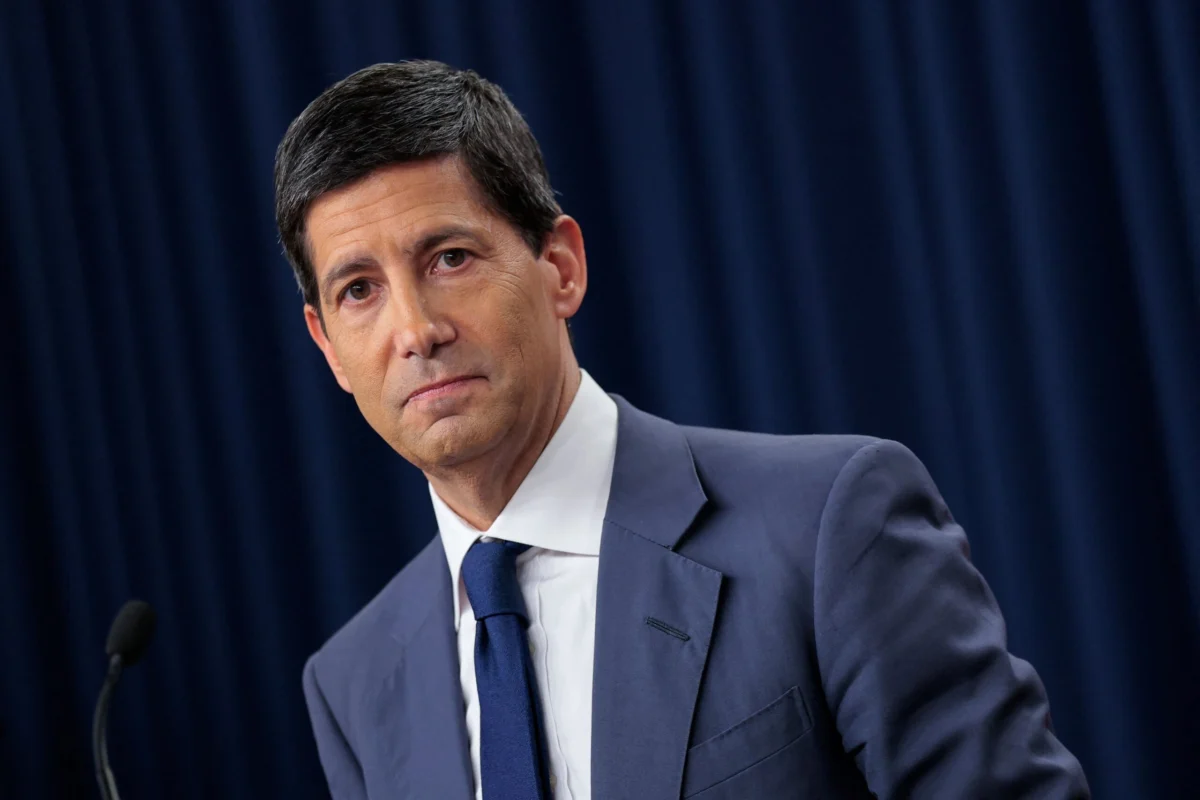
Six months into his tenure as Federal Reserve chairman, Kevin Warsh has maintained a remarkably disciplined silence regarding his outlook for monetary policy and the future trajectory of interest rates. However, rather than establishing a calm and unified front, his refusal to signal the central bank’s next moves has created a vacuum that his colleagues have been more than eager to fill.
Federal Reserve officials have rushed to the microphones in recent weeks, voicing a barrage of sometimes conflicting opinions on how the central bank should handle a persistent inflation bug that the broader economy simply cannot seem to shake. While a broad consensus has emerged among policymakers that benchmark interest rates should be raised—and soon—the specifics of that tightening path remain fiercely contested. Some officials are entirely willing to hike borrowing costs at a measured, data-dependent pace as economic conditions unfold, whereas others are aggressively pushing for a much faster and more forceful approach.
Among the most vocal proponents of rapid tightening are Federal Reserve Governor Christopher Waller and St. Louis Fed President Alberto Musalem, both of whom have openly entertained the thought of more aggressive rate hikes in a shorter period of time. Meanwhile, remaining largely on the sidelines of this public debate is Chairman Warsh himself. Warsh has repeatedly expressed a deep disdain for traditional forward guidance, arguing that pre-committing to specific policy paths handcuffs policymakers long before they actually have to make critical decisions.
Yet, Warsh’s personal communication philosophy has not stopped the vast majority of the other 18 officials who sit in on Federal Open Market Committee meetings from speaking their minds. In fact, according to a comprehensive analysis conducted by Bank of America, there has been a dramatic surge in so-called Fedspeak over the past two weeks, marking the highest volume of public commentary from central bank officials during any similar period since the start of 2025.

Industry analysts suggest that this explosion of commentary is a direct byproduct of the chairman’s deliberate reticence. "Warsh’s refusal to guide markets might be encouraging the rest of the FOMC to speak more, not less," Bank of America economist Aditya Bhave wrote in a research note. Bhave pointed out that there is always a natural range of differing views across the 19 participants who make up the FOMC. Typically, a Fed chair would weigh in heavily during periods of uncertainty, indicating clearly to financial markets whether the hawkish or dovish factions are in ascendence.
"Absent this leadership, however, both sides might feel incentivized to speak more often and more forcefully," Bhave added. This increasingly vocal and public debate comes at a critical economic juncture for the Federal Reserve, carrying myriad policy implications for financial markets, businesses, and consumers alike.
Threading a Needle
The repercussions of this communication void are becoming increasingly apparent as policymakers attempt to navigate conflicting economic signals. Bhave noted a "deepening divide" currently taking shape within the FOMC. The central bank’s pivotal decision to keep its benchmark interest rate unchanged at its October meeting "increasingly looks like a mistake," Bhave wrote, and as a direct consequence, "the hawks have been very vocal of late." Leading that charge is Governor Waller, who has publicly raised the very real possibility of hiking the federal funds rate by half a percentage point when the committee convenes for its next scheduled policy meeting in December.
Recently released minutes from the October FOMC meeting offer a rare glimpse into the internal tension, particularly concerning Warsh’s staunch refusal to provide forward guidance to the public and to financial markets. The official summary of the meeting revealed that some officials who were actively looking for a rate hike in October "could have supported no change in the federal funds rate provided that it was clearly understood by market participants that further tightening was likely." That specific caveat points directly toward the kind of explicit forward guidance that Warsh has stubbornly insisted the Fed must avoid.

The minutes "revealed that some officials favoring a hike would have accepted a hold if the Fed had clearly communicated further tightening," market veteran and economic analyst Ed Yardeni wrote in a note. "Warsh’s communication philosophy may thus be limiting the Fed’s flexibility precisely when it needs it most."
Other officials have attempted to walk a fine line between maintaining transparency and avoiding rigid commitments. Cleveland Fed President Beth Hammack, who notably voted against the October monetary policy pause in favor of an immediate quarter-point rate hike, carefully tiptoed around the thorny issue of forward guidance during a recent public appearance. Prefacing a series of observations about where she personally sees monetary policy headed in the months ahead, Hammack took pains to clarify the nature of her remarks.
"Those are not promises. Those are not commitments. They’re not forward guidance, which is a hot-button topic. But what they are are a conditional set of expectations of where I think the economy can go, based on what I’m seeing," Hammack told her audience.
Hammack’s careful phrasing vividly illustrates the difficult needle that Fed officials have been desperately trying to thread: continuing to be fully transparent about their individual analytical thinking without appearing locked into a future policy stance that rapidly changing economic conditions could quickly render obsolete.
Addressing the philosophical debate directly during a public appearance, Chicago Fed President Austan Goolsbee framed the ongoing argument squarely around the concept of central bank credibility. "I am sympathetic to the view that [Warsh] has expressed that let’s not be so, in our language, forward guidance-oriented, saying here is what I think rates are going to be at the next meeting," Goolsbee said, dismissing such exact pronouncements as "falsely precise."

However, Goolsbee was quick to separate the practice of strict forward guidance from broader, more open institutional transparency. "I think central banks should be careful about doing anything that undermines credibility," Goolsbee said. "That said, I also think that it’s pretty important [that] each person who sits around that table explain how they see the world. What do you see in business conditions? You don’t want to surprise everybody."
Taking a slightly different analytical tack, Philadelphia Fed President Anna Paulson addressed the communication dilemma in a speech focusing entirely on monetary policy communication. Paulson insisted that financial markets are fully capable of figuring out where policymakers are headed without specific, hand-holding guidance, provided that investors genuinely understand how evolving economic developments will influence future policy decisions. Paulson also strongly defended the cacophony of diverse voices currently emanating from the central bank.
"But volume is not the same as clarity," Paulson said. "The measure is not how much we say. It is whether we are understood." She added that the rich mixture of various viewpoints "guards against any single communication becoming the only one that matters."
Markets Take Their Own View
Financial markets have eagerly seized upon the plethora of public Fed communications and interpreted the crosscurrents in a distinctly hawkish light. Based on current pricing and trading activity, investors and market participants are pricing in a 100% probability of at least a quarter-percentage-point rate hike at the upcoming December meeting, alongside a very small, yet notable, probability of a more aggressive half-point move, according to data from CME Group’s FedWatch tool. Looking further ahead into the new year, market odds heavily favor a follow-up rate increase in January, potentially followed by at least one more hike before the end of 2027.

This aggressive market pricing persists even as a complex economic picture unfolds. While current inflation indicators continue to run stubbornly above 3%, remaining comfortably out of alignment with the Federal Reserve’s official 2% long-term target, market-based measures of longer-term inflation expectations have actually declined. Five-year forward inflation expectations, as measured closely through the Treasury market, have recently fallen to their lowest levels since April. That divergence suggests that institutional investors might be significantly less concerned about runaway inflation over an extended time horizon, even as central bank policymakers issue stern warnings that short-term price pressures remain stubbornly elevated.
Nevertheless, executing a sclerotic or fractured communications strategy from the apex of the central bank amid highly volatile economic and shifting geopolitical currents could prove dangerous for overall financial stability.
"The result of this back-and-forth is undue rates volatility in already turbulent times," BofA’s Bhave warned.
For his part, Chairman Warsh appears entirely unfazed by the public friction, reportedly advocating for a healthy "family fight" atmosphere inside the institution. He has argued that competing viewpoints and robust internal debates deserve a full and open airing as the committee laboriously works its way toward final policy decisions.
"There are benefits to shaping the market’s future expectations. Perhaps this is part of the ‘family fight’ that Warsh keeps referencing in his pressers," observed Tom Graff, chief investment officer at advisory firm Facet. "That family fight seems to be happening out in public."
| Source | : | Finance Poetry |
| Author | : | rifanmuazin |
| Editor | : | Finance Poetry Editorial Team |