
Appellate Court Rules Insurers Cannot Reclassify Losses and Invoke Higher Deductibles After Payouts Have Begun
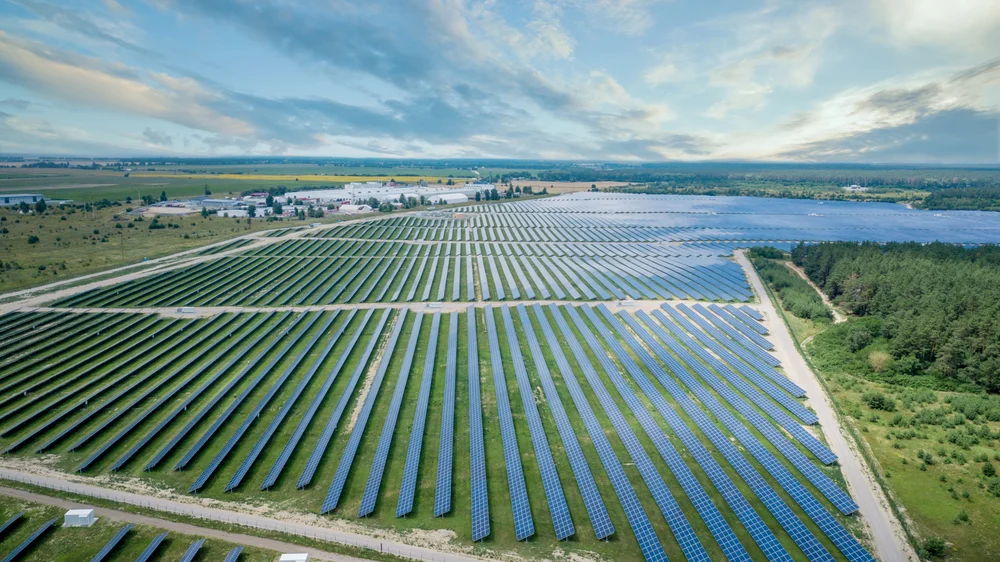
Insurance companies do not get a "mulligan" when they miscalculate a claim and later attempt to reverse course to avoid major payouts, a federal appeals court has ruled in a high-stakes legal battle involving heavy rain damage to a massive solar energy installation in Georgia.
In a strongly worded decision handed down by the U.S. 11th Circuit Court of Appeals, the judicial panel used a golfing metaphor to underscore that insurers are bound by their initial coverage determinations and claim handling decisions. Writing for the court, Judge Embry Kidd noted that while golfers might be granted a do-over on the links, commercial property insurers under Georgia law cannot simply change their minds after processing and issuing payments on claims under a lower deductible bracket.
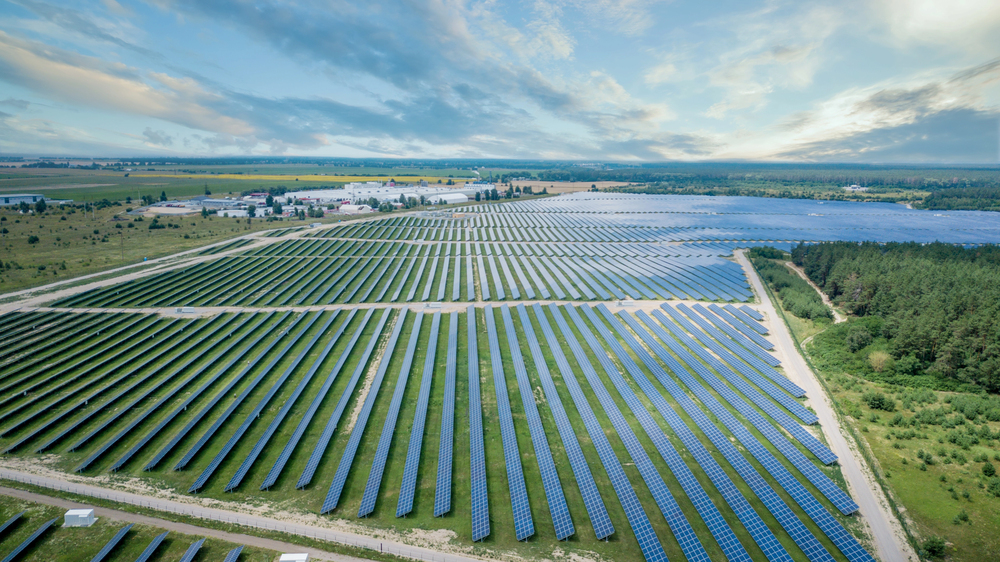
The protracted legal dispute centers on a builder’s risk insurance policy written by Zurich American Insurance Co. for First Solar. In 2018, the renewable energy giant was actively constructing a sprawling 200-megawatt solar power facility located on a former farm field near Warner Robins in central Georgia. During the construction phase, the site was battered by a series of severe weather incidents. Specifically, five heavy rain events occurred across 2019 and 2020, depositing massive amounts of precipitation that left standing water across the flat terrain and caused extensive, costly damage to delicate solar components and structural equipment.
Following the initial downpours, a claims adjuster working on behalf of Zurich American evaluated the situation and concluded that the losses were attributable to standard water damage rather than overflowing floodwaters. Based on this preliminary assessment, Zurich American proceeded to issue advance payments totaling $600,000 to cover the damages stemming from the first three rainfall events. Under the terms of the builder’s risk policy drafted by the insurer, claims categorized as water damage were subject to a relatively modest deductible of $100,000 per event.
However, the cooperative stance of the insurer shifted dramatically as the scope of the overall damage became clearer. Zurich American reversed its initial position, arguing that the torrential downpours that inundated the central Georgia property in 2019 and 2020 should actually be classified as flood events rather than simple water damage. This reclassification carried massive financial implications for both parties. Within the framework of the insurance contract, flood damage was subjected to a significantly higher deductible of $2.5 million per event.
By retroactively applying the flood deductible to the rain incidents, Zurich American contended that the total claimed damage for each event fell well below the $2.5 million threshold. Consequently, the insurer argued that no further payout was due to First Solar and that the company was essentially owed nothing under the policy terms, a defense that set the stage for contentious federal litigation.
The dispute ultimately escalated to the U.S. District Court for the Middle District of Georgia, where a trial jury evaluated the evidence and returned a verdict in favor of First Solar. Following the jury’s decision, the presiding federal judge entered a substantial judgment against the insurer, awarding First Solar $12.2 million, an amount that included both damages and accumulated prejudgment interest. Dissatisfied with various aspects of the trial court’s determinations, both Zurich American and First Solar appealed the outcome to the 11th Circuit.
At the heart of the appellate proceedings was the specific contractual wording contained within the builder’s risk policy. The document defined water damage broadly as all damage caused by water, regardless of its source, whether driven by wind or not, explicitly excluding damage otherwise defined as flood or resulting from a named storm. Despite this definition, Zurich American aggressively maintained that the vast accumulation of water that swamped the solar farm constituted a flood.
During earlier stages of the dispute, First Solar’s legal and technical teams countered that the property had been specifically underwritten as being situated on normally dry land and located at least partially within a Level 3 flood area, which denoted only a moderate risk of flooding. This underwriting classification, they argued, reinforced the notion that standing water on a flat former agricultural field following heavy rainstorms fit squarely within the water damage definition rather than a catastrophic flood designation.
The confusion over the claim’s classification prompted even the solar firm’s insurance broker, John Shaw, to intervene. Shaw actively urged Zurich American and its assigned adjusters to recognize the losses as water damage rather than attempting to shoehorn the incidents into the high-deductible flood category.
When the 11th Circuit panel reviewed the case, the judges undertook a rigorous examination of the policy language, the factual evidence presented at trial, and the conduct of the insurance carrier. The appellate court ultimately upheld the district court’s rulings regarding the claims stemming from the first three rain events. Furthermore, the court remanded the case back for additional deliberations concerning the two later rainfalls that occurred in 2020.
Interestingly, the appellate court acknowledged in its written opinion that a strict textual reading of the policy and the surrounding environmental evidence might have theoretically supported applying the higher flood deductible to the site’s inundation. However, the court emphasized that legal doctrines regarding waiver and estoppel superseded the strict contractual interpretation in this specific context. Zurich American had effectively waived its right to enforce the higher deductible by voluntarily paying out claims under the water damage category and, crucially, by failing to properly reserve its rights to alter its coverage determination while handling the early stages of the loss.
The central question in the appeal, as framed by Judge Kidd, boiled down to whether Georgia law permitted an insurance enterprise in Zurich American’s position to take a mulligan and secure a judicial do-over after mismanaging the initial adjustment process. Answering that question with an emphatic "yes" regarding the waiver of rights, the court concluded that Zurich American’s prior actions effectively locked it into the lower water damage deductible for the initial incidents.
Beyond the core dispute over deductibles and waivers, the appellate panel also addressed a technical procedural challenge raised by the insurer regarding the timeliness of First Solar’s lawsuit. Zurich American had pointed to an oddly worded clause within the policy, arguing that it mandated that any legal action against the company must be initiated within a strict 12-month window following the date of the loss-generating events.
The federal appeals court roundly rejected this defense after closely analyzing the contractual text. The judges concluded that the disputed phrasing did not function as a valid suit-limitation provision that would bar First Solar from seeking judicial relief. With the appellate court upholding the core liability findings while sending specific aspects of the later rainfall claims back for further review, the precedent stands as a sharp reminder to commercial insurers regarding the legal permanence of early coverage classifications and preliminary claim disbursements.
| Source | : | Finance Poetry |
| Author | : | rifanmuazin |
| Editor | : | Finance Poetry Editorial Team |