
Beyond Witch Hats and Macabre History: Inside the Real Estate and Community Boom of Salem, Massachusetts
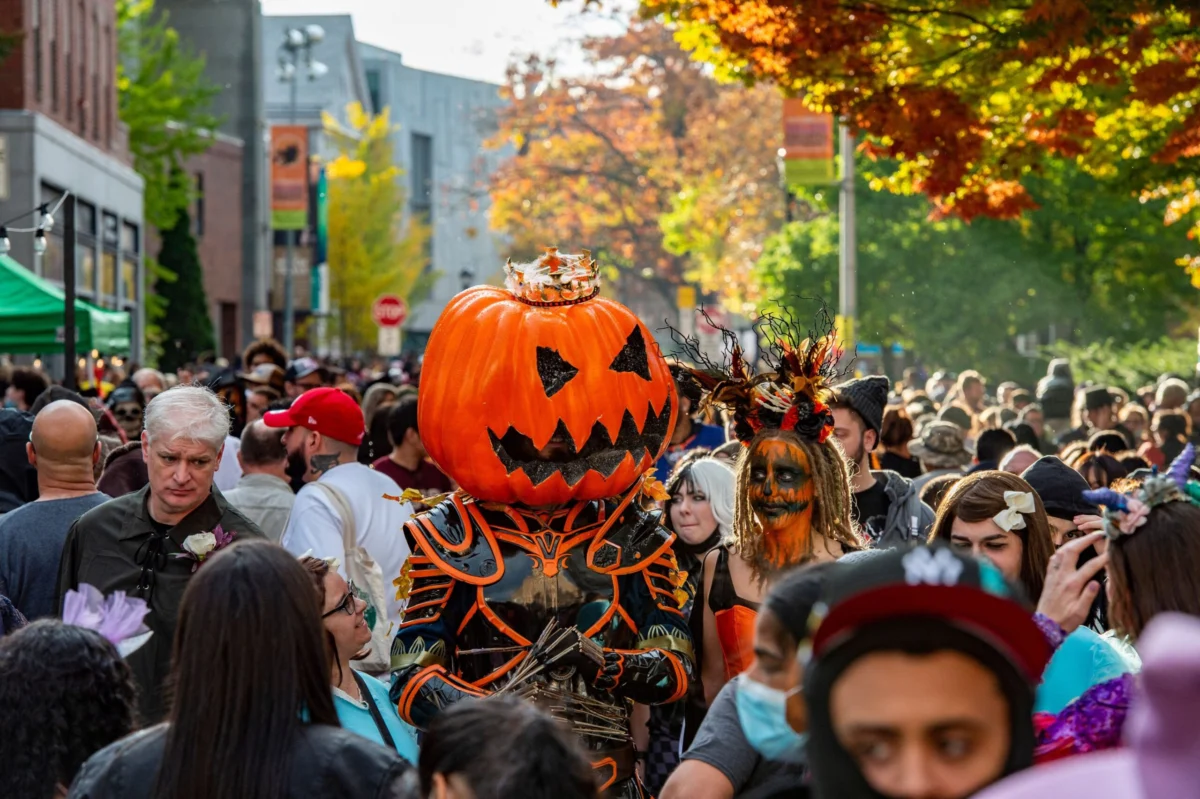
Last weekend, more than 2,700 people donning pointed black headwear gathered in Salem, Massachusetts, in a concerted world record attempt for the most witch hats worn simultaneously in a single location. While officials from the Guinness Book of World Records are still reviewing the official tally, there was no doubt about the sheer scale of the turnout. Throngs of enthusiastic visitors descended upon the historic coastal city for the charity event, which also served as a commemorative nod to the area’s ongoing 400th anniversary celebrations.
Yet, even as Salem’s notoriously macabre history takes center stage during the autumn months, the daily reality for full-time residents is remarkably far from somber. Despite an annual tourism surge that brings a wave of spooky attire and supernatural tourism, locals report that it is the vibrant, welcoming community rather than the hauntings that ultimately lured them in and keeps them deeply connected to the region.
Massive crowds of Halloween fun-hunters are nothing new for the people who call this municipality home. Historically speaking, October routinely brings roughly a million visitors to "Witch City"—a moniker that nods directly to the infamous Salem witch trials of 1692. For many residents, however, the massive influx of tourists is simply part of the local charm, often mirroring their own first experiences as wide-eyed visitors decades prior.
"Life in Salem is magical, and I personally enjoy the influx of crowds during Halloween because I was among them 25 years ago," says Luisa Cornish, who initially visited Salem on a vacation inspired by the television show "Bewitched" and immediately knew she wanted to put down roots. "We dropped by Salem because I was a huge fan, but the town was so warm and welcoming I didn’t want to leave."
Now a resident of 12 years, Cornish serves as the program manager for the annual Salem Horror Festival. She notes that the festival and other seasonal events continually draw large crowds of people who ultimately fall in love with the town’s atmosphere, much as she did after moving away from her native Texas. Transplants like Cornish are quick to point out, however, that looking at Salem exclusively through the lens of witches and haunted happenings overlooks a vast and dynamic local culture.
What It’s Really Like to Live in ‘Witch City’
Located about 16 miles north of Boston and set directly along the Atlantic Ocean, Salem boasts a rich maritime history that predates and matches its darker historical reputation. During the 19th century, the municipality served as a major international shipping and trade hub. Today, its 18.5 miles of tidal shoreline feature seven public beaches, offering residents a classic New England coastal lifestyle.
"Salem is so much more than its witch history—it’s a vibrant coastal city with incredible restaurants, historic architecture, a thriving downtown, and a strong sense of community," says Alex Sanchez, a lifelong resident and real estate agent for The Sarkis Team at Douglas Elliman. "One of the things I love most is that Salem offers the charm of a small New England city while still providing convenient access to Boston through the commuter rail and seasonal ferry."
That convenient access to the Boston metropolitan area remains a major selling point for prospective homebuyers. Salem offers buyers the possibility of significantly more square footage and property space with a manageable daily commute, all at price points that hover around half of Boston’s average metro listings.
According to Hannah Jones, a senior economist at Realtor.com, the median listing price in Salem stood at $568,450 in September—reflecting a modest dip of about $20,000 compared with the previous year, though still up $135,000 from September 2019. Despite price fluctuations, buyer demand remains remarkably resilient.
"The housing market moves scary-fast in Salem," Jones notes, pointing out that the median time a property spent on the market in September was just 33 days, which is roughly a month faster than the national average.
While many prospective buyers still arrive with preconceived notions rooted almost exclusively in Halloween lore, Sanchez observes that first-time visitors are frequently surprised by the municipality’s well-maintained residential neighborhoods, scenic waterfront views, diverse culinary scene, and high overall quality of life.
"We’re seeing buyers who previously focused exclusively on Boston explore Salem because they recognize the lifestyle opportunities here," Sanchez says.
Beyond regional transit connections, residents frequently praise the high level of walkability within Salem proper. Everyday necessities and cultural amenities are largely concentrated within a compact footprint.
"Everything is within walking distance—the shops downtown, grocery store, library, movie theater, museums, commuter rail, and so much more," Cornish says.
Furthermore, the municipality has cultivated a reputation as an exceptionally pet-friendly community. Local resident Julie Gordon even authored a book dedicated to the topic, titled "Tails of Salem: The Untold History of Dogs in the Witch City."
"Exploring the city through its dogs has given me another way to connect with neighbors, local businesses, and visitors—and share some lesser-known local history," says Gordon, who also leads free dog-friendly history walks that invite participants to experience a different side of the municipality.
Local community groups, including the Salem Pup squad, actively welcome visitors, while annual traditions like the Howloween parade draw massive numbers of spectators and participants. Cornish’s Basset Hound, Rufus, is a frequent participant in local costumed events, embodying the lighthearted spirit shared by many pet owners in the area.
At the core of residents’ praise, however, is a profound sense of belonging. Despite housing a population of more than 45,000 people, the city maintains a tight-knit community ethos where neighbors actively look out for one another.
"What surprised me most after moving here was the sense of community," says Gordon, who relocated to Salem five years ago from nearby Swampscott with her husband. "Coming from a small town to a city, I didn’t necessarily expect to feel more connected, but I do. I love the mix of people from different backgrounds and lifestyles, and the acceptance and kindness people show one another. There’s room to be yourself here."
Cornish echoes that sentiment, adding that the mutual support among residents is unlike anything she has experienced elsewhere. For lifelong locals and recent transplants alike, civic pride runs deep. Having grown up in the area and now serving on various local boards and organizations, Sanchez notes that he has seen firsthand how deeply invested residents are in shaping the community’s long-term trajectory.
How Locals Are Handling Halloween and the 400th Anniversary
Founded in 1626, Salem holds the distinction of being the second-oldest European settlement in New England and is currently observing its quadricentennial. This milestone means that the usual annual calendar of Haunted Happenings—which features everything from seances and haunted magic shows to specialized workshops—has run concurrently with a full year of 400th-anniversary programming.
With so many overlapping events, the historic moniker "The City of Peace" might seem ironic to first-time observers, yet local residents generally embrace the bustling atmosphere as an inevitable facet of living in Witch City.
"October brings an energy to Salem that’s difficult to describe," Sanchez explains. "Visitors come from around the world, businesses are bustling, and the entire city comes alive."
At the same time, locals acknowledge that navigating October requires a distinct set of strategies. While some residents fully dive into the festivities, others prefer to steer clear of the heaviest pedestrian congestion. Gordon notes that while the seasonal tourism is vital for supporting local shops and restaurants, the sheer volume of visitors can occasionally become overwhelming.
To manage the seasonal rush, many residents rely on the city’s walkability to bypass traffic, opting to avoid driving altogether during peak weekend hours. Some locals even use the busy month as an opportunity to travel or visit friends and family outside the area, occasionally renting out their historic properties to incoming travelers.
"I actually love helping guests discover the city beyond its best-known attractions," Gordon says. "Seeing Salem through their eyes reminds me how special it is to call this place home."
Meanwhile, community celebrations for the quadricentennial have brought residents together through civic parades, Salem Heritage Days, and quirky community traditions like the Great Salem Maritime Cardboard Boat Regatta. For those who have built their lives along its historic streets, the convergence of deep historical roots and modern community engagement points toward a bright future.
"What excites me most about the anniversary is the opportunity to celebrate not just Salem’s history, but the community and people who continue to shape its future," Sanchez says. "Salem’s history may be 400 years old, but I believe some of its best chapters are still ahead."
| Source | : | Finance Poetry |
| Author | : | rifanmuazin |
| Editor | : | Finance Poetry Editorial Team |