
Artificial Intelligence Boom Sparks New Real Estate Gold Rush Across New York City
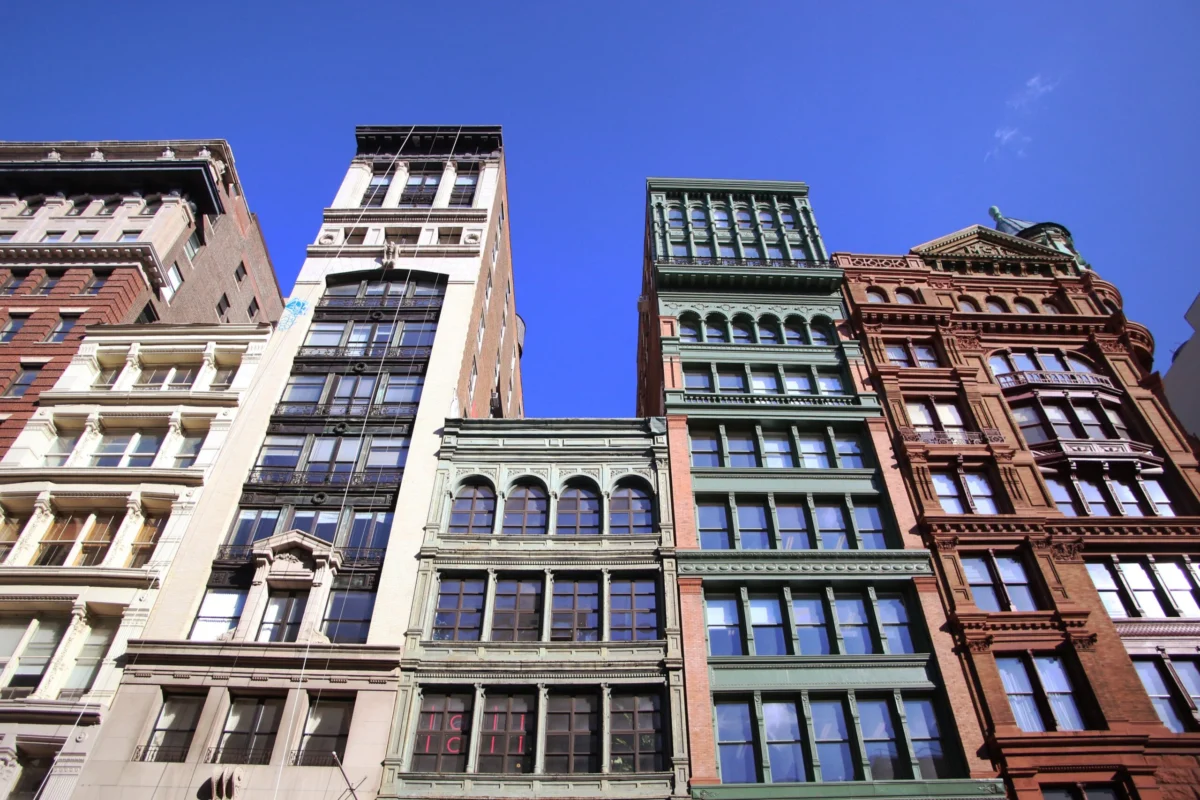
The artificial intelligence boom, which has long defined the rolling hills of San Francisco and the sprawling corporate campuses of Silicon Valley, has firmly established its roots along the busy streets of New York City. As the sector accelerates, it is sending profound shockwaves through an already tight and fiercely competitive local luxury real estate market.
The sheer scale of the AI wealth boom captured global attention following the highly anticipated initial public offering of Anthropic, which debuted with a jaw-dropping valuation of $1.494 trillion. As this transformative technology continues to evolve and mint a new generation of affluent professionals, the immediate local impacts of deep-pocketed AI workers entering the New York real estate market are becoming impossible to ignore, according to local brokers and industry experts.
The municipal footprint of the technology is expanding rapidly. According to data from the New York City Economic Development Corporation, there are currently more than 2,000 artificial intelligence companies operating within the five boroughs. Furthermore, commercial market reports, including findings highlighted by the Brooklyn Daily Eagle, show that AI firms signed leases for approximately 1.5 million square feet of commercial space in just the first six months of 2026 alone.
Major industry frontrunners such as Anthropic, Palantir, OpenAI, and EliseAI have established major corporate outposts in Manhattan, injecting immense momentum into the city’s commercial real estate ecosystem and transforming traditional office districts.
"It’s been pretty unbelievable, what’s happening in the public sphere of the AI business. We’re seeing a ton of AI leasing activity on the ground in New York," said Evan Kleinberg, co-founder of Cornelia Street Partners, a boutique commercial real estate firm, in an interview with Realtor.com. "And it’s been happening so fast, it’s almost representative of the technology itself. The companies hire immediately and they need space yesterday."
While Kleinberg has closely monitored the trajectory of the artificial intelligence industry for several years, his brokerage secured its first AI-specific corporate client approximately 12 months ago, near the end of 2025. In the short time since, Cornelia Street Partners has successfully negotiated and secured commercial leases for five distinct companies actively developing proprietary artificial intelligence models.
Kleinberg attributes this aggressive eastward expansion and the decision by AI firms to plant deep roots in New York to a combination of strategic advantages. The city has fully rebounded from the economic disruptions of the pandemic, offering an energetic, culturally vibrant lifestyle that actively attracts top-tier young talent. Additionally, tech leadership recognizes the immense strategic value of establishing physical proximity to their primary financial backers and portfolio partners.
"Ultimately, if your goal is to raise money from Goldman Sachs or JP Morgan or one of the major private equity groups like Apollo, they’re all here," Kleinberg explained, emphasizing the underlying financial drivers behind the corporate migration. "So wanting to get close to them is an underlying reason to move."
The Residential Market Feels the Stretch
The rapid influx of corporate office space has inevitably been followed by a massive wave of young, newly wealthy technology professionals who are eager to establish permanent or long-term residences in New York City. Many of these high-earning workers are stepping directly into a residential market that was already characterized by extreme competition and heavily constrained inventory.
"Wall Street has historically been a major driver of Manhattan luxury real estate, and now we’re really starting to see the effects of AI. It’s becoming an important engine for wealth creation and housing demand," Michelle Griffith, a prominent residential real estate agent in New York City, told Realtor.com. "Right now in Manhattan, we are already in a very tight rental market. Even for the last year, rents are up anywhere from 10% to 20% in Manhattan, especially for these luxury properties."
Market statistics illustrate the severity of the housing pressure. As of November, the median sold price for a home in Manhattan reached $1,150,000, representing a substantial 15% increase compared to the same period the previous year. Select neighborhoods popular among incoming tech workers have experienced even more extreme shifts in valuation and affordability.
The Lower East Side, for instance, witnessed its median sale price jump by 28% year over year, climbing to $1,435,000. Rental rates in the same neighborhood experienced an 11% increase over the same timeframe, bringing the median monthly rent to $5,947.
The New York City luxury residential landscape has historically been defined by fierce competition, with affluent buyers and renters constantly vying for a severely limited supply of premier properties. The sudden arrival of thousands of well-funded artificial intelligence professionals has introduced an entirely new layer of demand to an already strained ecosystem.
Griffith pointed to a recent high-end listing at 50 Gramercy Park North, a premier address that had historically commanded a monthly rent of $30,000. While a luxury rental of this caliber would typically require between 30 and 60 days on the market to secure a qualified tenant, this specific property generated eight competitive rental bids within just 48 hours of listing, with half of the offers coming in well above the asking price.
Because the vast majority of these technology workers are determined to live within close walking distance of their corporate headquarters, securing available housing in these targeted neighborhoods has become exceptionally difficult.
The major corporate hubs are heavily concentrated in trendy, high-demand areas of Lower Manhattan. OpenAI’s substantial 90,000-square-foot New York office is situated within the historic Puck Building, which sits directly on the border of SoHo and Nolita. Meanwhile, Anthropic’s sprawling New York operations occupy the entirety of a 16-story commercial building located at 330 Hudson Street within the vibrant Hudson Square neighborhood.
"The offices are in fantastic locations, so it’s easy to find great housing within walking distance," Griffith noted. "The challenge is finding that apartment because there is very, very limited inventory because those neighborhoods were already popular and in demand."
For luxury real estate agents operating across Manhattan, the nature of the profession has fundamentally shifted. The primary obstacle is no longer identifying prospective tenants or buyers with the financial resources to afford high-priced real estate; rather, the central dilemma is locating enough available inventory to satisfy the immense demand from deep-pocketed clients.
When Griffith began her career in New York real estate 15 years ago, securing a luxury rental priced at $100,000 per month was considered a rare milestone—often the single largest residential rental transaction of the entire year for a brokerage. Today, luxury rentals commanding between $80,000 and $150,000 per month have become increasingly common, and properties at this extraordinary price point are moving through the market with unprecedented speed.
| Source | : | Finance Poetry |
| Author | : | rifanmuazin |
| Editor | : | Finance Poetry Editorial Team |