
Beyond the Bottom Line: Why Financial Advisors Should Embrace Charitable Giving Conversations
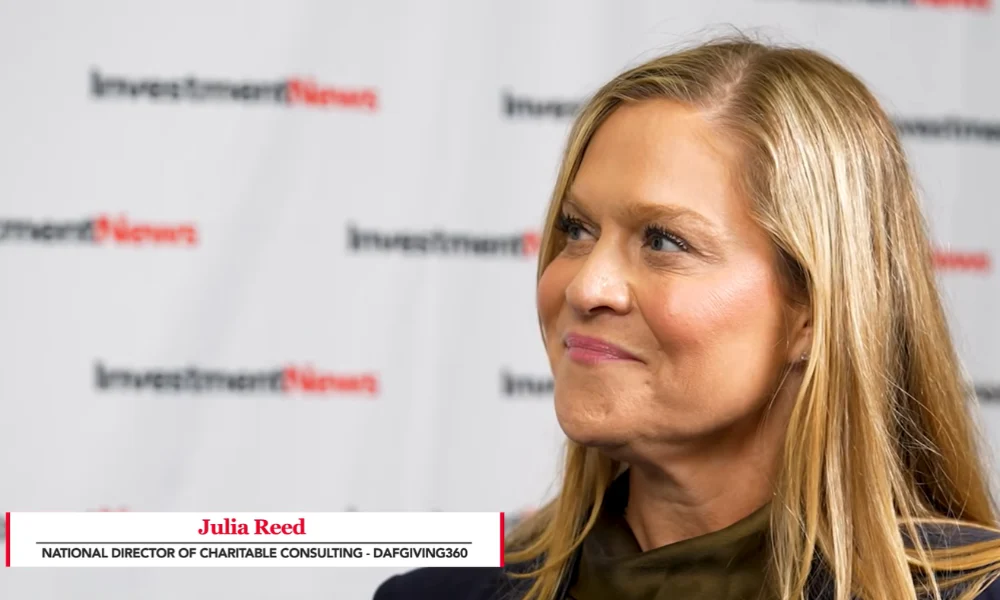
In the evolving landscape of wealth management, the divide between purely financial planning and holistic, values-based advice is narrowing. Yet, despite the growing importance of philanthropy in the lives of high-net-worth individuals, many financial advisors remain hesitant to initiate conversations about charitable giving. According to Julia Reed, national director of charitable consulting at DAFgiving360, this reluctance represents a significant missed opportunity—not just for the clients and the causes they support, but for the advisors themselves.
Speaking at the recent Schwab IMPACT event in Boston, Reed identified a persistent "pitfall" in the advisory industry: a palpable wariness among professionals when it comes to bringing up the topic of philanthropy. While advisors are often comfortable discussing tax-loss harvesting, asset allocation, and retirement distributions, the leap into charitable strategy can feel more personal and, at times, intimidating.
"Many advisors are hesitant to raise the conversation in the first place, and so it can be a place of vulnerability that actually has many rewards in the end," Reed explained. These rewards, she noted, extend far beyond the mechanics of the transaction. By engaging in these discussions, advisors have the opportunity to deepen their client relationships, foster greater trust, and increase client retention—factors that are increasingly vital in a competitive wealth management environment where commoditized services are becoming the norm.
The economic backdrop underscores the growing relevance of this topic. According to Giving USA 2026: The Annual Report on Philanthropy for the Year 2025, researched and written by Indiana University’s Lilly Family School of Philanthropy, U.S. charitable giving reached a historic milestone in 2025. For the first time, total giving surged past the $600 billion mark, reaching $617.2 billion. Of that total, individuals contributed $394.2 billion, a 4.1% increase over the previous year. Even when adjusted for inflation, individual giving saw a 1.4% uptick, signaling that despite broader economic fluctuations, the philanthropic impulse remains a primary driver of financial behavior for many American families.
Despite these figures, the "what comes next" hurdle remains a significant barrier for many practitioners. Reed acknowledged that advisors frequently express anxiety about their ability to manage the complexities that follow a successful initial conversation. There is a common fear that once a client expresses interest in a formal philanthropic structure, the advisor will be pulled into a labyrinthine process of administration and legal considerations that they are ill-equipped to navigate.
"Sometimes there can be a sense of, we bring it up and the client’s excited, and then what?" Reed noted. She emphasized that such fears are largely unfounded, noting that the infrastructure to support these transitions is robust and readily available. Firms like DAFgiving360 exist specifically to bridge that gap, providing the necessary tools, educational resources, and technical support to ensure that advisors can guide their clients through the philanthropic process without feeling overwhelmed by operational complexity.
For advisors looking to break the ice, Reed suggested a shift in perspective. Rather than approaching the conversation as a technical hurdle, advisors should view it as an extension of the values-based planning they already perform. A practical strategy, she suggested, is for advisors to establish their own donor-advised fund (DAF) accounts. By gaining personal experience with the mechanics of giving—from the initial contribution to the final grant recommendation—advisors can speak from a position of authenticity.
"They have personal experience with it and can, if they’re comfortable, talk about their own personal giving as a way to start the conversation," Reed said. This personal touch can demystify the process for the client, transforming a dry discussion about tax codes into a meaningful dialogue about legacy and impact.
However, Reed also recognized that the impetus for these conversations is rarely uniform. "Typically, the context in which it comes up is either technical or values-based," she explained. "So, it will be driven by tax many times."
This observation is supported by data from the DAFgiving360 report, Financial Planning in the Age of Donor Advised Funds 2026. The study found that tax benefits remain the dominant motivation for advisors when they recommend DAFs to their clients. Approximately 83% of the financial advisors surveyed indicated that tax benefits are either "very" or "extremely" important in their decision-making process.
This technical entry point is often triggered by specific life events. When a client experiences a liquidity event—such as the sale of a business, a major inheritance, or the maturation of a significant investment—the tax implications can be substantial. For an advisor, this moment is the ideal time to pivot toward charitable strategy. "There is a liquidity event that may be happening, and the advisor knows that the client is charitably inclined… that’s usually a great jumping-off point to begin the conversation with clients," Reed said.
The professionalization of this space has been further bolstered by the evolution of major industry players. DAFgiving360, which operated as Schwab Charitable until its 2024 rebrand, has seen firsthand the growing scale of this sector. The data underscores the massive volume of capital moving through these vehicles: donors used DAFgiving360 to allocate nearly $10 billion to charities in 2025 alone. This figure represents the most active granting year on record for the organization, illustrating that the demand for efficient, tax-advantaged giving tools is only accelerating.
As the industry continues to move toward more holistic, client-centric models, the role of the advisor as a facilitator of philanthropy appears to be shifting from a niche service to a standard practice. By moving past the initial hesitation and embracing the dual nature of these conversations—the technical tax benefits and the deeper, values-based goals of the client—advisors can provide a level of service that resonates on both a financial and personal level. In doing so, they not only facilitate the flow of billions of dollars to worthy causes but also solidify their position as essential partners in their clients’ long-term financial and personal journeys.
| Source | : | Finance Poetry |
| Author | : | rifanmuazin |
| Editor | : | Finance Poetry Editorial Team |