
Despite New Headline Risks, Big Tech May Keep Getting Bigger, Say ETF Experts
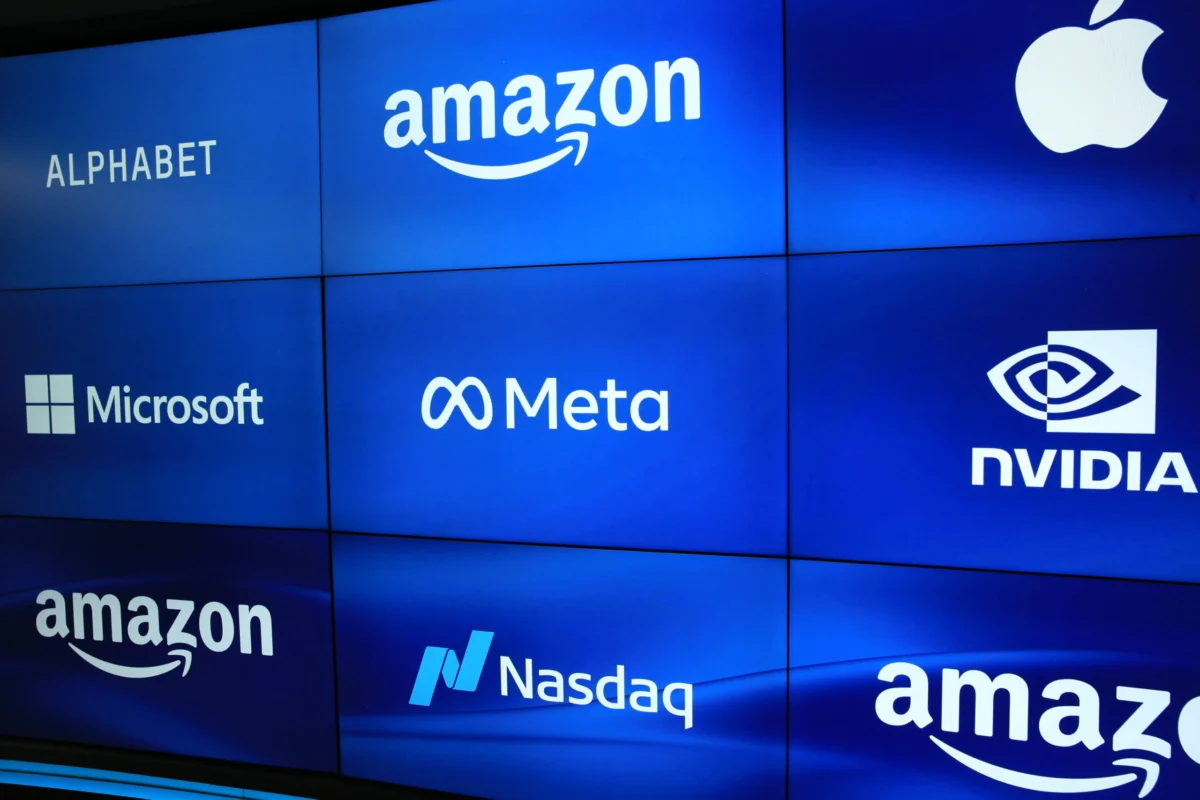
The massive wave of artificial intelligence spending that has dominated global markets for years may ultimately strengthen the hand of the world’s largest technology conglomerates, even as a flurry of regulatory, political, and executive shocks rattles the sector. According to investing experts interviewed on CNBC’s “ETF Edge,” the biggest technology stocks linked to the artificial intelligence trade could stand to benefit the most from recent turbulence surrounding Nvidia and a shifting political landscape in Washington.
Following a tumultuous week that upended parts of the artificial intelligence ecosystem, industry observers note that major players with established balance sheets and vast infrastructure are uniquely positioned to absorb market disruptions. A Democratic-controlled Congress pushing back against the rapid expansion of data centers, combined with sudden leadership changes at the epicenter of the chip market, has forced investors to reevaluate the near-term trajectory of the AI trade. Yet, rather than derailing the sector, these headwinds may reinforce the dominance of established mega-cap firms.
"We may have been put in an environment, as much as investors have sort of been looking for areas outside of Big Tech, where net-net Big Tech ends up as the winner once again," said Roundhill Investments CEO Dave Mazza, whose firm manages the Magnificent Seven ETF, trading under the ticker MAGS.
The bullish sentiment toward mega-cap technology rests partly on the fungibility of demand within the artificial intelligence infrastructure market. As investors grapple with a tumultuous period for Nvidia—including a dramatic executive shakeup that saw its iconic founder and CEO, Jensen Huang, resign—alternative chipmakers and cloud infrastructure providers have emerged as potential shock absorbers.
During his appearance on "ETF Edge," which aired as the Nvidia scandal escalated prior to Huang’s official resignation, Mazza pointed out that hardware buyers cannot simply halt their deployments. The systemic hunger for high-performance compute remains absolute. "If we get into an environment where people can’t trust Nvidia, they’re going to look for other sources for these chips because they need them," Mazza explained.
Discussing recent fund flow activity across specialized products, Mazza highlighted the dynamics between the MAGS ETF and the Roundhill Neocloud ETF, known by the ticker NCLD. While the latter focuses on smaller market-cap, specialized cloud computing companies, the broader hyper-scalers possess a distinct structural advantage. "In a weird way, [hyperscalers] may continue to benefit from this because they have the compute available. It’s going to be more valuable if the demand is there," Mazza said.
The Roundhill Magnificent Seven ETF managed to close the week in positive territory, securing a modest gain of less than 1%. Meanwhile, the Roundhill Neocloud ETF posted a weekly increase of over 1%, though underlying financial reports from its top holdings, CoreWeave and Nebius, painted a distinctly mixed picture for the broader neocloud ecosystem.
Market divergence among specialized infrastructure providers became glaringly apparent mid-week. CoreWeave recorded its single best trading day since April 2025 following the release of its latest quarterly financial results on Wednesday. Conversely, shares of Nebius sank sharply following its own earnings report released on Thursday. Compounding these pressures, the neocloud ETF remains deeply underwater since its launch in August 2026, sitting down roughly 39% amid persistent anxieties over balance sheet vulnerabilities. Those concerns are closely tied to Nvidia’s historical role in directly financing various components of the broader artificial intelligence hardware buildout. Following additional weakness on Friday, CoreWeave shares pulled back further, while Nvidia itself cemented its longest weekly losing streak since 2012.
With Jensen Huang stepping down, Nvidia’s interim CEO and current Chief Financial Officer, Colette Kress, faces the monumental task of steadying market confidence. Her first major test will arrive next Tuesday when the company reports its third-quarter earnings—an event widely anticipated as one of the most consequential corporate updates in the chipmaker’s history.

"Our focus remains on serving our customers, partners, developers and shareholders," Kress said in an official statement issued Thursday morning alongside the announcement of Huang’s departure.
Despite the abrupt leadership transition and subsequent stock volatility, prominent technology analysts remain fundamentally optimistic about the broader semiconductor landscape. Dan Ives, senior managing director at Yorkville Ives—who helped create the Dan IVES Wedbush AI Revolution ETF (IVES) during his tenure at Wedbush Securities—asserted that the market will readily pivot toward alternative AI chip suppliers, such as Advanced Micro Devices and Alphabet, should Nvidia face prolonged headwinds.
Reflecting this sector rotation, both AMD and Broadcom finished the trading week with robust gains of close to 13%. The broader, tech-heavy Nasdaq index similarly logged its strongest weekly performance since August, demonstrating that capital was not fleeing the technology sector entirely, but rather redistributing itself as Nvidia’s recent slump reshuffled the parameters of the AI trade.
In response to the shifting landscape, Yorkville Ives adjusted its price target on Nvidia from $300 down to $225 on Thursday, while maintaining an overarching buy rating on the stock, which closed the week at $162.85 per share.
"Nvidia remains the clear leader in GPU chips for the AI Revolution. They are roughly 2-3 years ahead of the nearest competitor and the demand trajectory the next few years is not changing because Jensen is gone," Ives wrote in a note to investors. "The strategic roadmap is already essentially built around the next few family of chips and physical AI with 42k employees driving it. … Valuation at roughly 10x 28 EPS is way too cheap once Nvidia gets through this storm and emerges on the other side."
Beyond corporate leadership changes, regulatory and political pressures are reshaping the infrastructure landscape. Mazza noted that the compute capacity currently in existence could become significantly more indispensable if Congress moves to decelerate the rapid buildout of data centers. Following the political shifts of the November 2 midterm elections, which resulted in the Democratic Party gaining control of Congress, the federal posture toward massive data center projects has grown increasingly restrictive.
Ives estimates that this political "blue wave" could result in anywhere from 10% of planned data centers failing to materialize on the conservative end, up to 15% to 20% on the high end. Nevertheless, he emphasized that underlying end-user demand continues to outstrip available supply by a factor of four to one.
"The compute is just that much more valuable in the capacity today than it was a week ago. So I could argue just more and more bullish, strong, get stronger," Ives said.
Ultimately, industry experts suggest that regulatory friction and infrastructure bottlenecks may serve to sanitize the market rather than stifle it. By introducing friction to the expansion cycle, policymakers may inadvertently eliminate speculative excess, cementing the dominance of well-capitalized market leaders.
"The game is going to change for Big Tech. It will slow it down. But there’s no overbuild, no bubble concerns. And I view that as actually a positive thing," Ives added.
| Source | : | Finance Poetry |
| Author | : | rifanmuazin |
| Editor | : | Finance Poetry Editorial Team |