
Federal Reserve Scales Back Rate-Setting Votes and Overhauls 2027 Calendar to Shrink Market Footprint
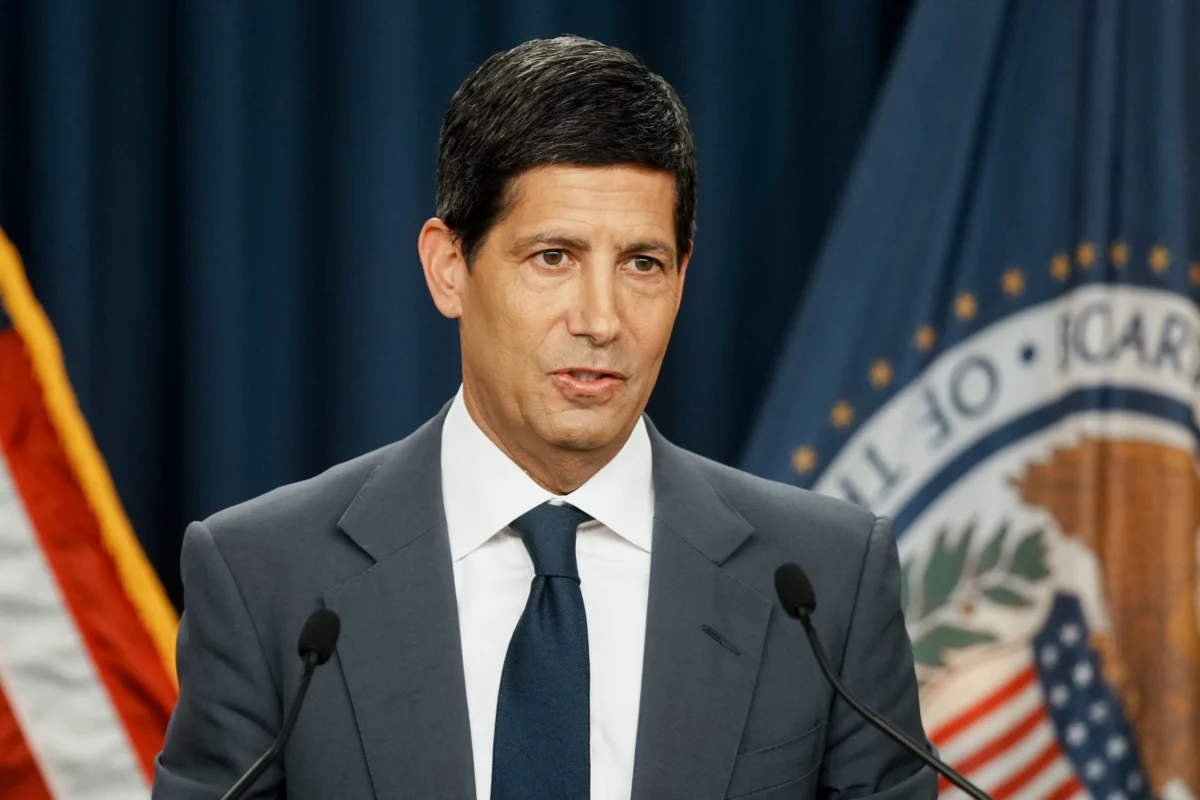
The Federal Reserve will not hold a vote on interest rates during its scheduled October 2027 meeting, marking a significant departure from traditional central
bank practices. The move is part of a broader, ongoing initiative spearheaded by Chairman Kevin Warsh to streamline the institution’s operations, reduce its footprint in financial markets, and refocus the policymaking body on long-term structural issues rather than short-term market reactions.
According to an official announcement released Thursday, the rate-setting Federal Open Market Committee (FOMC) will set aside its standard Oct. 26-27 session that year entirely for the discussion of broad monetary policy strategy issues. Chairman Warsh initially signaled the coming structural shift during his press conference following the October FOMC meeting, though he did not specify at the time which exact gathering on the calendar would be affected by the policy change.
Under the newly adjusted calendar for 2027, the central bank will conduct only seven voting meetings instead of the traditional eight. The October session is being repurposed as dedicated, high-level policy deliberation time, completely stripped of any formal rate vote or post-meeting policy statement. Additionally, structural adjustments to the calendar mean the final meeting of 2027 will now take place in November, shifting forward from its historical slot in December.
The decision reflects Chairman Warsh’s philosophy regarding how central bank meetings should be structured and how monetary policy should be communicated to the broader public and global financial markets. Explaining the fundamental reasoning behind the scheduling overhaul during his public remarks, the chairman characterized the shift as a straightforward necessity for modern central banking.
"Now, what’s the reasoning behind this change? To me, it’s quite straightforward," Warsh said when explaining his core rationale to reporters and economists. "Getting policy right involves assessing near-term developments at timely, regular, and information-rich intervals."
At the same time, the chairman emphasized that institutional focus cannot solely be consumed by immediate economic data releases and monthly indicators. "But it’s equally important we reserve time and space, as an intellectually diverse group, for strategic deliberations—for thinking anew about big questions, looking out over longer time horizons, focusing, as I say, on the left side of the decimal point," he added, pointing to the need for deeper foundational economic thought among governors and regional bank presidents.

Warsh has long maintained a critical stance regarding the Federal Reserve’s prior communications strategy and forward-guidance mechanisms. He has repeatedly argued that in past years, policymakers spent far too much time attempting to pre-announce and guide upcoming policy adjustments. According to the chairman, this heavy reliance on explicit guidance often functioned as a self-imposed handcuff, limiting the committee’s flexibility and independence when the time finally arrived to make crucial interest-rate decisions in a volatile economic environment.
By standard practice, the Federal Open Market Committee has historically convened eight times each calendar year. Each of those regular meetings has traditionally culminated in a formal vote on the benchmark federal funds rate, immediately followed by the release of a detailed policy statement and a comprehensive televised news conference hosted by the central bank chair to explain the committee’s rationale to Wall Street and Main Street alike.
However, since taking the helm, Warsh has systematically dismantled several traditional communication protocols in an effort to curb what he views as excessive market fixation on every word uttered by central bankers. Under his leadership, the post-meeting policy statement has been dramatically shortened and stripped of extraneous bureaucratic phrasing. Furthermore, the post-meeting press question-and-answer sessions have been significantly truncated, reduced to approximately half an hour from their customary duration of roughly 45 minutes or longer.
Addressing reporters in October, Warsh explicitly linked the newly redesigned meeting schedule to his broader, comprehensive plan to streamline official communications and reduce the central bank’s pervasive sway over day-to-day market movements. Expanding on his long-term vision for the institution, he indicated last month that the transformation will not stop in 2027, noting that the number of nonvoting, strategy-focused meetings is slated to increase to two per year by 2028.
To Warsh and his supporters within the economic policy sphere, these scheduling modifications are much more than mere administrative housekeeping or calendar management. Rather, they represent a deliberate, foundational institutional choice designed to alter the very nature and quality of internal deliberations. The chairman contends that by removing the pressure of an impending rate vote from every single gathering, policymakers can engage in more candid, intellectually rigorous debates, which will ultimately enhance the wisdom and stability of future monetary decisions.
"I believe the setting of the meeting schedule and agenda is more than some administrative detail," Warsh emphasized. "It’s an institutional choice, affecting the nature and the quality of our deliberations and, ultimately, the wisdom of our decisions. It’s yet another change to get the conduct of monetary policy on the right track."
As the central bank rolls out these sweeping structural reforms, the day-to-day operations of the FOMC continue on their near-term trajectory. The committee’s next regular gathering is scheduled for Dec. 8-9, where policymakers will continue to evaluate prevailing economic indicators, inflation metrics, and employment data. Looking ahead to the subsequent operational year, the Federal Reserve’s very first meeting of 2027 is officially set to take place on Jan. 26-27, marking the beginning of a transformative period for American monetary policy administration.
| Source | : | Finance Poetry |
| Author | : | rifanmuazin |
| Editor | : | Finance Poetry Editorial Team |