
Fed’s John Williams indicates higher interest rates likely ‘over time’ to address inflation
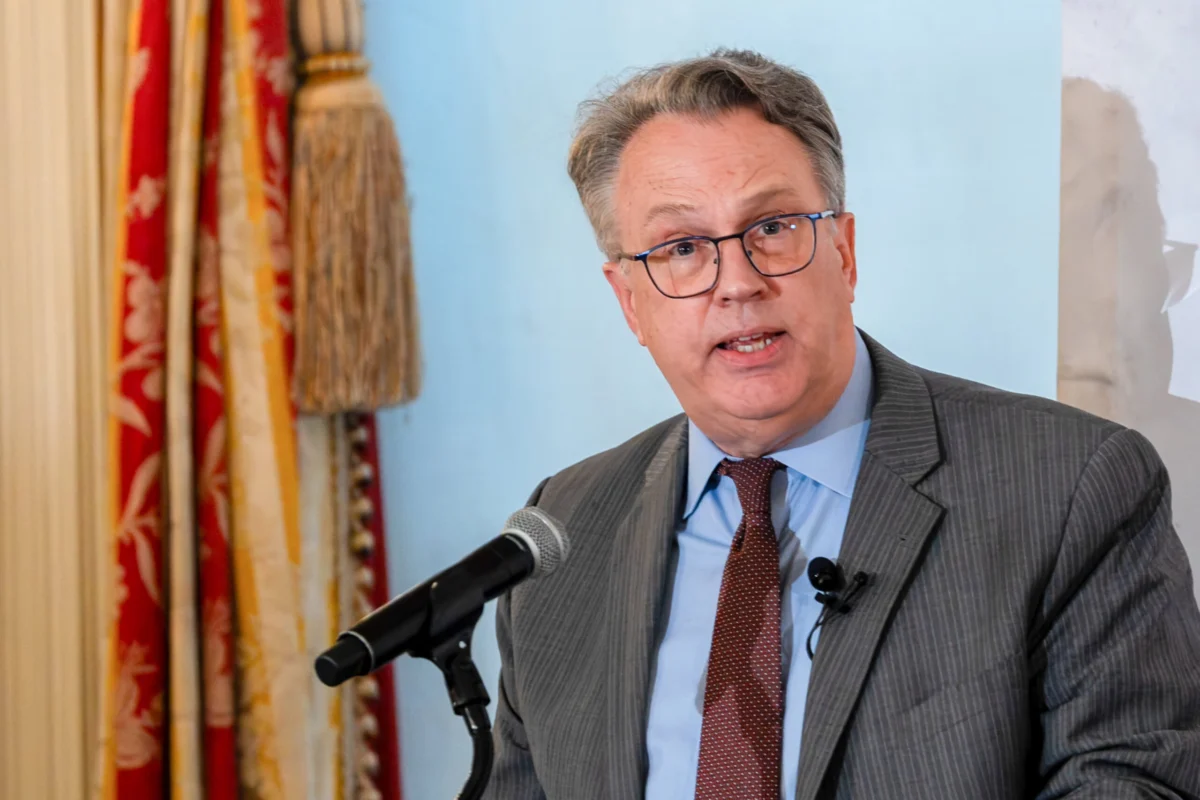
In remarks consistent with previous statements, the influential central banker expressed confidence that inflation will get closer to the Fed’s 2% target in 2027 before hitting the goal the following year. He also said that while artificial intelligence is pressuring prices, there is "little evidence" it will be the source of more persistent inflation.
"But getting inflation back to 2% is 100% essential," Williams said during an address at the University of Mount Saint Vincent in New York. "We must take actions over time that will ensure that we get inflation back to our 2% goal in a timely manner and on a sustained basis. There is still work to do to get that done."
The comments come at a delicate moment for monetary policy, as the broader United States economy continues to grow resiliently and inflation stays well above the central bank’s stated goal. Financial markets, economic analysts, and businesses across the country are closely monitoring every signal from Federal Reserve officials to gauge the future path of interest rates and borrowing costs.
Federal Reserve officials have occasionally differed over how quickly to adjust rates, with some advocating more aggressive action to cool economic activity while others, including Williams, have consistently emphasized a measured, deliberate approach. This internal debate reflects the complex economic environment, where robust growth and low unemployment run alongside stubborn price pressures originating from both domestic and international factors.
Williams ascribed the current inflation pressures to a combination of geopolitical conflict in Iran, high demand for goods and infrastructure associated with the ongoing artificial intelligence build-out, and the impact of tariffs. Regarding tariffs, he noted that their direct effects have largely abated as a source of ongoing price pressure. Nevertheless, he expressed confidence that inflation will subside substantially in the coming year, specifically pointing to 2027 as a period of notable progress, even as economic growth remains robust and unemployment edges lower.
The Federal Open Market Committee is scheduled to hold its next policy meeting on December 8-9. Financial markets have fully priced in a quarter percentage point interest rate increase, which would move the federal funds rate up from its current target range of 3.75% to 4%. Williams’ remarks on Monday are widely expected to be the last major policy statement from any Federal Reserve official before the central bank enters its customary quiet period ahead of the December decision.
Addressing the structural limits of monetary policy in the face of supply-side disruptions, Williams emphasized that central banks must focus on their core mandate of price stability. "Monetary policy cannot move ships or reopen pipelines and refineries, but it can—and must—ensure that these shocks do not lead to broader or persistent inflationary dynamics or erode well-anchored inflation expectations," Williams said, according to his prepared remarks.
During his appearance, Williams did not explicitly address expectations surrounding the upcoming December meeting, choosing instead to point back to the policy statement released after the prior FOMC meeting in late October. That statement noted that the "accumulation of more information" would help guide the committee in deciding the future path of monetary policy.
"The data that we have received since then show that the economy has remained strong and that inflation has continued to run too high," Williams said, reinforcing the central bank’s data-dependent stance as the year draws to a close.
| Source | : | Finance Poetry |
| Author | : | rifanmuazin |
| Editor | : | Finance Poetry Editorial Team |