
Inside the Shadows of the MSS: How China’s State Security Ministry Became a Central Player in High-Stakes Tech Espionage
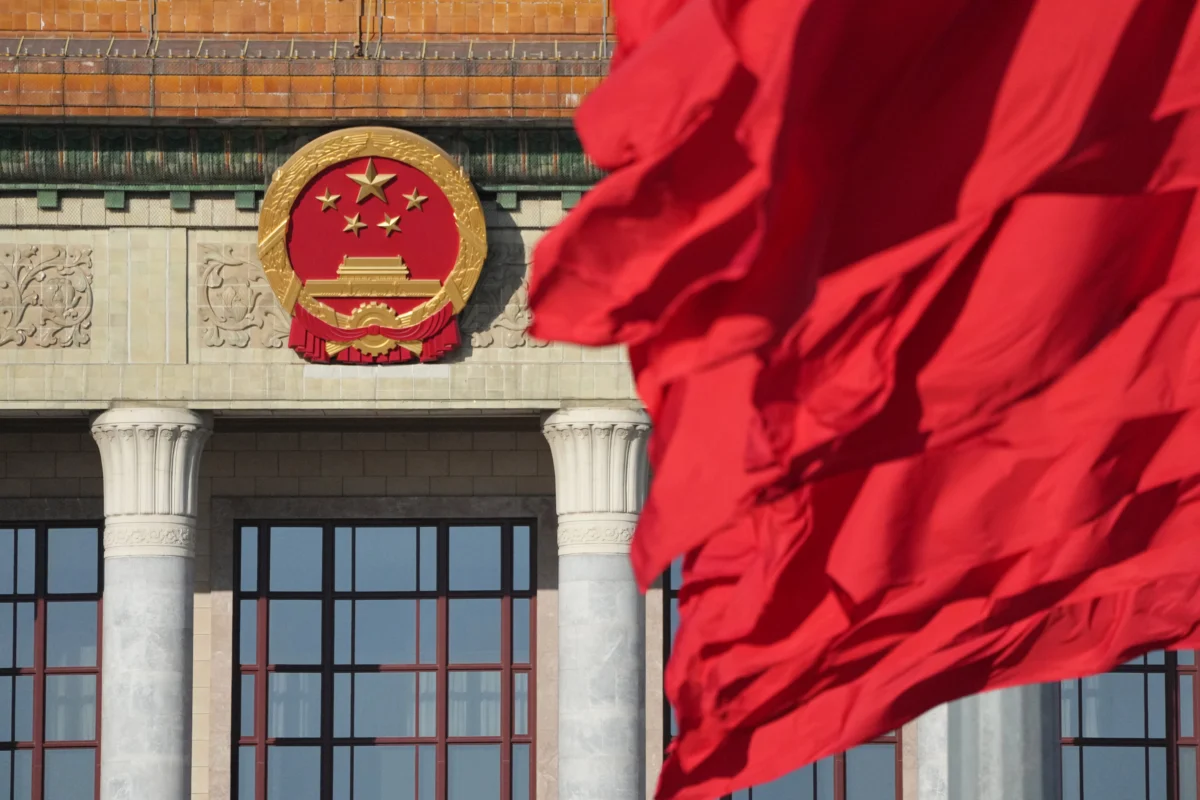
As geopolitical competition between the United States and China intensifies, intelligence operations and economic security have taken center stage in global affairs. At the heart of Beijing’s modern intelligence apparatus is an entity that operates largely in the shadows, yet has increasingly stepped into public view: the Ministry of State Security (MSS).
From alleged attempts to recruit students at prestigious U.S. universities to high-profile investigations surrounding Silicon Valley executives, recent reports have repeatedly pointed back to this opaque Chinese government agency. While China maintains multiple intelligence and security organizations, the MSS has emerged as a prominent instrument of Beijing’s growing emphasis on national security, a policy priority that has escalated significantly over recent years.
The ministry oversees a vast network of provincial and national-level bureaus dedicated to intelligence gathering, counter-espionage, and political security. Unlike many of its Western counterparts, the agency maintains an extremely low public profile, lacking an official website save for a portal designed to support whistleblowers and encourage public reporting of suspicious activities. Despite this institutional opacity, the MSS has frequently been named in connection with high-profile security cases and state-sponsored cyber operations targeting Western entities. In response to these hacking attempts and espionage campaigns, the U.S. Treasury Department has in recent years imposed targeted sanctions on various Chinese entities and individuals alleged to have direct affiliations with the ministry.
Recent investigative reports from major publications have further highlighted the expanding scope of MSS operations. Both The Financial Times and The New York Times reported that U.S. government intelligence assessments suggest the MSS recruited a businesswoman named Alice Huang to gather information on Nvidia CEO Jensen Huang, who are not related. Jensen Huang publicly acknowledged an affair over the weekend, though it remains entirely unclear whether any sensitive proprietary or corporate information was compromised during the interactions.
Adding to the complexity of the case, The Financial Times reported that the MSS earlier this year approached an individual acquainted with Alice Huang in an effort to extract background information regarding her business ventures and personal connections. According to the person who was questioned, it remained unclear whether Alice Huang herself was formally suspected of any wrongdoing. The MSS inquiry notably followed closely on the heels of news regarding a separate Singapore-based probe into Nvidia concerning chip-smuggling allegations.
Growing Prominence
The roots of China’s modern intelligence architecture trace back more than four decades. Beijing established the Ministry of State Security in 1983, a move designed in part to manage and mitigate the risks associated with the country’s newfound economic and diplomatic openness to foreigners after roughly three decades of tightly closed borders.
In the decades since its inception, the agency’s political influence and operational mandate have expanded markedly, particularly under Chinese President Xi Jinping. According to research by Sheena Chestnut Greitens, an associate professor at the University of Texas-Austin, the MSS has been heavily empowered under the current administration to strengthen China’s overall protections against foreign espionage and political infiltration. Greitens detailed this institutional evolution in a publication run by Minxin Pei, a non-resident senior fellow at the German Marshall Fund of the United States.
In a bid to modernize its public posture and foster grassroots vigilance, the MSS launched an official social media account on the WeChat messaging platform in 2023, utilizing the digital space to increase public awareness regarding security threats and counter-espionage. The department’s digital outreach is frequently used to address perceived internal threats as well. For instance, an article published by the agency criticized an unidentified individual with a Chinese surname for fabricating false allegations to a foreign organization. According to the post, the individual had falsely claimed that a colleague was a spy after discovering that the coworker had successfully secured a coveted overseas posting that the accuser had wanted.
It is worth noting that China’s MSS operates as a distinct entity separate from other powerful bureaucratic bodies, such as the Cyberspace Administration of China and the Ministry of Public Security. The latter is led by Minister Wang Xiaohong, who has previously engaged in high-level diplomatic and security talks with senior U.S. officials, including former U.S. Secretary of State Antony Blinken.
Despite their separate administrative structures, these powerful Chinese state entities frequently coordinate on overarching national security objectives. In September, State Security Minister Chen Yixin published a rare article in the cyberspace regulator’s official magazine emphasizing the urgent need to improve artificial intelligence governance and proactively prevent related security risks. That high-level commentary coincided with public warnings from prominent U.S. artificial intelligence executives regarding the potential hazards associated with the rapid, uncontrolled development of advanced technology. Furthermore, official Chinese readouts indicate that Chen has maintained active diplomatic engagement, meeting with his Vietnamese and Laotian counterparts in Beijing over the course of the year.
Focus on Tech
As the global technology race accelerates, Beijing has increasingly turned its attention toward the U.S. tech sector in an effort to narrow the prevailing gap in artificial intelligence capabilities and critical technological infrastructure. Matt Pearl, director of the strategic technologies program at the Center for Strategic and International Studies, previously noted that China’s strategic targeting of Western technological assets reflects a broader, systemic push to acquire cutting-edge know-how.
Evidence of these tactics has occasionally surfaced in academic and corporate environments. Last year, the student newspaper at Stanford University published an investigative report detailing allegations that an MSS agent had successfully posed as a Stanford student for years in order to quietly extract sensitive research and information. The report cited university experts on Chinese intelligence-gathering operations who requested anonymity, noting that state intelligence services frequently leverage civilian proxies and academic channels to extract the underlying intellectual property driving American innovation.
Other recent developments across the private and public sectors have reinforced concerns regarding state-sponsored economic espionage, even when direct institutional links to the MSS are not explicitly confirmed. In June, cybersecurity giant CrowdStrike released findings indicating that Chinese entities broadly accounted for more than half of all state-sponsored digital intrusions targeting technology companies during the twelve-year period ending March 31, with a particular focus on valuable artificial intelligence assets.
Corporate vulnerabilities have also emerged on the startup level. Brian Abbott, founder and CEO of U.S.-based artificial intelligence startup Agentiq Capital, previously recounted his belief that an employee he hired from China last year was acting as an agent of Beijing. According to Abbott, the individual purposefully altered underlying code and website content in an apparent effort to obstruct the company’s operational progress and prevent it from securing venture capital funding. The employee was dismissed earlier this year, and the company subsequently filed a formal complaint with the Federal Bureau of Investigation. Independent verification of the allegation and any potential formal connection to the MSS remains unavailable.
These corporate and academic incidents unfold against the backdrop of broader federal investigations into sensitive government institutions. In another high-profile case earlier in the year, U.S. investigators examined suspicions that a former senior official at the U.S. Federal Reserve had improperly passed confidential information concerning the American central bank to a Chinese government operative, underscoring the pervasive nature of modern intelligence challenges facing both government and industry leaders alike.
| Source | : | Finance Poetry |
| Author | : | rifanmuazin |
| Editor | : | Finance Poetry Editorial Team |