
Israel Faces Political Gridlock as General Election Produces No Clear Winner
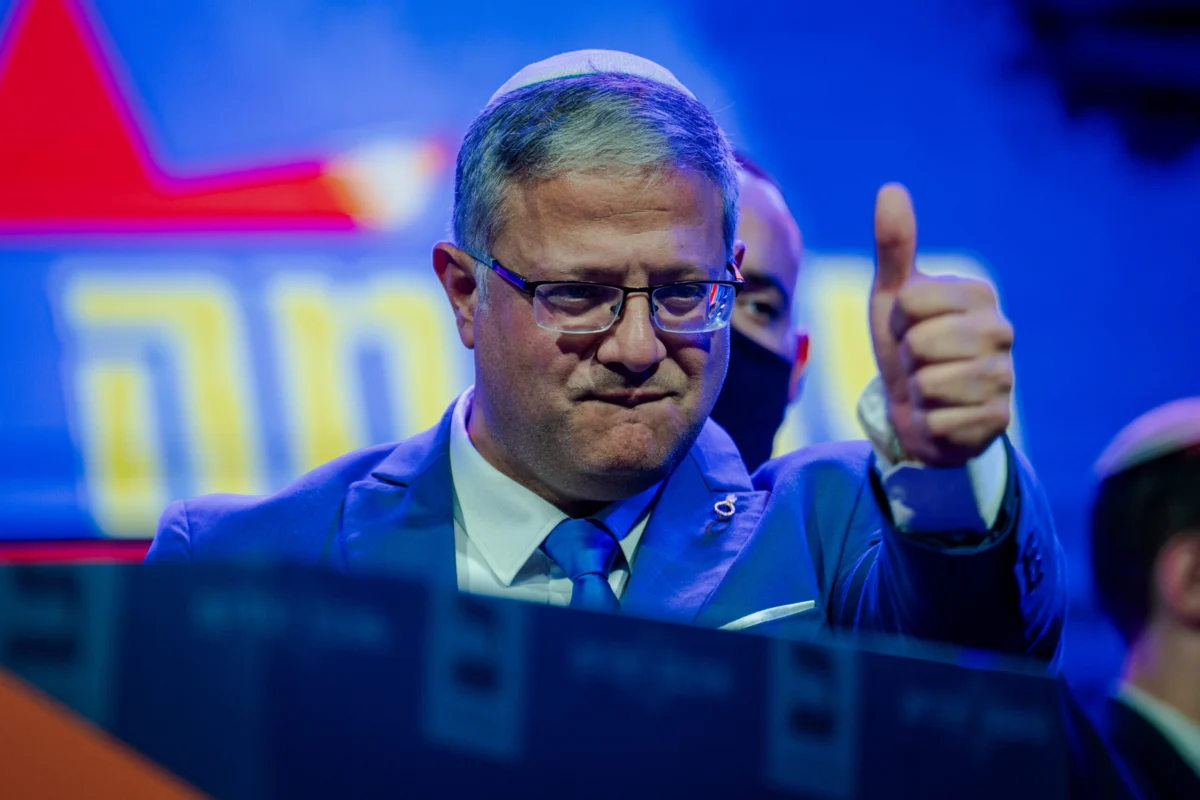
Israel’s high-stakes parliamentary election has ended in a familiar pattern of political deadlock, with nearly 90 percent of ballots counted and neither major political bloc securing the 61 seats required to form a governing majority in the 120-member Knesset.
The inconclusive outcome underscores a deeply polarized electorate following a turbulent campaign season defined by debates over national security, the ongoing war in Gaza, and the surging political participation of Palestinian citizens of Israel.
According to the latest vote tallies, Prime Minister Benjamin Netanyahu’s right-wing bloc is on course to capture 53 seats. Meanwhile, the primary opposition bloc, led by Gadi Eisenkot, is projected to secure 48 seats.
A notable development in the election was the historic performance of Arab-majority parties, which together captured a combined 19 seats. This surge was propelled by a record voter turnout of approximately 80 percent among Palestinian citizens of Israel. Consequently, Arab political factions find themselves at the center of the coalition arithmetic, even though several prominent Jewish-led party leaders have explicitly ruled out forming governing alliances with them.
The road to the election was marked by intense rhetoric, fierce campaigning, and starkly contrasting visions for the country’s future. The key political figures and their respective parties navigated a contentious landscape in the weeks leading up to the vote, on election day, and in the immediate aftermath as the results began to materialize.
Benjamin Netanyahu, Likud: Elections ‘Stolen by Arab Parties’
In the lead-up to the parliamentary election, Prime Minister Benjamin Netanyahu projected absolute confidence in his political longevity. Speaking to The Jerusalem Post on October 22, he remarked, “I’m gonna have five more terms.”

As voting day approached, however, Netanyahu pivoted sharply toward warning his base about the opposition. Citing a broadcast on Israel’s Channel 14, Haaretz reported that Netanyahu cautioned voters that an opposition victory would result in citizenship being granted to hundreds of thousands of Palestinians—a policy shift he claimed would spell the “end of the Jewish state.”
On election day itself, Netanyahu ramped up his rhetoric, telling supporters that establishing a government reliant on Arab-led parties would be “a shame and a disgrace.”
“It is forbidden — simply forbidden — to endanger Israel and to establish a government that relies on anti-Zionist Arab parties,” he declared.
Following election day, Netanyahu’s Likud party escalated its stance, issuing a formal statement shared by the prime minister that alleged the election “were stolen by Arab parties that support terrorism and the elimination of the Jewish state through serious criminal offences.” According to reports from The Times of Israel, both the Israel Police and the Central Elections Committee quickly dismissed these claims as unfounded.
Despite the controversies, Likud emerged as the single largest party in the Knesset, on course for 26 seats with roughly 20.65 percent of the vote. However, the broader Netanyahu-led bloc sits at 53 seats, leaving it eight seats short of a majority.
Gadi Eisenkot, Yashar Party: ‘I Do Not See an Arab Party That Accepts My Principles’
Gadi Eisenkot entered the electoral race with the explicit goal of unseating the incumbent prime minister. In a September interview with The Jerusalem Post, Eisenkot dismissed suggestions that he would need to rely on a coalition with Arab parties to form a government.
“I believe the majority we receive will be much larger than what the polls currently show,” Eisenkot said, adding, “I do not see an Arab party that accepts my principles.” He also expressed a strong personal conviction, noting that his “inner feeling is that I now have the ability to defeat Netanyahu.”

On election day, Eisenkot urged the Israeli public to mobilize and remove what he described as “the worst government Israel has known.” He also acknowledged the gravity of the political moment, telling voters that the nation was facing “perhaps the most critical day since the founding of the state.”
Following the initial results, Eisenkot addressed his supporters on Wednesday, asserting that the Israeli public had “voted against” Netanyahu. He pledged to work tirelessly “to ensure that the people’s decision is translated into a Zionist government.”
The electoral outcome placed Eisenkot’s Yashar party on course for 21 seats, capturing 16.16 percent of the vote. However, his bloc’s total of 48 seats leaves it 13 seats short of a majority, meaning that reaching the 61-seat threshold remains an immense challenge without unconventional coalition partners.
Naftali Bennett, Together Party: ‘The October 7 Government Is Going Home’
Naftali Bennett campaigned on a platform of sweeping political change, framing the election as a referendum on the current administration’s handling of national security. Months prior to the vote, in a February closed conference with party activists, Bennett addressed his controversial 2021 decision to govern alongside the Ra’am party, stating that he stood by the move but would not repeat it.
“We will establish a unity government under my leadership … We are going to win, and we are going to form it,” Bennett told attendees, according to Israel National News.
On election day, addressing supporters in Tel Aviv, Bennett declared that “Netanyahu has lost, and the October 7 government is going home.” In a subsequent post on X following the vote, he encouraged Israelis to “lift your heads” and promised to do everything in his power “to establish a Zionist Alliance of Servants government.”
The Together party, co-led alongside Yair Lapid, is on course to secure 12 seats with 9.07 percent of the vote, placing it narrowly behind the Joint List.

Itamar Ben-Gvir, Otzma Yehudit: Palestinians in Gaza ‘Shouldn’t Live’
Far-right politician Itamar Ben-Gvir adopted some of his most extreme positions during the campaign trail. In August, he remarked that there are Palestinians in Gaza “who are not worthy of life. They shouldn’t live. They’re not even people,” while publicly calling for military operations to eliminate dozens of individuals in Gaza on a nightly basis.
On election day, Ben-Gvir sought to galvanize right-wing turnout by invoking political threats. Speaking to supporters near the entrance of the Arab city of Kafr Qasim, he urged, “If you want this country to stay Jewish and Zionist, if you don’t want it to be in the hands of (Israeli Knesset members) Mansour Abbas and Ahmad Tibi, go out and vote.”
Despite these appeals, Otzma Yehudit fell significantly short of its internal ambitions, tracking toward just seven seats with 5.58 percent of the vote—less than half of the 15 seats Ben-Gvir had publicly targeted.
Bezalel Smotrich, Religious Zionism-Zehut: ‘Jewish Settlements Will Be Established in Gaza’
Bezalel Smotrich used his campaign platform to advance plans for territorial expansion and demographic shifts. In an August statement, he promised to expand his settlement “revolution” through a targeted program focused on the “Judaization of the Negev and the Galilee” at the expense of local Palestinian populations.
On election day, Smotrich took to social media to warn right-wing voters that low turnout in communities of Palestinian citizens of Israel could inadvertently allow “terror supporters” into the corridors of government.
Later that evening, addressing his supporters, Smotrich made a definitive policy pronouncement, stating, “Jewish settlements will be established in Gaza.”
When the ballots were tallied, the Religious Zionism-Zehut alliance was projected to win six seats, representing 4.78 percent of the national vote.

Yousef Jabareen, Joint List: ‘Change Comes Through Jewish-Arab Partnership’
Yousef Jabareen, leader of the Arab-led Joint List alliance, positioned his party as an indispensable pillar for any effort to unseat the incumbent administration. Back in August, Jabareen stated that only “a large and strong Joint List will work with all its might to send the Netanyahu/Ben-Gvir/Smotrich government home,” as reported by The Jerusalem Post.
On election night, in a video statement, Jabareen asserted that Netanyahu was acutely aware that Arab voters “can put an end to his bloody reign.” Following the election, he took to X to reiterate his party’s readiness to participate in ousting a government he characterized as defined by bloodshed.
“Against a politics of supremacy, racism, and exclusion, we offer a completely different alternative. The change comes through Jewish-Arab partnership, a true and equal partnership,” Jabareen wrote.
The Joint List secured 12 seats with 9.14 percent of the vote, cementing its status as the third-largest political force by vote share in the newly elected Knesset.
Mansour Abbas, Ra’am: Netanyahu Uses ‘Scare Tactic to Mobilise Right-Wing Voters’
Mansour Abbas, head of the conservative Islamic Ra’am party, set an initial electoral goal in July of capturing at least seven seats, arguing that such a tally would grant his party the balance of power within a broader “government of change.”
On election day, Abbas pushed back against Netanyahu’s online statements targeting Palestinian citizens of Israel. In a video response, Abbas accused the prime minister of “lying and inciting against Ra’am, using it as a scare tactic to mobilise right-wing voters and drive them to the polls.”
Abbas surpassed his electoral objective, with Ra’am on course to win eight seats, capturing 6.09 percent of the vote.

Avigdor Lieberman, Yisrael Beiteinu and Yair Lapid Weigh In
Avigdor Lieberman maintained an optimistic outlook throughout the final stretch of the election cycle. On October 15, he confidently predicted, “We will reach 61 seats or more for the change bloc.” As election day concluded, Lieberman urged patience among his supporters, stating that the political landscape would eventually reveal “a much better and more optimistic picture.” Yisrael Beiteinu is currently projected to secure seven seats with 5.93 percent of the vote.
Meanwhile, opposition figure Yair Lapid directed sharp criticism at the prime minister’s campaign messaging. In September, Lapid posted a statement reading, “Netanyahu ignored every warning before October 7, and now, 28 days before the election, he’s suddenly busy fear-mongering.” As election day results rolled in, Lapid declared that “The Netanyahu bloc has suffered a crushing defeat.” Lapid shares the leadership of the Together party alongside Naftali Bennett, with the alliance on track to hold 12 seats in the upcoming parliament.
| Source | : | Finance Poetry |
| Author | : | rifanmuazin |
| Editor | : | Finance Poetry Editorial Team |