
Nvidia Beats Earnings Expectations With $115.84 Billion in Third-Quarter Revenue Despite Leadership Turmoil
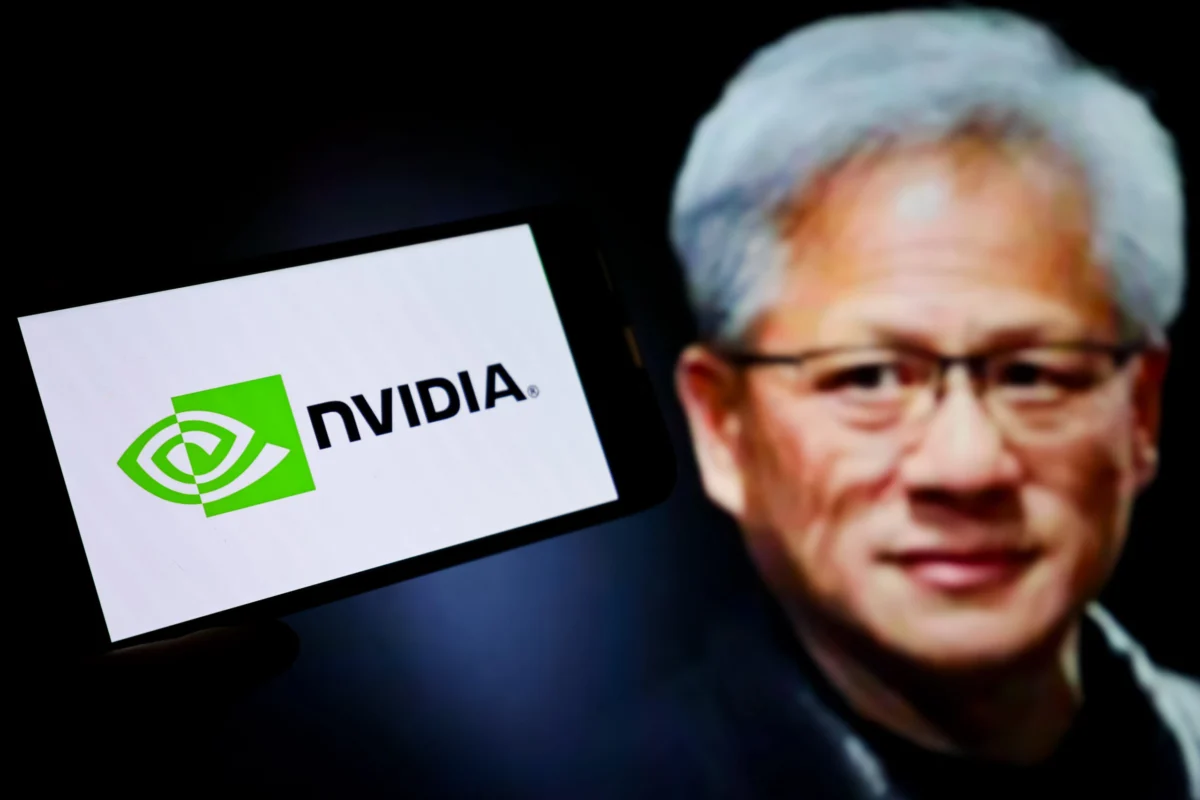
Wall Street analysts widely expect uncertainty surrounding Nvidia’s long-term future to linger, even in the wake of another stellar earnings beat that demonstrated the company’s powerful financial momentum. Market observers noted that a significant portion of Nvidia’s third-quarter performance was already locked in before the sudden leadership turmoil that culminated in the resignation of longtime Chief Executive Officer Jensen Huang.
For the third quarter, Nvidia reported revenue of $115.84 billion, shattering analysts’ consensus expectations by more than $6 billion. FactSet and LSEG consensus estimates had previously pegged expected revenue at $109.10 billion. Looking ahead, the company issued fourth-quarter guidance projecting revenue of $130 billion, which comfortably topped the $125.1 billion consensus estimate anticipated by Wall Street.
A notable portion of this sequential revenue increase is attributed to calendar adjustments. Melius Research estimated that an extra calendar week included in the fiscal fourth quarter accounts for roughly $9 billion to $10 billion of the projected jump. Building on this robust financial trajectory, Nvidia also raised its ambitious fiscal 2028 growth forecast to 75%, up from its previous projection of 70%. Significantly, this upward revision was achieved even with mainland China completely excluded from its data center compute revenue outlook due to ongoing geopolitical and regulatory hurdles.
Market analysts viewing the earnings report saw a company operating at peak efficiency despite the executive suite upheaval. Josh Gilbert, lead analyst for Asia Pacific and the Middle East at eToro, captured the sentiment surrounding the operational momentum.
"That’s a team going full steam ahead, rather than just steadying the ship, and a clear signal that management believes next year can run just fine without Jensen Huang at the helm," Gilbert said.
Nevertheless, even with financial results that he described as "nothing short of astonishing," Gilbert cautioned that market participants will continue grappling with unanswered questions. "Investors will still be left with the uncertainty of who and what comes next," he added.
The leadership question became a central talking point following Huang’s departure. In his first public statement since resigning from his post the previous week, Huang indicated prior to the earnings release that he would be open to returning to the company under the right circumstances. However, during the subsequent earnings call, Nvidia board chair Harvey Jones addressed the matter directly, stating firmly that the board does not intend to reinstate Huang as chief executive officer.

Despite the executive transition, financial analysts expressed confidence that the underlying business remains insulated from immediate disruption. Brian Colello, senior equity analyst at Morningstar, described the figures as "solid" and broadly in line with his firm’s expectations, noting that the results should help ease some of the anxieties generated by the recent boardroom drama. Colello expressed continued faith in the market thesis, stating his belief that "the infrastructure buildout is real," while pointing to Nvidia’s steady hardware shipments throughout the third quarter.
Echoing this perspective, Michael Wilson, chief investment officer and chief U.S. equity strategist at Morgan Stanley, told CNBC television that the financial results were largely expected. Wilson noted that no major drop-off in Nvidia’s core business is anticipated in the near term, with corporate guidance remaining "pretty constructive."
Wilson added that artificial intelligence remains a highly desirable investment category, observing no tangible slowdown in spending from major hyperscalers and emerging neocloud providers—newer cloud computing infrastructure firms specifically built around AI workloads. However, he offered a nuanced caveat, suggesting that the blistering pace of capital investment may not continue at the exact velocity that aggressive investors had anticipated six months prior.
Nvidia continues to be treated by institutional investors as the primary bellwether for the broader artificial intelligence industry and its associated capital expenditures. Gilbert shared this macro perspective, suggesting the entire AI trade can now "let out a small sigh of relief" after holding its collective breath for weeks. Nvidia had been "firing on all cylinders" prior to Huang’s unexpected exit, he noted, ensuring that the company’s fundamental market position remains firmly intact.
As evidence of this underlying demand, Gilbert pointed to Nvidia’s soaring supply commitments, which climbed to $390 billion from $279 billion over the span of just three months. Furthermore, he highlighted the commercial rollout of the company’s upcoming Vera Rubin platform, which has already secured $20 billion in early commitments.
"It’s the clearest sign yet that the AI boom still has plenty of fuel in the tank," Gilbert said.
Following the earnings release and conference call, Nvidia shares rose more than 5% in after-hours trading. Even so, analysts warned that any upward stock rally is likely to encounter near-term resistance and heightened volatility. The formal CEO search is only just getting underway, and various regulatory investigations and market headwinds are still playing out across the global technology sector.
Adding another layer of complexity for the chipmaker, new U.S. export restrictions were announced by the federal government. The Department of Commerce revealed it will require explicit export licenses for shipments of advanced high-performance computing chips to Singapore, Malaysia, Indonesia, Thailand, and Brazil. The regulatory action was taken amid growing concerns that these nations could potentially serve as transshipment hubs, allowing restricted semiconductors to be diverted to customers in China.

Gilbert suggested that the direct impact of these new rules on Nvidia’s immediate financial forecasts appears relatively limited. Because Nvidia’s internal guidance already assumed zero data center revenue from China, and with mainland China accounting for only about 2% of total sales during the latest quarter, the direct baseline exposure is low. However, he warned that mandatory licensing requirements for shipments directed to regional hubs like Singapore and Malaysia could temporarily slow down certain international neocloud data center build-outs.
Melius Research analyst Ben Reitzes suggested that fiscal 2028 is the timeframe when sales to countries covered by the newly expanded restrictions would realistically be expected to face headwinds. Reitzes interpreted Nvidia’s confident forward guidance as an indication that major hyperscale cloud providers are fully prepared to absorb whatever supply becomes available through alternate, unrestricted channels globally.
Nvidia management stated during the post-earnings communications that the company is actively studying the fine details of the new Commerce Department rules, but emphasized that leadership remains entirely confident in achieving its 75% growth target.
Looking toward the horizon, Morningstar’s Colello pointed out that long-term risks surrounding regulatory policy, international sales dynamics, and the persistent possibility of hyperscalers eventually developing their own proprietary silicon chips remain factors to monitor. Nevertheless, he maintained that Nvidia is well-positioned to remain an indispensable market player as the overall total addressable market expands.
Colello emphasized that the investment community will now look for executive leadership to consistently reaffirm its long-term strategic outlook, proving that the enterprise can execute flawlessly through a major leadership transition.
"We’re at a point of peak uncertainty because investors still don’t know what Nvidia’s long-term leadership will look like," Colello said. "Jensen Huang’s departure could create some near-term disruption, but a credible succession plan should go a long way toward steadying the ship. The next CEO will have big shoes to fill, but Nvidia’s long-term opportunity does not hinge on one person."
| Source | : | Finance Poetry |
| Author | : | rifanmuazin |
| Editor | : | Finance Poetry Editorial Team |