
Rare Severe Storms Sweep Across Arizona Packing Golf Ball-Sized Hail, High Winds, and Possible Tornado
Arizona is not typically known as a hot spot for severe weather, but this week the state experienced a dramatic and destructive atmospheric upheaval, featuring a volatile combination of large hail, widespread urban flooding, and even a rare tornado that left residents reeling from the unexpected devastation.
The severe weather system struck on Wednesday, unleashing a barrage of chaotic weather across multiple regions of the Grand Canyon State. In the metro Phoenix area, the storm produced violent hail reaching the size of golf balls, shattering and cracking vehicle windshields across the entire Valley. Dramatic reports and images shared on social media by weather agencies and local residents alike showed fleets of cars with severely damaged and completely destroyed windshields, pointing to the sudden and intense nature of the localized cell.
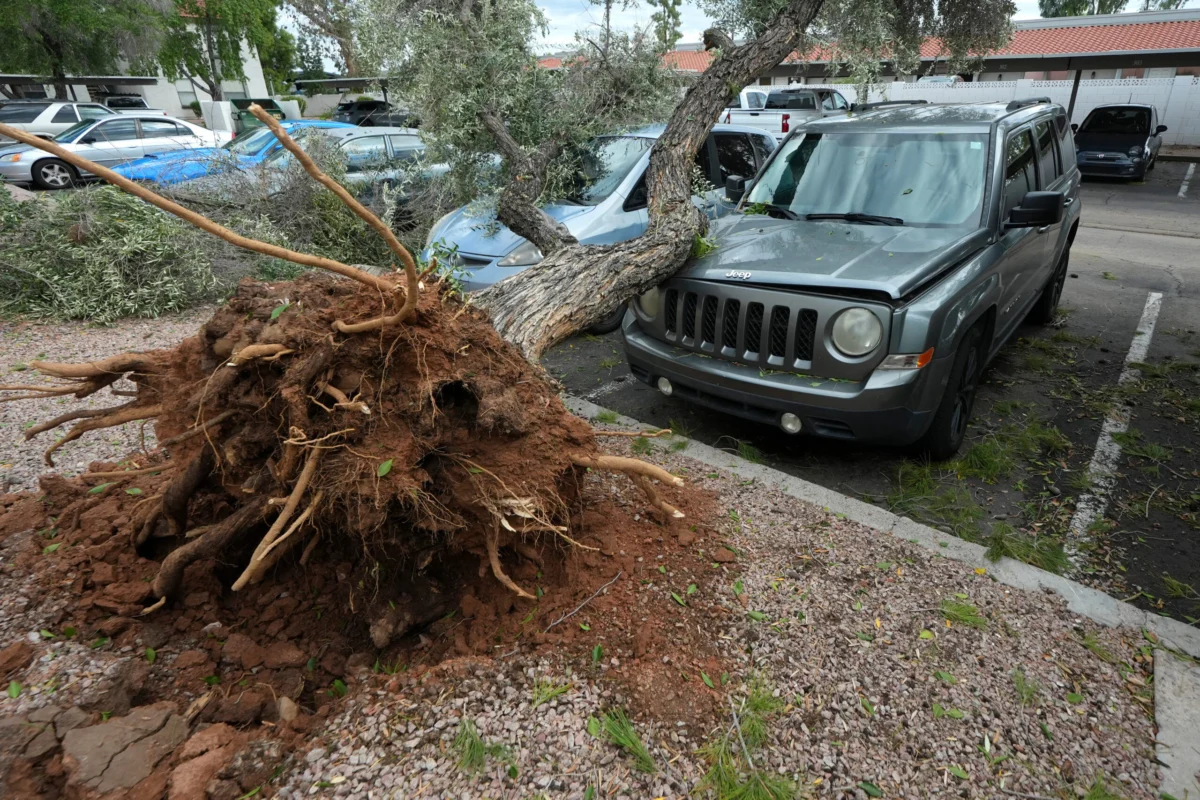
North Phoenix, Glendale, Tempe, and Mesa were among the hardest-hit Valley communities, bearing the brunt of the heavy hail accumulation alongside roaring winds. Meteorological data indicated that winds reached speeds of up to 60 miles per hour during the peak of the storm, knocking down mature trees, snapping branches, and scattering debris across major roadways and residential neighborhoods throughout the metropolitan expanse. In Mesa, the aftermath was stark, with uprooted trees falling across local apartment complexes and damaging parked vehicles as residents began assessing the unexpected morning-after toll.
While intense hailstorms are relatively infrequent in the desert climate of Phoenix, the metropolitan area has actually experienced multiple notable severe weather outbreaks over the past year. This includes a previously recorded storm in November 2025 that also dropped substantial hail across parts of the West Valley, signaling a potential shift in how severe localized systems behave in the region.
Looking further back into the historical weather archives, Phoenix is no stranger to catastrophic hail events, though they remain rare outliers. In October 2010, the metro area was struck by a series of successive, highly destructive hailstorms that ultimately caused an estimated $2.7 billion in insured losses, remaining a benchmark for severe storm damage in the desert metropolis. Wednesday’s storm, while far from reaching those historical financial thresholds, served as a jarring reminder of the vulnerability of urban infrastructure to sudden severe weather.
However, the most severe manifestations of Wednesday’s storm system largely missed Phoenix, tracking instead to the north and targeting higher-elevation communities. Mountain and foothill communities near Prescott and Flagstaff experienced extensive damage as the storm intensified, driven by ferocious winds reaching up to 70 miles per hour and torrential downpours that triggered localized flash flooding.
Among the hardest-hit areas further north was Overgaard, a community situated within Navajo County, which reported significant property and environmental damage from the ferocious winds. Local eyewitnesses and preliminary reports from the area suggested that a possible tornado may have touched down during the height of the storm, cutting a path through the community. As of the latest updates, however, the National Weather Service has not yet officially confirmed whether a tornado was directly responsible for the specific damage patterns observed in Overgaard, noting that meteorological survey teams are continuing to evaluate the evidence.
As emergency crews, municipal workers, and insurance adjusters fan out across the state to clear fallen timber, repair structural damages, and assist affected vehicle owners, the atmospheric drivers behind the storm are beginning to shift. State and local emergency management officials are advising residents to remain cautious of lingering hazards, such as downed power lines and unstable trees, as recovery efforts get underway.
Looking ahead, meteorologists indicate that conditions are expected to dry out significantly across most of the state in the coming days, bringing a return to the classic, stable arid climate that Arizona is traditionally known for, even as residents continue to recover from a surprisingly ferocious day of severe weather.
| Source | : | Finance Poetry |
| Author | : | rifanmuazin |
| Editor | : | Finance Poetry Editorial Team |