
Ryanair CEO Warns European Airfares Could Jump by up to 20% Next Year Amid Surging Fuel Costs
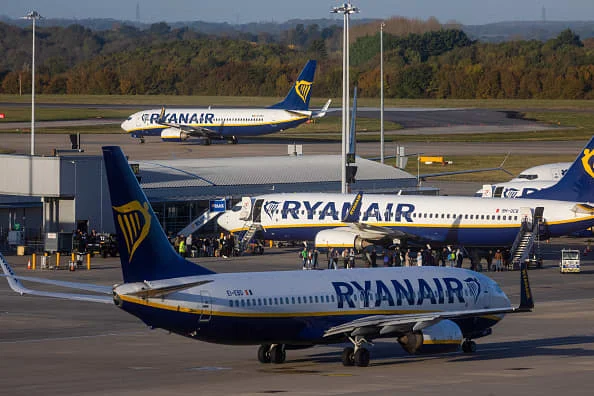
European air travelers are facing the prospect of significantly higher ticket prices next year as the aviation industry confronts a severe cost cliff driven by soaring oil prices and expiring fuel hedges. According to Ryanair CEO Michael O’Leary, consumers across Europe could see airfares rise by 10% to as much as 20% in the coming year, ending a period of relative price stability that has insulated passengers from the worst of global commodity volatility over the past twelve months.
Speaking in an interview with CNBC on Monday, O’Leary outlined the looming financial pressures facing the continent’s budget carrier and the wider airline sector. The warning comes as Ryanair reported a 15% decline in profit to 2.15 billion euros ($2.3 billion) for the first half of its fiscal year. This profit squeeze was directly attributed to a dramatic doubling in the price of its unhedged jet fuel, which constitutes roughly 20% of the airline’s overall fuel consumption.
"So we’re facing 2027 where we have much higher oil prices… I think they’re going to get passed on in significantly higher airfares," O’Leary told CNBC’s Steve Sedgwick on Monday.
The aviation industry has relied heavily on financial hedging strategies to buffer operations against volatile crude oil markets. However, as those protective financial instruments roll off and geopolitical tensions persist in the Middle East without a clear diplomatic or military resolution, carriers are increasingly exposed to spot market prices. Jet oil currently trades at around $170 a barrel, creating what O’Leary described as a very significant cost cliff that airlines across Europe will be forced to navigate next year.
"The market customers have been insulated for the last 12 months… but those hedges are rolling off. There’s still no resolution in the Middle East. Jet oil today is $170 a barrel. I mean, this is a very significant cost cliff we’re all facing next year. I believe you’re going to see airfares rise next year across Europe by 10%, maybe even 20%," O’Leary added.
Despite being one of the most financially resilient airlines in Europe, Ryanair has conceded that increasing short-haul airfares will not be enough to fully offset an estimated 2-billion-euro increase in fuel charges expected next year. In response to these mounting pressures, the low-cost carrier is initiating a comprehensive internal cost review. The efficiency drive will include reducing crew rations, implementing a potential temporary pay freeze across the workforce, and leveraging artificial intelligence technologies to drive further operational efficiencies and reduce overhead.
The financial markets reacted swiftly to the dual news of falling profits and rising cost pressures. Ryanair’s Irish-listed shares initially edged higher during early Monday trading before steadily paring those gains and slipping below the flatline. The airline’s stock has faced persistent downward momentum over the course of the year, falling by more than 22% since January.
The strategic adjustments extend beyond ticket pricing and cost-cutting measures. In September, Ryanair announced it would scale back its ambitious growth plans by cutting its full-year traffic target from 216 million passengers down to 214 million passengers. The deliberate reduction in capacity is designed to limit the airline’s exposure to unhedged fuel purchases during the winter months. The carrier now expects its winter traffic figures, spanning from November through March, to remain broadly flat compared to the same period a year prior.
"I think you’re seeing even this winter, all of the airlines across Europe, even Ryanair, for the first time in many years, we cut our winter capacity," O’Leary noted. "We’ll only be flat this winter over the prior year, because it makes no sense for us to be growing capacity if we’re buying unhedged oil at $170 a barrel."
Ryanair’s historical approach to fuel hedging has frequently provided a competitive advantage over rivals. For the current financial year, the airline successfully hedged 80% of its jet fuel needs at a fixed price of $67 per barrel. This protective measure insulated its earnings from the worst of the market volatility that crippled less-prepared competitors. Looking further ahead, the company has already secured hedges for at least 25% of its projected 2028 jet fuel requirements at $95 per barrel.

Earnings Remain ‘Hostage’ to Oil Prices
The muted market reaction to Ryanair’s financial results reflects broader investor sentiment and existing expectations rather than any profound shock from the earnings report itself, according to market analysts. Adam Vetesse, a market analyst at eToro, suggested that investors had already anticipated the financial drag of unhedged fuel exposure and softer summer ticket fares.
"Investors appear to have already priced in the hit from unhedged fuel and softer summer fares, leaving room for relief that the quarter landed exactly where consensus had predicted," Vetesse said.
Vetesse added that the immediate outlook for the sector remains tightly bound to external commodity markets and consumer booking behavior, though Ryanair’s underlying financial strength could offer long-term reassurance.
"Near-term earnings remain hostage to oil prices and close-in bookings, but the market’s early bounce suggests investors are willing to give Ryanair the benefit of the doubt that its cost advantage will matter more than the fuel spike once the dust settles," he added.
Supporting this view of relative corporate strength, Ryanair highlighted its robust balance sheet in Monday’s announcement. The airline reported holding 2.6 billion euros in cash as of September 30, even after executing a substantial debt repayment of 1.3 billion euros during the period.
O’Leary emphasized the unique financial footing of the airline compared to its industry peers, pointing out that the company has systematically eliminated its long-term borrowings while maintaining a massive operational fleet.
"You know we’ve paid off all of our debt this year, so we have effectively zero debt. We have 650 aircraft on the balance sheet. We’re significantly cash positive," O’Leary told CNBC.
At the same time, the Ryanair chief executive issued a stark warning regarding the financial maneuvers of rival airlines attempting to stay afloat amid high interest rates, volatile oil prices, and rising operational costs. Without naming specific competitors, O’Leary criticized airlines that rely on financial engineering to generate short-term liquidity rather than addressing structural financial health.
"The challenge facing all airlines is the volatility in oil prices, lack of hedging, and higher financing costs," O’Leary said. "So you see, some of our competitors are doing sale and leasebacks to generate cash. They’re just mortgaging their futures; they’re Ponzi schemes."
| Source | : | Finance Poetry |
| Author | : | rifanmuazin |
| Editor | : | Finance Poetry Editorial Team |