
Tanzania’s Digital Agriculture Push Struggles to Bridge the Gap Between Registration and Real-World Impact for Smallholders
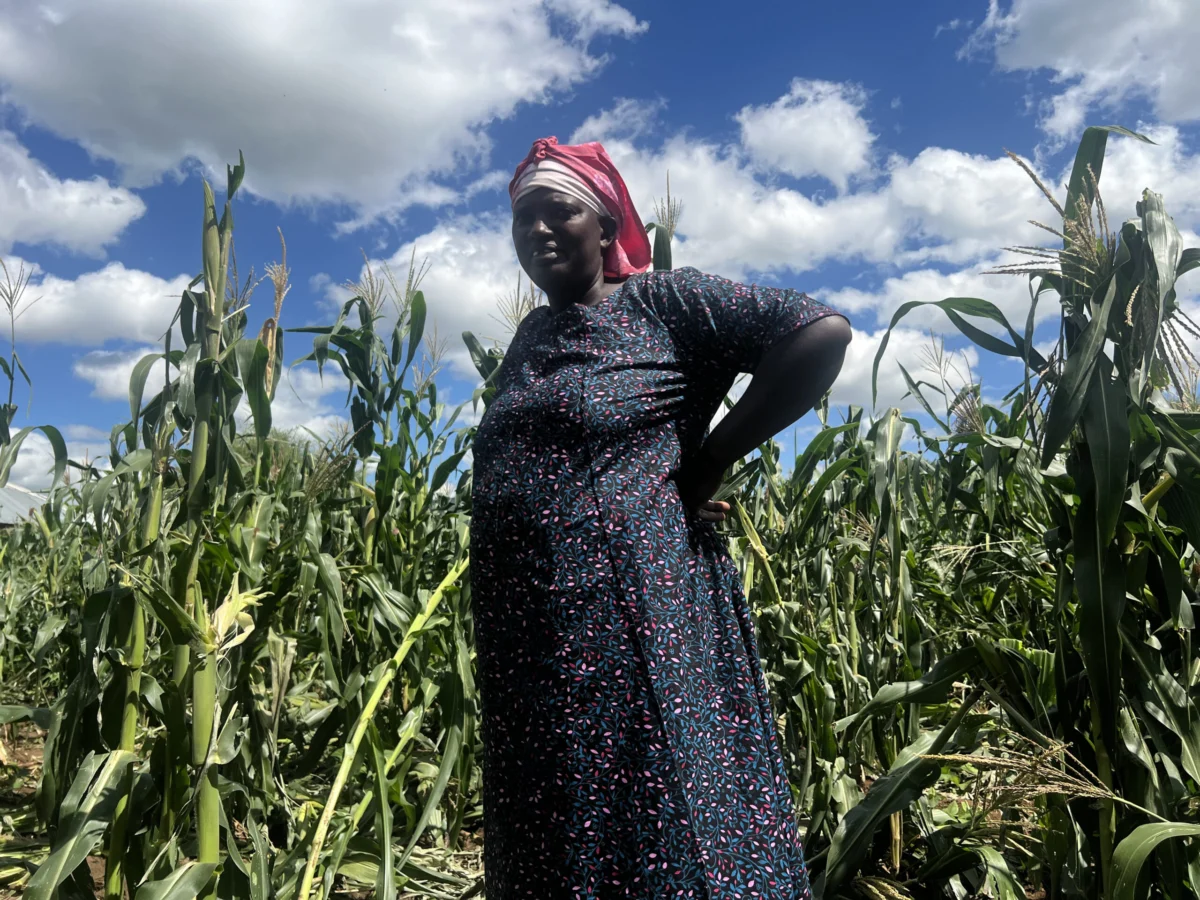
DODOMA REGION, Tanzania — For millions of smallholder farmers across Tanzania, the digital revolution in agriculture arrives as a text message or a notification on a screen. Yet, behind impressive government registration statistics and multi-million-dollar technology investments, a stark reality persists on the ground: access to a platform does not automatically translate into understanding, utility, or financial benefit.
Theresia Abel Nyoka knows the digital landscape only through intermittent alerts. She has received text messages on her mobile phone about M-Kilimo and e-Kilimo—flagship digital initiatives championed by the government to revolutionize farming—but she has never actually registered for either service.
"It is simply because we have not been given education. I do not know their importance or benefits," Nyoka told Al Jazeera by phone from Paranga village, nestled in central Tanzania’s semi-arid Dodoma region.
Instead of navigating smartphone applications or text-based menus, Nyoka relies on physical systems she understands and trusts. She takes her agricultural produce directly to a local warehouse operated through her Agricultural Marketing Cooperative Society (AMCOS). There, farmers pool their harvested crops together for collective sale at organized public auctions during the height of the marketing season.
The disconnect experienced by farmers in Dodoma and surrounding districts highlights a profound operational challenge for Tanzania’s broader digital agriculture strategy. While the state continues to pour resources into modernizing the agricultural sector, rural communities are often left behind due to a lack of digital literacy, connectivity barriers, and systems that fail to deliver timely information when it matters most.
The Promise Versus the Practice of Digital Tools
The government’s ambitions for digital agriculture are substantial. M-Kilimo operates as a Ministry of Agriculture mobile service intended to provide real-time market information, agronomic advice, and a channel for farmers to advertise their produce or request immediate assistance from agricultural extension workers. The broader e-Kilimo platform seeks to consolidate various government agricultural services into a unified online portal accessible via websites and dedicated smartphone applications.
To fuel these initiatives, the Tanzanian government and international partners are heavily investing in the sector. A prime example is the $3.62 million Data for Digital Agricultural Transformation Joint Programme, scheduled to run from September 2024 through August 2027. This multi-year framework aims to fundamentally strengthen agricultural data systems, expand access to digital services, and set ambitious targets: improving digital literacy for roughly 500,000 farmers while systematically training 500 government extension officers.
Yet, for farmers currently trying to navigate the marketplace, the theoretical benefits of these programs often clash with everyday frustrations.
Jeremiah Luwe, a 49-year-old maize and pigeon pea farmer from Ngomai village in Kongwa district, has actively tried using M-Kilimo on his smartphone. But his experiences have left him skeptical. When submitting inquiries regarding shifting market prices or the availability of agricultural inputs, Luwe discovered that responses can take up to two weeks to arrive.
"Sometimes the information arrives too late to be useful," Luwe told Al Jazeera. "The government should provide a faster system that responds on time and connects us to markets and other farmers."
Because of these delays, Luwe continues to rely on traditional, community-based methods for his livelihoods, turning to public village meetings, physical auctions, and conventional media reports to gauge market conditions. When contacted regarding these persistent concerns about user training, response times, and platform performance, the Ministry of Agriculture did not respond to requests for comment.
Registration Does Not Guarantee Use
Official metrics present a booming digital ecosystem, but analysts note a vast gulf between administrative numbers and actual field-level engagement. A 2024 study drawing directly from Ministry of Agriculture data reported approximately 7.2 million registered farmers on the M-Kilimo platform. The same dataset recorded 9,985 extension workers and agricultural experts, alongside 24,523 customers and 26,927 sellers of agricultural products.
Furthermore, the study documented that the platform had processed 75,623 advisory consultations, with 73,839 of those inquiries receiving replies. However, researchers point out that these raw administrative figures fail to establish how many farmers actually used the service regularly, nor do they prove whether the advice received materially helped farmers make better production and marketing decisions.
Beneath the surface of those millions of registrations lie significant administrative and technical bottlenecks. The 2024 study identified roughly 400,000 incomplete registrations, underscoring systemic challenges with digital literacy and basic technological access. While M-Kilimo utilizes USSD technology—allowing users to interact with menus via basic mobile phones without needing an active internet connection—many farmers reported struggling to navigate even these simplified text-based prompts. Comparable usage figures for the broader e-Kilimo platform have not been publicly released.
In Kingale village, Adam Rashidi cultivates pigeon peas and sesame across more than six hectares of land. Armed only with a basic mobile phone, Rashidi relies on organized local auctions and traditional farm-gate buyers who come directly to rural areas to purchase harvests.
"If I am given education, I can register," Rashidi told Al Jazeera, noting that he could not name a single person in his village who actively used either M-Kilimo or e-Kilimo.
Nearby, fellow pigeon pea farmer Shaban Omary faces similar hurdles. Operating without a smartphone, Omary gathers whatever price intelligence he can find by watching television. Though M-Kilimo is theoretically built to accommodate basic mobile phones, studies show that usability remains a major hurdle for rural populations with limited formal or digital education.
"If I knew how to use it, it would help me because I would know more and it could help me move forward," Omary said.
Shaban Ndatwa, the chairman of the Kingale AMCOS cooperative, has attended seminars concerning the Tanzania Mercantile Exchange (TMX)—the nation’s premier commodity exchange platform—yet admits he has never registered and has received no formal training on how to operate the system.
"I can see that people still do not understand the systems properly," Ndatwa observed.
Agricultural development experts emphasize that technology alone cannot fix structural inequalities within rural supply chains. Praygod Malisa, an agriculture specialist with Rikolto East Africa in Tanzania, points out that larger, wealthier commercial farmers already enjoy superior access to market intelligence.
"They know where buyers are, hold contracts, and can afford to store produce until prices rise," Malisa told Al Jazeera. "Smallholders may not know where to find markets and often sell quickly because they need money."
Malisa argues that while digital tools hold immense potential to narrow this information gap, they are only effective if farmers possess the capacity to utilize them. He identifies widespread training gaps, high costs associated with smartphones and SIM cards, and unreliable rural connectivity as primary barriers, urging digital transformation programs to meet farmers directly within their villages.
"If farmers do not know the technology, it has no benefit for them," Malisa said. He further advocates for shifting how institutional success is measured, urging policymakers to evaluate initiatives based on tangible impact rather than inflated registration numbers. "We need to know how many farmers were reached, how many benefitted, and whether there is real data and evidence of success."
Building on Existing Market Systems
Digital applications are far from the only avenues through which Tanzanian smallholders access market data. Long-standing physical cooperatives and structured commodity markets have historically served as reliable bridges connecting rural producers to commercial buyers.
The Warehouse Receipts Regulatory Board, a government agency operating under the Ministry of Industry and Trade, oversees a structured system enabling farmers to deposit their harvested crops into licensed, secure warehouses. Meanwhile, the Tanzania Mercantile Exchange establishes transparent marketplaces for trading commodities, including those held within the warehouse receipt framework.
Rather than replacing these physical institutions, experts argue that digital platforms must be integrated with them. Kadeghe Goodluck Fue of Sokoine University of Agriculture notes that smallholders require comprehensive, transparent intelligence regarding pricing structures, verified buyers, and distant commercial hubs to optimize their seasonal planning.
"Farmers need information about prices, buyers, and markets beyond their immediate areas to make better production and marketing decisions," Fue explained.
For some farmers who have managed to navigate the digital registration process, the utility of platforms like M-Kilimo has been mixed. Vedalinda Asiya, a 35-year-old sesame and maize farmer living in Chilanjilizi village within Kongwa district, registered for M-Kilimo after a friend recommended it. Yet, she found that the app fell short of delivering real-time market pricing data. Instead, the platform’s primary utility for her came in the form of government notifications regarding input subsidies.
"I have not seen its direct benefits. It does not give me market information, particularly prices. I have only seen information about subsidised fertiliser, which I followed up on and accessed," Asiya told Al Jazeera.
To overcome the persistent barriers of adoption and engagement, technology experts suggest leveraging social structures that are already deeply trusted within rural communities. Mahadia Tunga, co-founder and executive director of the Tanzania Data Lab, advocates for embedding digital services into existing communication channels, such as WhatsApp groups managed directly by local extension officers, while combining digital alerts with offline support from grassroots enterprises.
"Utilize existing, deeply embedded social architectures to make information accessible, highly conversational, and interactive," Tunga told Al Jazeera.
Across the farming communities interviewed, none of the smallholders could point to an acquaintance who had visibly increased their income or transformed their business directly through M-Kilimo or e-Kilimo. While that anecdotal absence does not prove national-scale failure, it underscores a persistent divide between administrative registration metrics and the lived realities of rural farmers.
For local leaders like Ndatwa, however, the underlying promise of the technology remains compelling enough to warrant a second look.
"I really want to learn. If I am given training on how M-Kilimo and e-Kilimo work, I believe they would help me a lot and open me up to many things I do not know, including information on agricultural input subsidies and markets," Ndatwa said.
| Source | : | Finance Poetry |
| Author | : | rifanmuazin |
| Editor | : | Finance Poetry Editorial Team |