
Tensions Boil Over on Oahu’s North Shore as Routine Coastal Permit Hearing for Seven New Homes Erupts Into Community Conflict
What was supposed to be a routine public permit hearing for seven new homes on Oahu’s North Shore quickly devolved into a bitter clash between developers and local residents. During the proceedings, neighbors came forward to level serious allegations against the proposed project, pointing to unpermitted construction activity, potential threats to sacred ancestral burial sites, and tainted runoff that one local resident blamed for causing painful boils on neighborhood children.
The contentious atmosphere underscored the delicate balance between family housing goals and community preservation in one of Hawaii’s most culturally and environmentally sensitive coastal regions. "It’s a disgrace to the community," Carla Lenhoff, a resident living on the same residential lane as the proposed development, told Honolulu planners during the session. "It’s a disgrace to the ocean. It’s a disgrace to your neighbors."
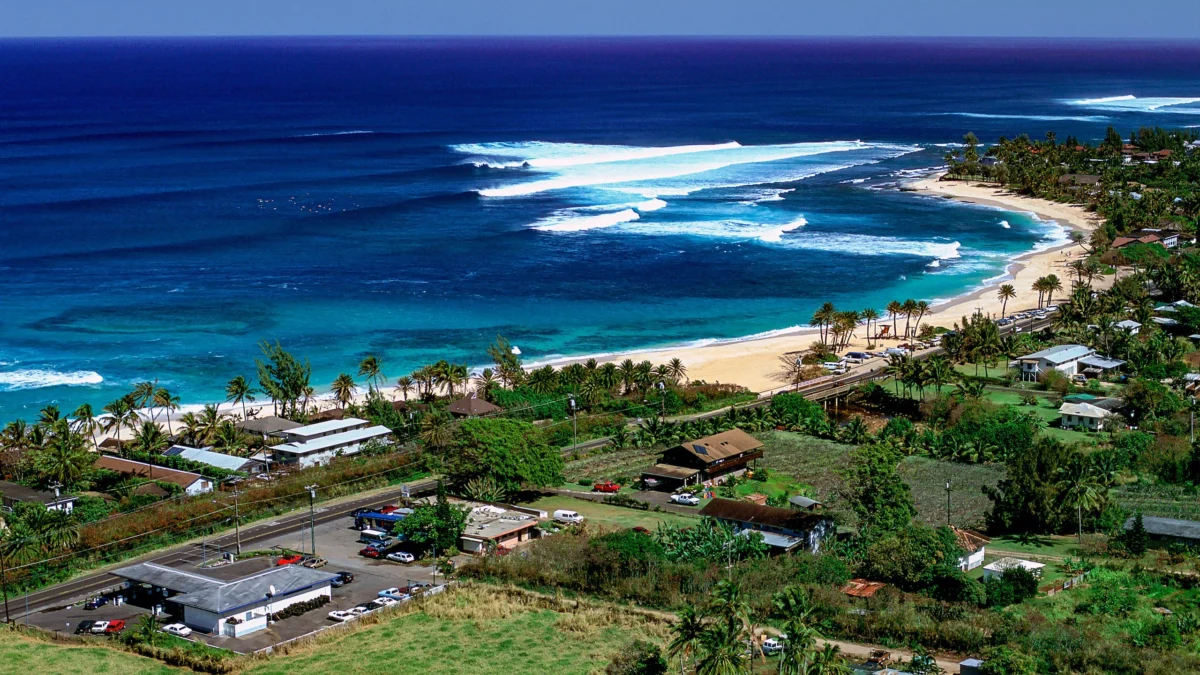
At the center of the November 20 town hall was homeowner Linda Donoso and an application submitted by Malaekahana LLC for a Special Management Area permit. The request targets Mōlaekahana Bay, a quiet and picturesque stretch of coastline lined with beachfront homes nestled between the communities of Kahuku and Lā‘ie.
According to the official public hearing notice, the requested permit would cover the construction of seven new homes located on Condominium Property Regime units numbered two through eight, while an existing home would be retained on CPR unit one. Furthermore, the development proposal includes the installation of six individual wastewater systems, necessary utility connections, driveways, walkways, fencing, rock walls, and a variety of other site improvements.
While the property is formally divided into eight separately owned condominium units, the City and County of Honolulu treats the parcel as a single, unified lot for local zoning and planning purposes. Donoso explained to officials that she personally took on the financial burden and administrative complexity of pursuing the coastal permit covering the seven additional homes because the other property owners were unwilling or unable to contribute to the costs.
Donoso, who has resided on unit one since 2016 and acquired unit six two years later, emphasized her personal ties to the land. "I am not a developer, I am building a home for my family. In order for me to build on this property, a legal CPR, I have to apply for an SMA permit," Donoso stated ahead of the hearing. "It will benefit all the lot owners. But in order for me to build, I have to pay for this SMA because no one else is."
Sharing further background, Donoso explained that she lost her husband to COVID-19 and deeply desires to keep her family close by. She noted that while there was no existing home on the specific lot designated for her family member at the start of the process, one of the homes was already standing—though unfinished—on a unit owned by her son, Allen Graham. Meanwhile, Michael Marchak, the city planner tasked with reviewing the application, confirmed to attendees that an active citation issued in August for building without a permit remained open on the site.
"All of this should be put on hold"
Despite Donoso’s personal explanations and her framing of the project as a family endeavor, neighboring residents remained deeply skeptical and unconvinced.
"Are we just going to short-term rent it out to as many people as possible?" Lenhoff asked the planning officials.
Although the Kahuku area remains predominantly residential, it is situated directly along Oahu’s highly active North Shore tourism corridor. According to Hawaii state tourism research reports, an estimated 12,100 visitors were present on a typical day in the region in 2024, putting continuous pressure on local infrastructure and housing stock.
For Naomi Fiatoa-Holani, who raised six children along the very same residential lane and was baptized in the nearby waters of the bay, the prospect of an expanded development bringing transient visitors hit profoundly close to home. "We purposely live there for the serenity and the culture of that area," she told planners during her testimony.
In reality, short-term vacation rentals are strictly prohibited in this part of Oahu. City zoning regulations explicitly bar property owners from renting out homes for stays of fewer than 30 consecutive days, regardless of whether a coastal permit has been granted. Furthermore, Donoso had a prior history involving municipal scrutiny over short-term rental advertising on the property.
The city previously cited her home on unit one in December 2023 following the discovery of an online advertisement offering stays of under 30 days. While Donoso acknowledged that she had previously rented to vacationers, she insisted that she immediately ceased accepting bookings after receiving the official notice. A second citation followed in April 2024 over a recurring advertisement, but city records indicate that both cases are now marked as corrected and closed. At the hearing, Donoso firmly disputed any suggestions that she intended to resume renting out her property to tourists.
She also pushed back against assertions that the proposed cluster of homes would transform into an unofficial commercial vacation rental community. Pointing to familial ties, she noted that her son owned unit two and her grandson had recently purchased unit four. "It isn’t going to be a vacation rental community," she asserted.
However, local residents questioned whether they could trust the applicants to adhere to local rules and municipal codes when construction on Graham’s home on unit two had already commenced without the required building permits. Honolulu’s August 13 violation notice documented the unauthorized construction of a two-story residential structure. During the hearing, neighbors alleged that construction crews continued working on the site even after municipal authorities issued stop-work orders, though city officials did not formally verify those specific timing claims during the proceedings.
"They’re still building," Lenhoff told planners, adding that she had submitted photographic evidence to document the ongoing activity.
That unauthorized construction incident carried profound emotional weight for local residents due to the deep historical and cultural significance of the ground beneath the homes. "That’s precious to us," Fiatoa-Holani said, gesturing toward the white sand along the bay. "That’s where our kūpuna are buried."
In Native Hawaiian tradition, ancestral human remains, known as iwi kūpuna, are considered sacred. They embody an enduring spiritual and familial connection linking the physical land, the deceased ancestors, and their living descendants. Adding weight to these community concerns, human remains were discovered back in 2018 during the construction of two homes in a neighboring three-home development, according to draft minutes published by the Oahu Island Burial Council.
While no human remains were reported as found on Graham’s specific unit during the recent unpermitted work, and an earlier archaeological investigation of the broader property had yielded no immediate cultural resources, that initial study had distinct limitations. Archaeological contractors excavated six test trenches across the parcel in 2021, but none of them were located on Graham’s unit. Furthermore, the applicants’ own submitted filings acknowledged that the State Historic Preservation Division considered the initial findings insufficient to definitively rule out negative impacts to buried cultural resources. Consequently, the state agency formally requested on-site archaeological monitoring during any future ground-disturbing work, explicitly noting that the area’s shifting sandy soils are historically known to harbor human burials.
Graham maintained that the construction work on his house had involved minimal new excavation, explaining that sand used behind a retaining wall originated from an earlier excavation for a driveway. "We didn’t go deep below the surface," he stated.
However, as public testimony drew to a close, planner Marchak asked whether anyone had actively monitored the construction work on unit two for potential archaeological discoveries. Donoso responded that the family had attempted to arrange for professional monitoring, explaining, "We couldn’t get it done till January."
Where is this wastewater going?
Beyond concerns regarding cultural resources and unauthorized construction, neighbors raised intense questions concerning local water quality. Residents described recurring floodwaters that they feared were carrying heavy silt and potential contaminants from the development site directly onto their shared residential lane.
Fiatoa-Holani recounted watching muddy water and debris wash down the exact road her children walked along daily to collect the mail. She expressed a firm belief that the persistent flooding had sickened local children, claiming that wading through the runoff had caused youngsters in the neighborhood to develop painful boils. "The boils wouldn’t go away," she testified.
While other residents also voiced complaints regarding property runoff and localized flooding, Fiatoa-Holani was the sole speaker who reported children developing skin boils as a result. Donoso strongly disputed the allegations during the hearing, stating, "It was completely dry during the rain," and adding that her own grandchildren had never experienced any such health symptoms. The official permit application likewise maintains that the property’s naturally permeable sandy soil would adequately retain stormwater on-site, with engineered dry wells proposed to help manage surface drainage.
Yet, underlying the dispute over stormwater management was a much larger engineering question: Could the relatively compact property safely accommodate the wastewater demands of eight distinct homes?
The submitted plans call for a total of six individual wastewater systems, with units three and four sharing a single system, and units seven and eight sharing another. Donoso noted that her son had already replaced an old, outdated cesspool on unit two with a modern septic system. However, Lenhoff challenged whether the parcel possessed sufficient physical land area to legally accommodate the six proposed wastewater systems. During his final series of questions to the development team, Marchak raised the exact same land-area concern.
Under established Hawaii state health rules, installing six separate wastewater systems requires a minimum of 60,000 square feet of usable land. Historical records show that the property originally measured 64,033 square feet, but a certified shoreline survey completed in 2015 documented a loss of 6,229 square feet of land due to coastal erosion.
That leaves 57,804 square feet incorporated into the application’s current calculations—leaving the project 2,196 square feet short of the stated state requirement. When Marchak directly asked whether the comprehensive wastewater plans had been formally submitted to the Hawaii State Department of Health for review, Roy Irei, the engineer representing the applicants, acknowledged that while he had informally discussed the proposal with state officials, he had not yet submitted it for official regulatory approval.
What happens next for the seven-home plan?
As the hearing underscored deep community divisions, Kahuku resident Evelyn Lane offered a much more direct demand regarding the future of the unfinished structure already standing behind Donoso’s primary home. "They should tear down the unpermitted building that they built, and I don’t know why that wasn’t brought up in this discussion," Lane told the planning officials.
The friction spilled beyond the formal municipal hearing room just days later. Local news outlet Hawaii News Now was interviewing Lenhoff about the ongoing controversy when Donoso unexpectedly approached them. "So you guys want to fight, you guys will have a fight," Donoso told the assembled neighbors, according to the station’s reporting. The heated argument reportedly lasted for roughly 20 minutes and concluded only after local law enforcement officers were called to the scene.
Speaking to the news station, Donoso reiterated that her son had been unaware he needed a municipal building permit for the structure, claiming the building was "already done by the time he was notified."
The development application, filed in October, projects that heavy construction work could begin in early 2027, with work on Donoso’s own personal home slated for the fourth quarter of that year. The full realization of the multi-home project is expected to span approximately five years following the eventual approval of all necessary permits.
Before any heavy machinery can move forward, however, the Honolulu City Council must review the case and decide whether to grant the critical coastal permit. Under municipal law, city planners have 45 days following the close of the public hearing to transmit their formal recommendation to the City Council, unless the applicant formally agrees to a time extension. Area residents will be afforded another formal opportunity to present public testimony when the City Council officially takes up the proposal, though an exact date for that legislative session has not yet been announced.
| Source | : | Finance Poetry |
| Author | : | rifanmuazin |
| Editor | : | Finance Poetry Editorial Team |