
UK Government Welfare Services Disrupted Following Cyber Incident
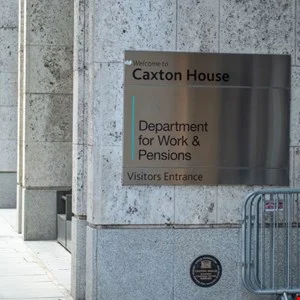
The United Kingdom’s Department for Work and Pensions (DWP), the massive government body responsible for the nation’s social security, pension payments, and disability support, has been forced to take its online services offline following a cyber incident. The disruption, which began late on November 26, has left millions of claimants unable to access critical digital portals, including those for Universal Credit and state pension management.
In an official statement released on the gov.uk website on November 27, the department confirmed the outage, characterizing the decision to sever connectivity as a proactive measure. While the department has moved quickly to contain the potential threat, the incident has highlighted the ongoing vulnerabilities within the UK’s sprawling digital public sector infrastructure.
Continuity of Payments Amidst System Downtime
Despite the widespread loss of digital access, the DWP has moved to reassure the public—specifically the approximately 20 million claimants and customers who rely on the department for their livelihoods—that financial distributions remain secure. The DWP stated clearly that regular benefit and pension payments have not been affected by the incident and will continue to be processed and paid as scheduled.
The primary impact of the outage, according to reporting from The Times, involves the inability for users to sign into their personal accounts or submit new claims. Steven Swinford, the newspaper’s political editor, noted on X (formerly Twitter) that the DWP initiated a total shutdown of its online services at approximately 21:00 GMT on November 26. For those attempting to navigate the complexities of Universal Credit or manage their retirement savings, the digital gateway remains shuttered until further notice.
The department is currently coordinating a multi-agency response to the incident. "We are working closely with the National Cyber Security Centre (NCSC) and the Government Cyber Coordination Centre to investigate and to bring services back online as quickly as possible and to minimise any disruption," the DWP stated.
In a move to protect vulnerable citizens from opportunistic bad actors who might exploit the confusion, the DWP issued a stern warning regarding security. The department reminded the public that it will never initiate contact via message to request bank details, nor will it send unsolicited links for users to click. Claimants are being advised to simply wait for the systems to be restored rather than seeking alternative, potentially malicious, digital avenues.
A Large-Scale Department Under Pressure
The scale of the disruption underscores the immense administrative footprint of the DWP. As of 2025, the department stands as one of the largest in the United Kingdom, employing nearly 97,000 staff members. Its responsibilities are vast, encompassing the administration of the State Pension and a comprehensive array of benefits aimed at supporting individuals of working age, those with disabilities, and those dealing with long-term ill health.
When a department of this size and reach is forced to "pull the plug" on its digital interface, the ripple effects are felt across the entire UK population. The current situation remains fluid, and the DWP has not yet provided specific details regarding the nature of the cyber incident, the methodology employed by the potential attackers, or whether any specific threat actors have been identified. The lack of information has fueled public concern, though officials maintain that the precautionary measures taken are intended to safeguard data and restore services in a controlled environment.

Escalating Concerns in the UK Cyber Threat Landscape
The disruption at the DWP does not occur in a vacuum; it arrives against a backdrop of intensifying warnings from the UK government regarding the resilience of the nation’s critical national infrastructure (CNI). In recent months, senior officials have been increasingly vocal about the reality that the UK faces a persistent and evolving cyber threat.
In October, Secretary of State for Defence Wes Streeting provided a sobering assessment of the modern threat landscape, advising the public to prepare for the possibility that cyber incidents could temporarily remove access to essential daily services. These include fundamental utilities such as mains water, sewage systems, telecommunications, and the internet. Such rhetoric signals a shift in government policy, moving away from the assumption that these services are impenetrable and toward a posture of "resilience and readiness."
The complexity of these threats is compounded by rapid technological advancement. In November, NCSC CEO Richard Horne issued a stark warning regarding the future of digital warfare, noting that AI-powered malware is increasingly expected to feature in ransomware attacks against UK infrastructure by 2028. This potential for automated, high-velocity attacks poses a significant challenge to the security protocols currently protecting government systems.
The vulnerability of government portals was also underscored in October, when a series of UK government websites were taken offline to mitigate the risk posed by "PHP2Shell" vulnerabilities. By disabling these sites ahead of scheduled security patches, the government demonstrated a clear willingness to sacrifice service availability for the sake of long-term system integrity.
The Debate Over "Pulling the Plug"
Industry experts suggest that the DWP’s current strategy of taking services offline is becoming an inevitable reality for large-scale public sector bodies. Trevor Dearing, the senior director of critical infrastructure at Illumio, explains that the interconnected nature of government networks creates a significant tactical disadvantage when a breach is suspected.
"Public sector networks are huge, interconnected and full of legacy systems," Dearing noted. "When you can’t be sure how far an attacker has moved, the only safe option is to pull the plug."
While this approach is effective at containing an active threat, it presents a significant dilemma for a government tasked with delivering vital social services. The DWP’s reliance on millions of people for whom these digital services are their only point of contact makes long-term shutdowns unsustainable. Dearing warned that while cutting off access is a necessary defensive maneuver in the immediate aftermath of an incident, it cannot serve as the definitive, long-term solution for managing the cybersecurity of critical services like pensions and welfare.
As the investigation into the DWP incident continues, the challenge for the government remains twofold: restoring access to these essential services for those who depend on them, and fortifying the underlying infrastructure against a future where such disruptive events may become increasingly frequent. For now, millions of citizens are left waiting for the green light, as the government continues its efforts to secure the digital perimeter of one of the nation’s most vital public institutions.
| Source | : | Finance Poetry |
| Author | : | rifanmuazin |
| Editor | : | Finance Poetry Editorial Team |