
Tetco M-2 Spot Prices and Forward Curves Highlight Winter Volatility Risks in Natural Gas Markets
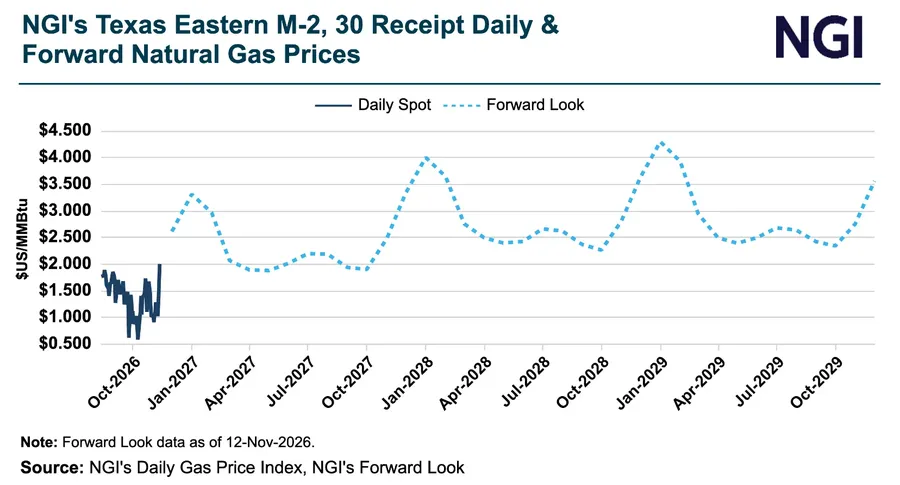
As the natural gas market continues to navigate shifting regional supply dynamics and seasonal demand pressures, market participants are keeping a close eye on key pricing hubs and forward curves. Recent analytical insights provided by the research and data team at NGI shed light on the intricate price behaviors characterizing major production and delivery regions, particularly focusing on Appalachian pipeline corridors like the Texas Eastern Transmission Corp. (Tetco) M-2 30 Receipt delivery point.
Understanding these localized dynamics requires a deep dive into how spot prices interact with long-term forward curves. NGI’s comprehensive market intelligence highlights the persistent threat of winter price spikes in constrained supply areas, offering valuable context for producers, midstream operators, and utility buyers alike. By examining historical spot pricing alongside forward curves stretching out toward the end of the decade, analysts can better decipher the subtle signals sent by the physical and financial natural gas markets.
The natural gas sector relies heavily on regional hub pricing to balance supply and demand imbalances. Delivery points such as the Tetco M-2 30 Receipt serve as vital barometers for Appalachian basin activity, reflecting both the abundance of local shale production and the physical limitations of pipeline takeaway capacity. When winter weather drives up residential and commercial heating demand, regional infrastructure often faces severe operational testing, leading to pronounced pricing volatility that separates regional hubs from national benchmarks like Henry Hub.
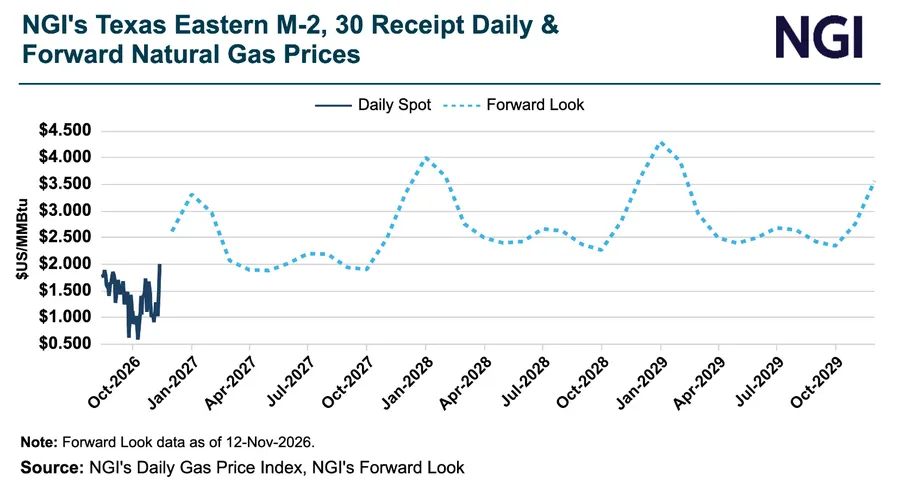
To capture these complex market movements, NGI’s research utilizes advanced data visualization tools, comparing day-to-day spot transactions with multi-year forward price curves. These comparisons are essential for stakeholders who must hedge against seasonal price spikes or secure reliable fuel supplies well in advance of peak heating months. The interplay between immediate cash prices and forward-looking contracts illustrates the cyclical nature of natural gas trading, where cold weather risk is continuously priced into future delivery obligations.
Behind these market insights is a wealth of industry expertise. Patrick Rau, Senior Vice President of Research and Analysis at NGI, plays a pivotal role in guiding the publication’s analytical content, including specialized offerings such as NGI’s LNG Insight, Mexico Gas Price Index, and Shale Daily. With more than two decades of dedicated experience in the oil and gas sector, Rau brings a seasoned perspective to the evolution of pipeline grids and regional pricing mechanisms.
Prior to his tenure at NGI, Rau built a robust foundation in energy finance and equity research. His background includes working as a sell-side equity research analyst covering natural gas pipelines for the Bank of Montreal, as well as serving as a financial analyst and internal consultant for the Amerada Hess Corporation. A Chartered Financial Analyst (CFA) charterholder, Rau holds a Bachelor of Arts degree in Economics from the College of William and Mary and earned his Master of Business Administration in Finance from Georgetown University. His extensive experience ensures that NGI’s market commentary remains grounded in rigorous financial analysis and a thorough understanding of physical infrastructure fundamentals.
As the natural gas landscape evolves amidst shifting regulatory frameworks, changing export demand from liquefied natural gas (LNG) terminals, and fluctuating production levels in major shale plays, transparent and accurate pricing data remains more critical than ever. Market participants rely on NGI’s continuous monitoring of hubs like Tetco M-2 to navigate the complexities of modern commodity trading. By maintaining a sharp focus on regional pipeline dynamics and forward curves, analysts and traders can better anticipate the seasonal shocks and structural shifts that regularly reshape the North American energy marketplace.
| Source | : | Finance Poetry |
| Author | : | rifanmuazin |
| Editor | : | Finance Poetry Editorial Team |