
US Natural Gas Exports to Mexico Face Seasonal Dip Ahead of Winter Despite Long-Term Growth Outlook
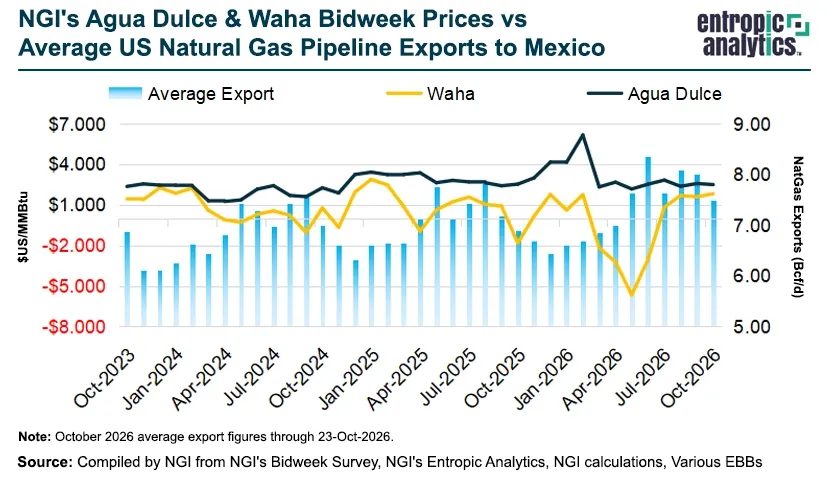
US natural gas exports to Mexico are experiencing a downward adjustment as the market heads into the winter season. Even as structural shifts, new liquefied natural gas (LNG) projects, and evolving industrial demand drivers appear on the horizon, cross-border pipeline flows have encountered a near-term cooling trend.
The seasonal fluctuation highlights the complex interplay between domestic US production centers, particularly in Texas basins such as Waha and Agua Dulce, and the expanding but seasonally variable energy demands of Mexico’s power generation and industrial sectors. While pipeline corridors connecting the United States to Mexico have served as a critical outlet for abundant US shale gas over the past decade, short-term macroeconomic and weather-driven factors continue to influence immediate trade volumes.
At a Glance
The recent contraction in southbound gas flows comes at a time when market participants are closely monitoring long-term structural changes across North American energy markets. Cross-border infrastructure has steadily matured, facilitating robust commerce between the two neighboring nations. Yet, as winter approaches, lower cooling demand in parts of Mexico, combined with routine maintenance and shifting power dispatch dynamics, often temporary dampens the velocity of pipeline nominations.
At the same time, the broader energy landscape is preparing for transformational shifts. The anticipated ramp-up of new LNG export terminals, both along the US Gulf Coast and within Mexico’s own coastal regions, is poised to reshape regional supply balances. These projects are expected to draw heavily on North American gas supplies, potentially tightening regional availability and altering traditional pricing relationships between benchmark hubs like Agua Dulce and Waha.
Market Dynamics and Regional Pricing
The relationship between US production pricing and export volumes to Mexico remains a cornerstone of the North American natural gas trade. Pricing markers at key trans-boundary hubs reflect the localized supply-demand fundamentals that dictate pipeline movements. When production outpaces domestic consumption in Texas and surrounding regions, discounted gas frequently finds its way southward, providing a reliable and cost-effective fuel source for Mexico’s power plants and manufacturing hubs.
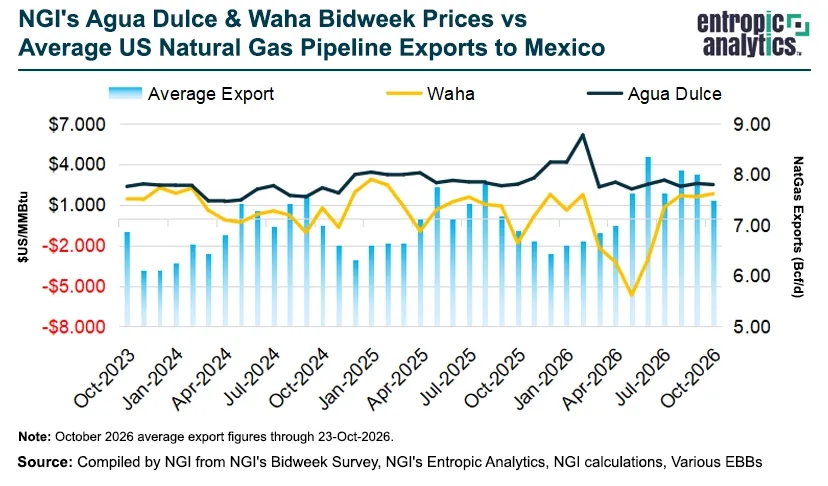
However, shoulder months and the transition into winter frequently introduce volatility and demand recalibrations. Power generation needs shift as ambient temperatures drop, reducing the reliance on gas-fired air conditioning load while simultaneously raising questions about heating requirements in specific northern Mexican industrial corridors. These seasonal adjustments often translate into the modest dips in export volumes observed ahead of the winter heating season.
Looking Ahead: LNG and Evolving Demand Drivers
Looking past the immediate winter shoulder period, market analysts are increasingly focused on the medium- and long-term demand drivers that could redefine the North American gas trade. Chief among these are the emerging LNG export facilities designed to liquefy US and imported gas for global markets. Several projects situated on the Mexican coastline, as well as expansions on the US side of the border, are moving through various stages of development, construction, and regulatory review.
These LNG ventures represent a fundamental shift in how natural gas produced in the United States and consumed or transiting through Mexico will be utilized. Rather than serving solely domestic industrial and power generation markets within Mexico, southbound pipeline capacity increasingly intersects with global export strategies. This integration connects Mexican energy infrastructure more directly with Asian and European LNG markets, creating new commercial opportunities and potential supply competition.
Regulatory and Cross-Border Considerations
As these trade patterns evolve, regulatory oversight remains a critical component of the cross-border natural gas ecosystem. Agencies in both the United States and Mexico continuously monitor pipeline capacity allocations, environmental compliance, and cross-border tariffs. The regulatory framework must adapt to the growing complexity of bi-national energy integration, particularly as private sector participation expands and new infrastructure projects seek the necessary permits to commence operations.
Market participants, pipeline operators, and industrial consumers alike must navigate this evolving regulatory terrain while responding to the day-to-day realities of commodity price fluctuations. Although current export volumes are easing as winter sets in, the underlying trajectory of North American energy interdependence points toward continued expansion, driven by the strategic imperative of secure, reliable, and abundant natural gas supplies across the continent.
| Source | : | Finance Poetry |
| Author | : | rifanmuazin |
| Editor | : | Finance Poetry Editorial Team |