
US Treasury’s Financial Crimes Enforcement Network Investigates Cybersecurity Breach
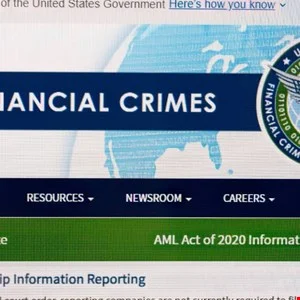
The United States Treasury Department’s Financial Crimes Enforcement Network (FinCEN) officially announced on November 25 that it is currently investigating a significant cybersecurity incident. According to the agency, unauthorized actors managed to gain access to a "limited subset" of its internal systems, prompting an immediate response from federal cybersecurity experts to secure the network and mitigate potential damage.
FinCEN serves as a cornerstone of the United States’ national security and financial integrity infrastructure. As the bureau responsible for safeguarding the financial system from illicit use, it handles critical reports regarding money laundering, terrorist financing, human trafficking, and a wide array of other financial crimes. Given the sensitive nature of the data managed by the agency—much of which involves intelligence gathered from financial institutions to track criminal enterprises—the breach has naturally drawn immediate attention from federal authorities and the cybersecurity community at large.
In the wake of the discovery, FinCEN officials moved quickly to contain the intrusion. As a proactive measure, the agency opted to take a portion of its digital services offline. This decision was designed to prevent the lateral movement of unauthorized actors within the network and to ensure that the integrity of the remaining systems could be verified before being restored to full operational capacity. While the agency has not provided extensive technical details regarding the origin or the scope of the threat actor’s activities, the decision to disconnect systems underscores the severity with which federal agencies treat any compromise of their internal digital environments.
Despite the disruption to some internal services, FinCEN was quick to reassure financial institutions and the broader public that its primary reporting channel remains functional. The Bank Secrecy Act Electronic Filing (BSA E-Filing) System—the secure, standardized online portal used by banks, credit unions, and other financial entities to submit required documentation—remains operational. This is a vital distinction, as the BSA E-Filing system is the primary vehicle through which the agency receives Suspicious Activity Reports (SARs) and Currency Transaction Reports (CTRs), both of which are essential for the ongoing efforts of law enforcement and intelligence agencies to track illicit financial flows.
To further accommodate the operational strain placed on financial institutions by this incident, FinCEN has officially extended the filing deadlines for necessary regulatory documents. This measure aims to alleviate the burden on compliance departments that may have been temporarily disrupted by the technical response to the breach. The agency emphasized that if a financial institution identifies an urgent matter that requires the immediate attention of law enforcement, they have a secure alternative path available. Filers are encouraged to utilize the Financial Institutions Hotline at 1-866-556-3974. FinCEN explicitly confirmed that this hotline is not impacted by the current service disruption and remains fully available for the reporting of time-sensitive suspicious activity information.
The incident at FinCEN does not appear to be an isolated event. It occurs within a broader, increasingly volatile landscape of cyber-attacks targeting the highest levels of the United States government. In recent days, multiple federal agencies, including the Federal Bureau of Investigation (FBI), the Central Intelligence Agency (CIA), and the Office of the Director of National Intelligence (ODNI), have launched investigations into a series of sophisticated data breaches. Reports indicate that these breaches have targeted highly sensitive databases, including the National Crime Information Center (NCIC), which serves as a central repository for law enforcement data, as well as various unclassified intelligence networks.
The timing of these incidents suggests a coordinated or at least concurrent effort by adversarial groups to probe the vulnerabilities of federal infrastructure. The fact that entities as diverse as the CIA and the Treasury Department are simultaneously addressing security compromises has sparked a wider conversation about the resilience of the nation’s digital architecture. For FinCEN, the challenge lies not only in securing its systems against future intrusion but also in maintaining the public and institutional trust that is required for the effective functioning of the Bank Secrecy Act reporting regime.

For financial institutions, the current situation necessitates a high degree of vigilance. While the primary filing portal remains open, organizations are advised to monitor the official FinCEN website and government communication channels for further updates regarding the restoration of offline services and the status of filing deadlines. The cybersecurity community, meanwhile, is watching closely to see if the techniques used in the FinCEN breach mirror those employed in the wider wave of attacks against the FBI and intelligence agencies. If a pattern emerges, it could indicate a large-scale campaign aimed at exfiltrating law enforcement data or mapping the intelligence-sharing networks that connect the Treasury Department to the broader national security apparatus.
The complexity of modern cybersecurity threats means that even agencies with robust defensive postures can fall victim to sophisticated intrusions. The use of the term "limited subset" suggests that the agency’s core defense mechanisms may have successfully contained the threat before it could penetrate the most critical databases. However, the exact nature of the "unauthorized access" remains a subject of intense investigation. Federal investigators, likely working in conjunction with the Cybersecurity and Infrastructure Security Agency (CISA) and private-sector forensic experts, are currently performing a deep-dive analysis of system logs, traffic patterns, and access credentials to identify the point of entry and the extent of any data exfiltration.
The impact of this breach extends beyond mere technical inconvenience. FinCEN plays a central role in the global fight against financial crime. Its ability to process and analyze vast quantities of data is what allows for the identification of illicit networks that span international borders. Any degradation in its operational capacity, even for a short period, potentially creates a gap in the information flow that criminals might attempt to exploit. By maintaining the BSA E-Filing system and providing clear guidance on alternative reporting methods, the agency is taking the necessary steps to minimize any impact on national security and law enforcement investigations.
As the situation unfolds, the agency is maintaining a policy of transparency, albeit within the bounds of what is permitted during an active investigation. Infosecurity magazine has reached out to FinCEN for further comment regarding the nature of the breach, the potential timeline for the restoration of the impacted services, and whether any specific threat actors have been identified. As of the current reporting, the agency continues to focus its efforts on incident response and system recovery.
The broader implications of these recent government-wide breaches are likely to prompt a review of federal cybersecurity protocols. As federal agencies increasingly digitize their workflows and rely on cloud-based infrastructure to handle sensitive intelligence and administrative data, the attack surface expands accordingly. The current incident at FinCEN serves as a sobering reminder of the constant pressure exerted by state-sponsored actors and sophisticated cyber-criminal syndicates against the U.S. government’s most vital information assets.
For now, the focus for all involved parties remains on stabilization. The financial sector, which relies heavily on the guidance and oversight provided by FinCEN, is waiting for definitive word on when full operations will resume. In the meantime, the agency’s commitment to maintaining its core functions while undergoing a rigorous investigation highlights the resilience required to manage national-level data systems in an era of persistent cyber threats. Further updates from the Treasury Department are expected as the forensic investigation progresses and the agency completes its assessment of the incident’s impact on its internal network security.
| Source | : | Finance Poetry |
| Author | : | rifanmuazin |
| Editor | : | Finance Poetry Editorial Team |