
Zipline Soars to $21.5 Billion Valuation After Securing $1.5 Billion in Funding and Massive Walmart Expansion
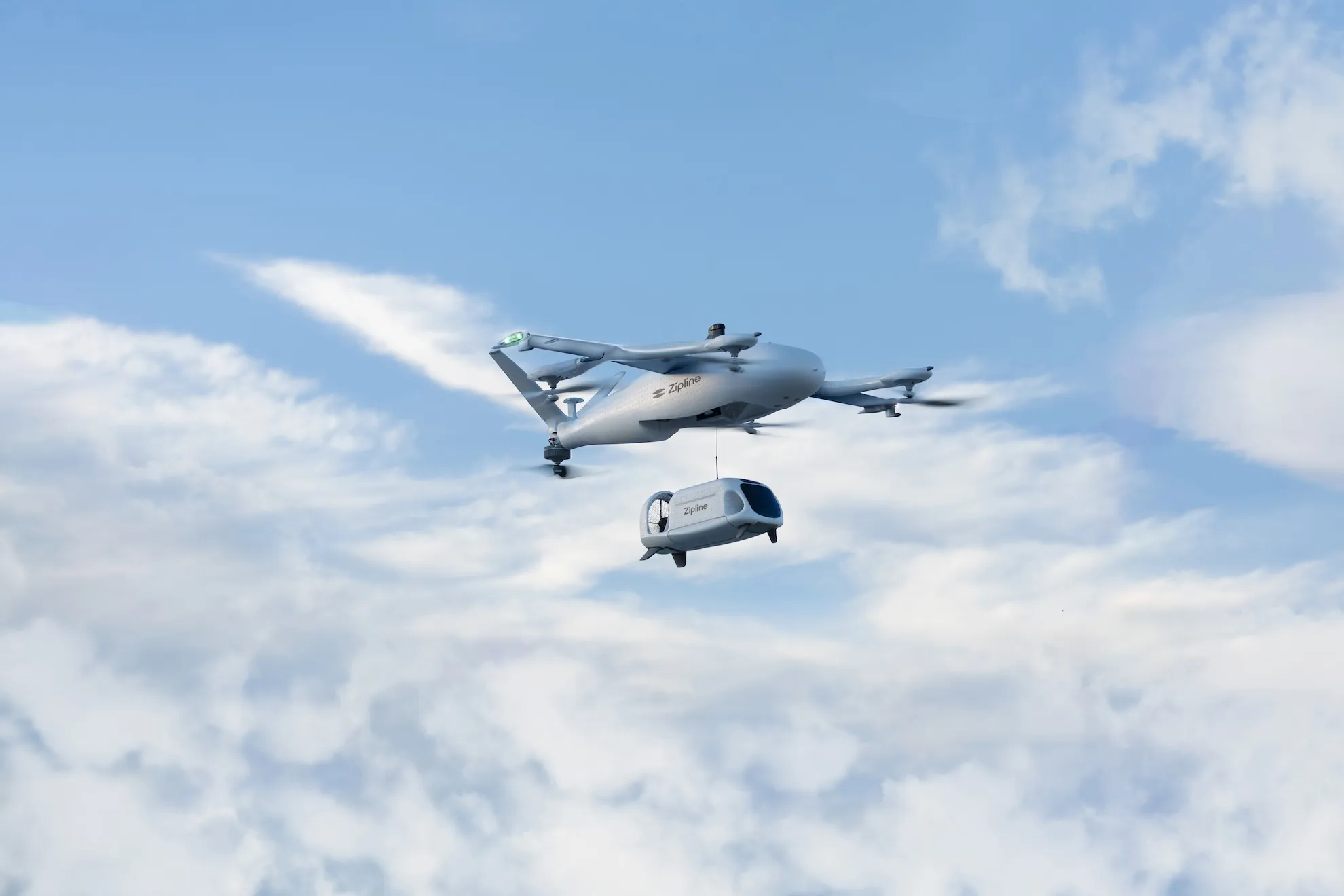
Autonomous drone delivery and logistics pioneer Zipline has reached a monumental milestone in its corporate trajectory, securing a massive $1.5 billion in a new fundraising round while dramatically ramping up its high-profile partnership with retail giant Walmart. Together, these two landmark agreements have significantly elevated the California-based startup’s industry profile, expanding its operational footprint and driving its corporate valuation to an impressive $21.5 billion.
The freshly minted agreement between Zipline and Walmart represents a multi-year commitment to dramatically scale up aerial logistics across the United States, adding 300 new drone delivery sites nationwide. While the two commercial heavyweights have maintained a drone delivery partnership since 2021, this new expansion marks an exponential leap forward from the modest 21 active delivery sites they currently operate together.
Simultaneously, the company’s massive $1.5 billion fundraising round underscores strong investor confidence in the viability and future of autonomous logistics. The financing was co-led by Paradigm, WCM Investment Management, and Layer Global, with substantial participation from a roster of prominent financial institutions and strategic partners, including Valor Equity Partners, Fidelity Management & Research Company, ride-hailing giant Uber, Tiger Global, J.P. Morgan, ARK Invest, and Salesforce Ventures.
Zipline leadership has indicated that the newly acquired capital will be strategically deployed to expand the company’s domestic manufacturing facilities. Furthermore, the startup plans to aggressively ramp up its hiring initiatives to build out a robust, nationwide drone delivery network capable of meeting surging consumer and enterprise demand.
The company’s rise to a $21.5 billion valuation has been more than a decade in the making. Founded in 2014, Zipline initially established its operational foundation on the African continent, deploying autonomous drones to solve critical medical supply chain challenges by delivering emergency blood supplies in Rwanda. The pioneering use case proved successful, prompting subsequent expansions into Ghana and Nigeria, where the company demonstrated the reliability and safety of its aerial delivery ecosystems in demanding operational environments.
The California-based enterprise eventually turned its sights toward the United States, launching its inaugural domestic operations in 2020 by ferrying vital medical equipment and healthcare supplies to Novant Health facilities in North Carolina. Building upon that regulatory and operational momentum, Zipline struck its initial landmark agreement with Walmart the following year, signaling its intent to conquer the massive consumer retail delivery market.
However, it was in 2022 that Zipline’s domestic business really began to take off in earnest. A critical turning point arrived when the company secured its Part 135 air carrier certification from the Federal Aviation Administration. This vital regulatory hurdle authorized Zipline to officially execute long-range commercial drone deliveries under stringent federal aviation standards, unlocking new commercial pathways and paving the way for a wave of high-profile partnerships. Among these alliances is an integration with Uber announced earlier this year, which brought Zipline drones directly into the Uber Eats delivery network.
Today, Zipline utilizes its proprietary technology stack to deliver a diverse array of goods—ranging from food and retail merchandise to agricultural supplies and essential health products—across five African countries, multiple major metropolitan areas in the United States, and Japan.
The company’s consumer home delivery service relies heavily on its cutting-edge Platform 2 drones. These specialized aircraft are engineered to carry payloads of up to eight pounds and efficiently travel to residential customers within a 10-mile radius. Meanwhile, Zipline continues to deploy its larger, heavy-duty Platform 1 drones for complex, long-range enterprise, business, and government missions, capable of covering an impressive 120-mile round trip on a single operational flight.
The market demand for these advanced logistics capabilities is clearly reflected in the company’s financial metrics. Zipline reported that its share of overall delivery revenue experienced a dramatic surge, climbing from 10.8% to 34.9% in the span between March and October of this year. With the influx of capital from its latest funding round, the company aims to accelerate this growth trajectory and push its market penetration metrics even higher in the months and years ahead.
| Source | : | Finance Poetry |
| Author | : | rifanmuazin |
| Editor | : | Finance Poetry Editorial Team |