
‘Boring is not bad’: CEO of Southeast Asia’s largest bank pitches Singapore as a haven amid global turmoil
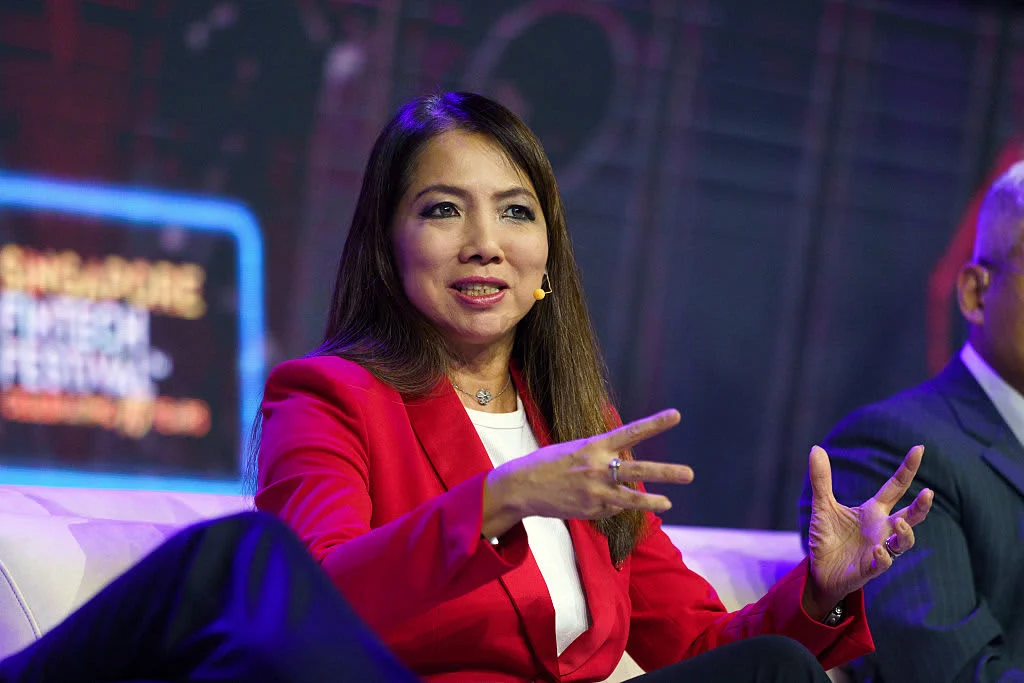
Speaking at the DBS Asia Future Forward conference in Singapore, DBS Group Holdings Ltd. Chief Executive Officer Tan Su Shan made a compelling case to international investors, arguing that the city-state’s predictable regulatory environment and robust economic foundations offer a much-needed sanctuary from worldwide uncertainty. As enterprises grapple with an onslaught of global disruptions—ranging from escalating trade wars and regional conflicts to severe weather patterns driven by climate change—Singapore continues to position itself as a reliable anchor for international commerce and capital.
Tan embraced the affectionate moniker often used to describe the island nation, highlighting its virtues in an era of unprecedented volatility. "I love it that the ‘Little Red Dot’ we all call home was open, predictable, and almost kind of boring," Tan told the audience at the conference, referring to Singapore by its widely recognized nickname. "In this huge time of volatility, ‘boring’ is not bad, right?"
The sentiment strikes at the heart of Singapore’s enduring appeal to multinational corporations and global wealth managers. The investing and business climate worldwide has been severely upended over recent years by a cascading series of crises. Ongoing trade tensions, unpredictable climate disruptions linked to El Niño weather phenomena, the persistent conflict in the Middle East involving Iran, and the protracted Russia-Ukraine war have collectively rewritten the rules of international trade. Against this backdrop of systemic instability, Singapore has retained its coveted AAA-rated sovereign debt status, maintained a remarkably stable political environment, and leveraged its strategic geographic position at the heart of Asia to cement its reputation as a global bastion of stability.
According to Tan, the core attributes that define Singapore’s macro environment are mirrored within the corporate DNA of DBS itself. The bank boasts what she describes as one of the safest credit ratings in the world, a distinction that underpins its growing appeal to institutional and retail investors navigating turbulent financial waters. Furthermore, the institution enjoys strong institutional backing that reinforces its fiscal standing. Temasek, Singapore’s state-owned global investment company, serves as the bank’s largest shareholder. As of March 31, Temasek managed an extensive portfolio of assets worth 518 billion Singapore dollars, equivalent to approximately $404 billion. This deep-pocketed state backing is widely viewed by market analysts as a cornerstone contributing to Singapore’s overarching financial resilience and the unshakeable confidence investors place in its premier financial institutions.
Tan emphasized that this unique combination of sovereign backing, pristine credit ratings, and strategic foresight places DBS in an exceptionally strong position to navigate the complex web of economic uncertainties currently reverberating across the globe. As supply chains undergo a fundamental restructuring in response to rising protectionism and geopolitical friction, the bank is actively positioning itself as an indispensable facilitator for businesses seeking to adapt to new commercial realities.
Elaborating on these supply chain realignments during an exclusive interview with CNBC on the sidelines of the conference, Tan pointed out the systemic vulnerabilities currently plaguing international commerce. "Trade and supply chains are all fragmented," she observed, detailing the daily challenges faced by corporate executives and supply chain managers worldwide. "If you need to diversify your upstream supply chain, just because you’re worried about geopolitics, because you’re worried about blockages, because you’re worried about the war and the Strait of Hormuz, DBS is a partner to help you … We can help our customers pivot from one market to another quite quickly."
This agility in helping corporate clients navigate complex logistical and geographic shifts has become a core competency for the bank. As traditional trade routes face mounting threats from regional conflicts and maritime bottlenecks, businesses are increasingly compelled to redesign their procurement and manufacturing networks. By offering comprehensive financial solutions, advisory services, and cross-border connectivity, DBS aims to ease this transition, ensuring that its clients can maintain operational continuity even as the external environment remains fraught with peril.
Beyond the immediate challenges of geopolitical fragmentation and supply chain restructuring, Tan also turned her attention to the profound structural transformations reshaping the modern workplace. Addressing management strategies in the rapidly advancing age of artificial intelligence, she offered insights into the evolving nature of human capital and the imperative of identifying individuals with the right skill sets to harness emerging technologies effectively. The rapid integration of artificial intelligence across the financial sector has placed a premium on adaptability, prompting leaders to rethink traditional hiring paradigms.
For Tan, the key to building a resilient workforce capable of thriving alongside advanced technology lies not in technical certifications alone, but in fundamental human traits that cannot be easily replicated by algorithms or acquired through standard training modules. "Humans intrinsically are nimble and agile," Tan noted, sharing her philosophy on organizational leadership and talent acquisition within the financial services industry. "I tell all my managers, hire for attitude — because you know you can’t buy attitude, you can’t train attitude."
This emphasis on cultural fit, resilience, and an innate willingness to embrace change reflects the broader mindset required to steer a major financial institution through an era of profound transformation. Whether managing the complexities of global trade fragmentation or integrating cutting-edge artificial intelligence into everyday banking operations, leaders like Tan are banking on a combination of foundational stability and human adaptability. As the international community continues to grapple with a myriad of unpredictable economic and geopolitical headwinds, the narrative coming out of Singapore’s premier financial institution remains clear: in an unpredictable world, a steadfast commitment to predictability, robust partnerships, and the right human attitude may well be the most valuable assets a business can possess.
| Source | : | Finance Poetry |
| Author | : | rifanmuazin |
| Editor | : | Finance Poetry Editorial Team |