
Don Jr.’s Investor Business Partner Abruptly Resigns From Fannie Mae Board
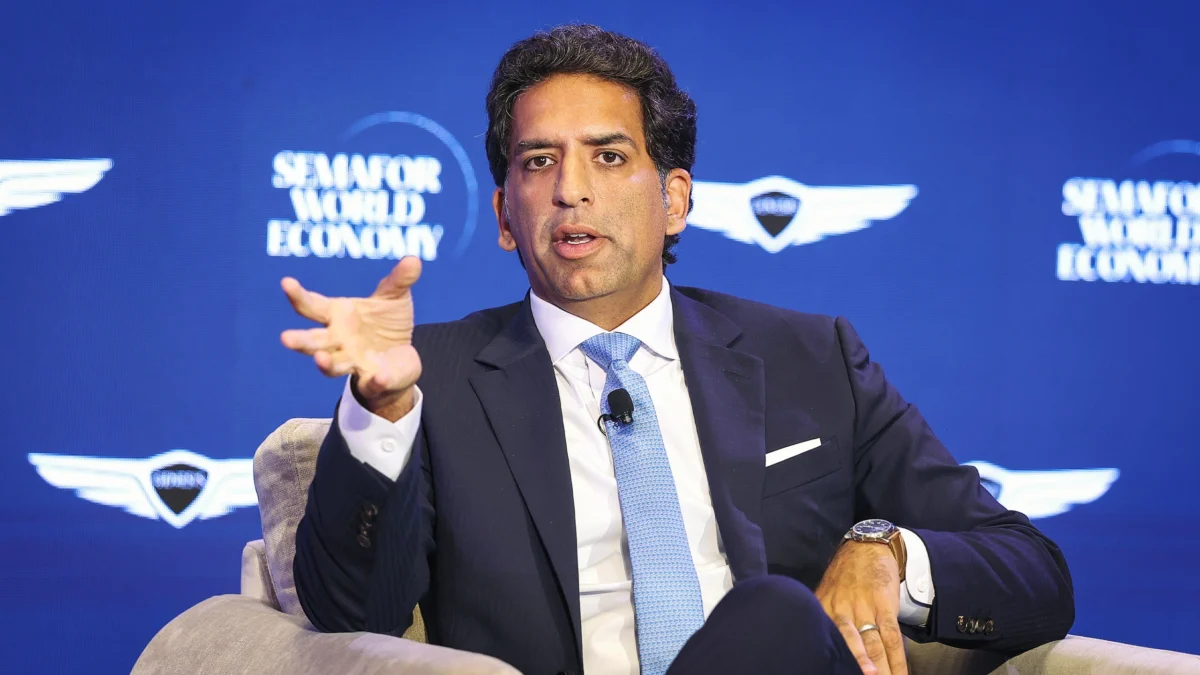
The government-sponsored mortgage giant disclosed the departure in a regulatory filing submitted to the Securities and Exchange Commission on Tuesday. According to the filing, Malik’s resignation from the board of directors took effect on October 30, concluding a tenure that began earlier in the year in April 2025.
Malik is widely recognized in financial and political circles as the president of the venture capital firm 1789 Capital as well as the founder of the investment bank Farvahar Partners. His professional ties to the broader Trump family extend beyond political alignment; notably, Donald Trump Jr. joined 1789 Capital as a partner in November 2024, further solidifying the close professional relationship between Malik and the inner circle of the administration.
When Malik was originally appointed to the Fannie Mae board in April 2025, federal housing officials welcomed his arrival with high expectations regarding his financial acumen. Federal Housing Finance Agency Director Bill Pulte, who chairs the board, took to social media at the time to praise the appointment, posting on X that Malik brought great capital markets, legal, and investment experience to the institution as part of broader efforts to support the housing market.
Fannie Mae’s annual report, published in February, previously highlighted Malik’s professional background, noting that he brought extensive experience in financial services and capital markets alongside a unique blend of legal, entrepreneurial, and strategic leadership expertise. Regulatory disclosures show that Malik was compensated $114,222 last year for his service on the board.
During his time as a member of the eight-person board, Malik participated in governance at a critical juncture for Fannie Mae. The mortgage giant has been actively enlarging its balance sheet at the direct behest of President Donald Trump. As part of broader economic policy initiatives, Trump has previously pushed the government-sponsored enterprise to purchase mortgage-backed securities in a strategic bid to help lower mortgage rates for everyday homebuyers navigating a challenging housing market.
Beyond purchasing securities to influence borrowing costs, the broader future of Fannie Mae and its sibling enterprise, Freddie Mac, has remained a subject of intense discussion within conservative policymaking circles. President Trump has frequently floated the possibility of ending the long-standing government conservatorship of Fannie Mae and Freddie Mac. Such a historic move could potentially pave the way for a massive initial public offering valued at approximately $30 billion, returning the mortgage giants fully to the private sector.
However, despite these long-term ambitions, the Trump administration has spoken relatively little about those specific privatization plans in recent months. The reticence comes as Americans across the country continue to grapple with persistent inflation, economic uncertainty, and elevated housing costs, keeping the immediate focus of housing policy squarely on affordability and market stability rather than structural corporate reorganization.
Despite broader economic headwinds and political debates surrounding housing finance, Fannie Mae’s underlying financial performance has remained robust. The government-sponsored enterprise recently reported a substantial $4.2 billion in net income during the third quarter alone. Furthermore, over the course of the year, Fannie Mae has provided approximately $344 billion in market liquidity, directly supporting an estimated 295,000 homebuyers nationwide.
The company’s overall financial strength has also expanded dramatically over recent years. Driven by steady operational revenues and retained earnings, Fannie Mae’s net worth has swelled significantly, rising from $47.4 billion in 2021 to an impressive $119.6 billion by the close of the third quarter.
With Malik’s departure effective at the end of October, Fannie Mae has yet to name a permanent replacement for his seat on the board of directors. The company’s remaining board members will continue to oversee the enterprise as it navigates ongoing housing market dynamics, shifting interest rate environments, and the broader policy directives of the federal government.
| Source | : | Finance Poetry |
| Author | : | rifanmuazin |
| Editor | : | Finance Poetry Editorial Team |