
Technical Glitches and Voting Delays Reported Across the United States During Midterm Elections
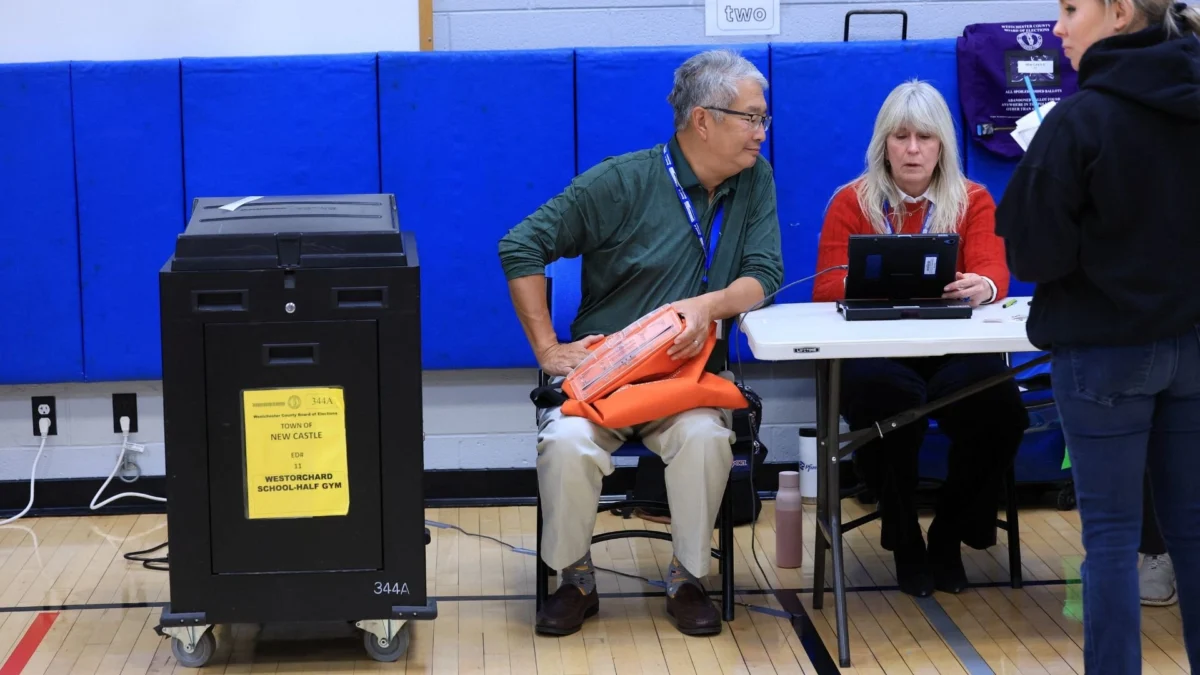
As voters head to the polls across the United States for the midterm elections, election administrators in several key districts have reported scattered technical issues and equipment malfunctions. While federal, state, and local officials have been quick to characterize these incidents as minor inconveniences rather than systemic failures, the disruptions have nevertheless prompted temporary polling station closures, extended voting hours, and heightened scrutiny from both the public and political campaigns.
The midterms represent a critical test for election infrastructure nationwide, as local jurisdictions balance the implementation of new security features with the reliable processing of millions of physical and electronic ballots. While the vast majority of polling locations have operated smoothly since doors opened early Tuesday morning, a handful of notable technical challenges have emerged in states spanning from the Northeast down to the Sun Belt and across the country.
Westchester County Faces Ballot-Thickness Issues with Liberty Vote Machines
One of the more prominent technical hurdles occurred in Westchester County, New York, situated just north of New York City. Local officials reported that electronic scanners meant to automatically read physical paper ballots were encountering persistent reading errors. The root cause of the malfunction, according to county administrators, was that the paper stock utilized for the official ballots was simply too thick for the legacy-styled intake slots of the optical scanning equipment.
Al Jazeera correspondent Kristen Saloomey, reporting live from Tarrytown, New York, explained that local election officials swiftly pivoted to a contingency protocol. Rather than turning voters away or keeping them waiting indefinitely, poll workers began securely collecting the unread paper ballots in specialized compartments to be counted manually at a later time.
The tabulating machines in question are manufactured by Liberty Vote, a company formerly known as Dominion Voting Systems. Dominion has previously navigated a deeply contentious political landscape, having faced aggressive, unsubstantiated allegations from former US President Donald Trump and his allies regarding vote tabulation during past national election cycles. Given this historical context, local election officials were exceptionally proactive in communicating their security and transparency measures to the public.
"Election officials are reassuring that they will be counted manually after everything is done," Saloomey reported from the ground in New York. "And we don’t know of this issue in other districts across New York or the United States, and there are dozens that do use this system."
To maintain absolute public trust and preempt the circulation of unverified rumors or conspiracy theories, Westchester County officials announced that all affected ballots would be transported directly to the central Board of Elections facility under a formal police escort. Furthermore, representatives from all major political parties, along with legal counsel representing diverse interests, were invited to observe the secure transport and subsequent manual counting process to ensure complete transparency and accountability.
Extended Voting Hours and Technical Snags in Other Key Jurisdictions
Beyond the challenges faced in New York, a series of isolated technical malfunctions and logistical setbacks were documented in various other states, prompting local and state election boards to take corrective action to guarantee that every eligible voter retains the opportunity to cast a ballot.
In Broward County, Florida, one of the most populous counties in the state, the opening of voting was abruptly delayed for approximately twenty minutes at the start of the day. The delay was attributed to the unexpected malfunction of a newly introduced security feature designed to safeguard the integrity of the electronic check-in and ballot-issuing network. Once technical support personnel resolved the software handshake issue, operations resumed normally, though the brief morning delay created manageable queues outside select precincts.
Further north in North Carolina, the state Board of Elections weighed whether to exercise its authority to extend voting by an entire hour across seven distinct counties. This consideration followed widespread reports of "technical issues" that temporarily hindered the efficient check-in of voters and the processing of ballots in those specific jurisdictions. State officials emphasized that extensions are standard administrative procedures designed precisely to offset time lost due to technical downtime, ensuring that voters who arrived before the scheduled closing time are not disenfranchised.
In the desert Southwest, Arizona’s Maricopa County—a historically closely watched battleground for national elections—experienced its own localized disruption when a neighborhood polling station located inside a school had to be temporarily closed. The temporary suspension of voting was triggered by an unexpected power outage that knocked out local lighting and electronic poll books. Technicians and utility crews worked swiftly to restore power, and while voting was briefly paused, election officials confirmed that contingency generators and battery backups were evaluated to prevent extended delays.
Meanwhile, in several counties across Pennsylvania, another critical swing state, voting hours were extended by thirty minutes beyond the legally mandated closing time. County officials pointed to "machine setup issues" that occurred early in the morning, which temporarily delayed the proper initialization and calibration of electronic voting systems in multiple precincts. By extending the operational hours of these specific polling locations, election administrators sought to balance the scales for voters who faced morning obstacles.
National Response and Election Integrity Safeguards
As reports of these disparate technical issues circulated through media outlets and social platforms, federal cybersecurity and election security agencies reiterated that the incidents are standard occurrences in an undertaking as massive as a United States national election. Managing tens of thousands of polling places involving millions of individual machines naturally produces isolated mechanical and software friction.
Election security experts have consistently praised local jurisdictions for having robust contingency plans in place. Whether through the use of provisional ballots, emergency power supplies, manual hand-counts under bipartisan observation, or legally authorized extensions of polling hours, the system is designed to absorb these challenges without compromising the ultimate accuracy or security of the final vote count.
As voting draws to a close in these affected districts, attention now shifts from the logistical hurdles of the daytime hours to the complex, highly scrutinized process of tabulation, reporting, and result verification. Local election boards across New York, Florida, North Carolina, Arizona, Pennsylvania, and beyond remain committed to ensuring that every vote is accounted for securely, transparently, and in accordance with state and federal election laws.
| Source | : | Finance Poetry |
| Author | : | rifanmuazin |
| Editor | : | Finance Poetry Editorial Team |