
Midterm Blue Wave Delivers Key Victories Over Cost of Living, but Economists Warn Quick Inflation Relief Is Unlikely
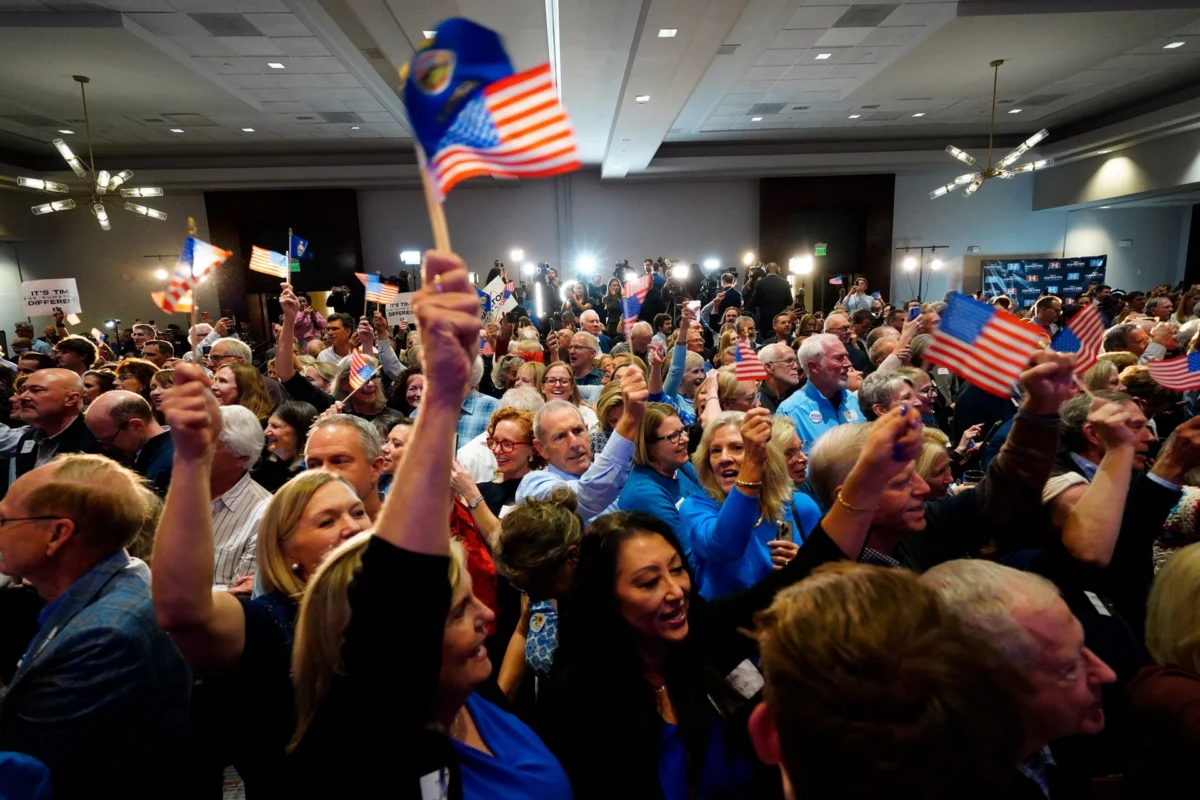
Voters deeply frustrated by the soaring cost of living have handed Democrats a series of crucial victories in the midterm elections, fueled by campaign promises to make everyday expenses more manageable for American families. However, financial experts and economists caution that it may take considerable time before the relentless upward pressure on consumer prices truly begins to stabilize.
With state election officials continuing to process ballots across the country, the overall electoral landscape has solidified enough to confirm that Democrats are poised to reclaim control of both the House and the Senate when the new congressional term begins on January 3. A notable blue wave swept through numerous regions, propelled by exit polls that underscored widespread voter dissatisfaction with economic decisions made under the Republican and Trump administrations, which many citizens hold directly responsible for driving up inflation. Data from an NBC exit poll vividly illustrated this sentiment, revealing that an overwhelming 75% of participating voters characterized the current state of the U.S. economy as either "not so good" or "poor."
Despite the shifting balance of power in Washington, economists emphasize that citizens hoping for immediate relief from elevated prices should significantly temper their expectations. Even with a Democratic majority taking the reins in Congress, any legislative solutions will ultimately require the signature of President Donald Trump—whom the president himself playfully dubbed "Mr. Veto" during a recent interview with the New York Post.
Policy experts who spoke with USA TODAY noted that while there might be theoretical incentives for both major political parties to find common ground—particularly concerning urgent issues like housing and health care affordability—bipartisanship within Capitol Hill alone will likely fall short of bringing the nation’s stubborn inflation under control.
"Affordability issues and price issues don’t have easy fixes," said Mike Skordeles, head of U.S. economics at Truist Advisory Services. "That’s the difficulty."
War, Tariffs and AI Have Boosted Prices
The high consumer prices plaguing households across the nation significantly predate President Trump’s second term in office. Annual inflation has stubbornly remained above the Federal Reserve’s targeted 2% threshold for more than five years. While consumer price spikes initially accelerated during the height of the COVID-19 pandemic and never truly retreated to historical baselines, the rate of increase had been on a mostly downward trajectory until inflation resurged sharply this year.
Throughout 2026, inflationary pressures have accelerated once again, driven in large part by the ongoing war in Iran, the massive infrastructure buildout surrounding artificial intelligence, and broad sweeping tariffs.
"The extent to which the new Congress will be able to substantially revert any of those causes seems to be quite low," observed Francesco D’Acunto, an associate professor of finance at Georgetown University.
What’s Next for Iran?
The military conflict involving Iran has emerged as one of the primary catalysts for surging inflation over the past year.
Ongoing blockades in the vital Strait of Hormuz, coupled with persistent security conflicts in the Red Sea and the protracted Russia-Ukraine war, have severely constrained the global oil supply. This tightening of petroleum availability has directly translated into punishingly high prices at the gas pump for everyday American commuters. Furthermore, the constrained supply has caused diesel fuel prices to soar—an increase that ripples across the entire commercial sector, impacting every business that relies on freight and transport to move goods, thereby fueling higher retail prices across the board.
To put the economic toll into perspective, consumer prices were climbing at a moderate 2.4% year-over-year rate in February before the outbreak of the war in Iran. By September, that annual figure had accelerated to 3.7%, significantly outpacing the modest wage growth experienced by the typical American worker.
For prices to genuinely stabilize and reverse course, economists generally agree that there must be a meaningful de-escalation in geopolitical conflicts. For that diplomatic milestone to occur, President Trump’s administration will almost certainly need to be actively on board.
"Irrespective of the fact that formally after 60 days of war activities, there needs to be some backing of Congress, we have seen in the past that other administrations have actually kept following their agenda when it comes to many of these foreign operations," D’Acunto explained.
A successful diplomatic agreement to end the war would almost certainly pave the way for lower global oil prices over the long term. However, D’Acunto cautioned that Iran might remain hesitant to return strictly to the pre-war status quo, and maritime shippers could potentially face lingering fees or surcharges for navigating waters through the strait that were once entirely free of transit tolls.
In the immediate short term, the political shift brought on by the midterm blue wave has already exerted a downward pull on oil prices. Crude benchmarks fell by approximately 9% on November 4 as financial markets and investors rapidly reassessed the rising probability of geopolitical de-escalation following Republican losses at the ballot box.
What’s Next for AI?
The explosive growth of energy-intensive data centers is driving up consumer prices in select product categories, but recent Democratic victories at the state level could potentially slow down the rapid, unchecked AI infrastructure buildout.
Voters in key battleground states such as Ohio, Texas, and Georgia elected Democratic gubernatorial candidates who campaigned explicitly on enacting temporary moratoriums and halting the construction of new data center sites. Simultaneously, voters in dozens of local jurisdictions across the country successfully passed municipal bans or strict zoning restrictions on commercial data center developments.
Beyond widespread community grievances regarding environmental impacts and persistent industrial noise pollution, everyday Americans are increasingly worried about how the massive resource consumption of data centers directly affects their personal finances. Surging corporate demand for advanced semiconductors, specialized memory chips, and computer hardware has driven up retail prices for these critical components. Slowing the pace of the AI infrastructure buildout may ultimately provide some much-needed price relief for those specific goods and the wider array of consumer electronics they power, according to Skordeles.
Moreover, Americans have increasingly blamed data centers for contributing to their rising monthly utility bills. In geographic regions where these facilities are most densely concentrated, the staggering volume of electricity required to power banks of servers drives up overall energy demand and, consequently, spikes electricity rates for residential customers.
In response, state lawmakers are expected to push forward with legislative efforts designed to shift a larger portion of that heavy financial burden away from everyday ratepayers and onto the tech companies operating the data centers.
"In Ohio, utility prices are up 15% year over year," Skordeles noted. "If you’re the data center and you require all these redundancies and upgrades and what have you, they probably should be bearing more of the cost. That’s probably where things are heading, especially when you talk about it on a state level because accountability is a lot closer to home."
What’s Next for Tariffs?
Tariffs, which have served as a foundational cornerstone of President Trump’s economic and trade strategy, have also significantly contributed to the broader resurgence of inflation since the administration imposed aggressive import taxes on the majority of the nation’s core trading partners last year.
Despite the electoral shift in Congress, these tariffs are largely unlikely to disappear anytime soon, according to Blake Harden, a specialized trade policy expert at Ernst & Young and a former attorney for Customs and Border Protection.
President Trump is currently executing these trade policies by relying on existing statutory authorities granted by Congress, including Section 301 of the Trade Act of 1974 and Section 232 of the Trade Expansion Act of 1962. These long-standing legislative provisions grant the executive branch sweeping discretionary power to impose tariffs without needing fresh congressional approval.
"There will be more oversight. There will be more scrutiny," Harden said regarding the dynamic between the White House and the newly empowered legislative branch. "But in terms of actually changing the tariff rate, that is not something Congress is going to be able to do. It would have to pass legislation to reform those authorities, and that’s pretty unlikely."
Nevertheless, trade analysts like Harden and economists such as Skordeles remain cautiously hopeful that the United States and its northern neighbor, Canada, might successfully negotiate and strike a modernized trade agreement in the near future.
"There was some increased pressure leading up to the election for states that do a lot of trade with Canada, and so now that the midterms have come and gone, you sort of lose that as an action-forcing event, but my sense is that the talks will continue," Harden concluded.
| Source | : | Finance Poetry |
| Author | : | rifanmuazin |
| Editor | : | Finance Poetry Editorial Team |