
Inside the TechCrunch Founder Summit 2026: Practical Strategies, Live Pitching, and Meaningful Networking in Boston
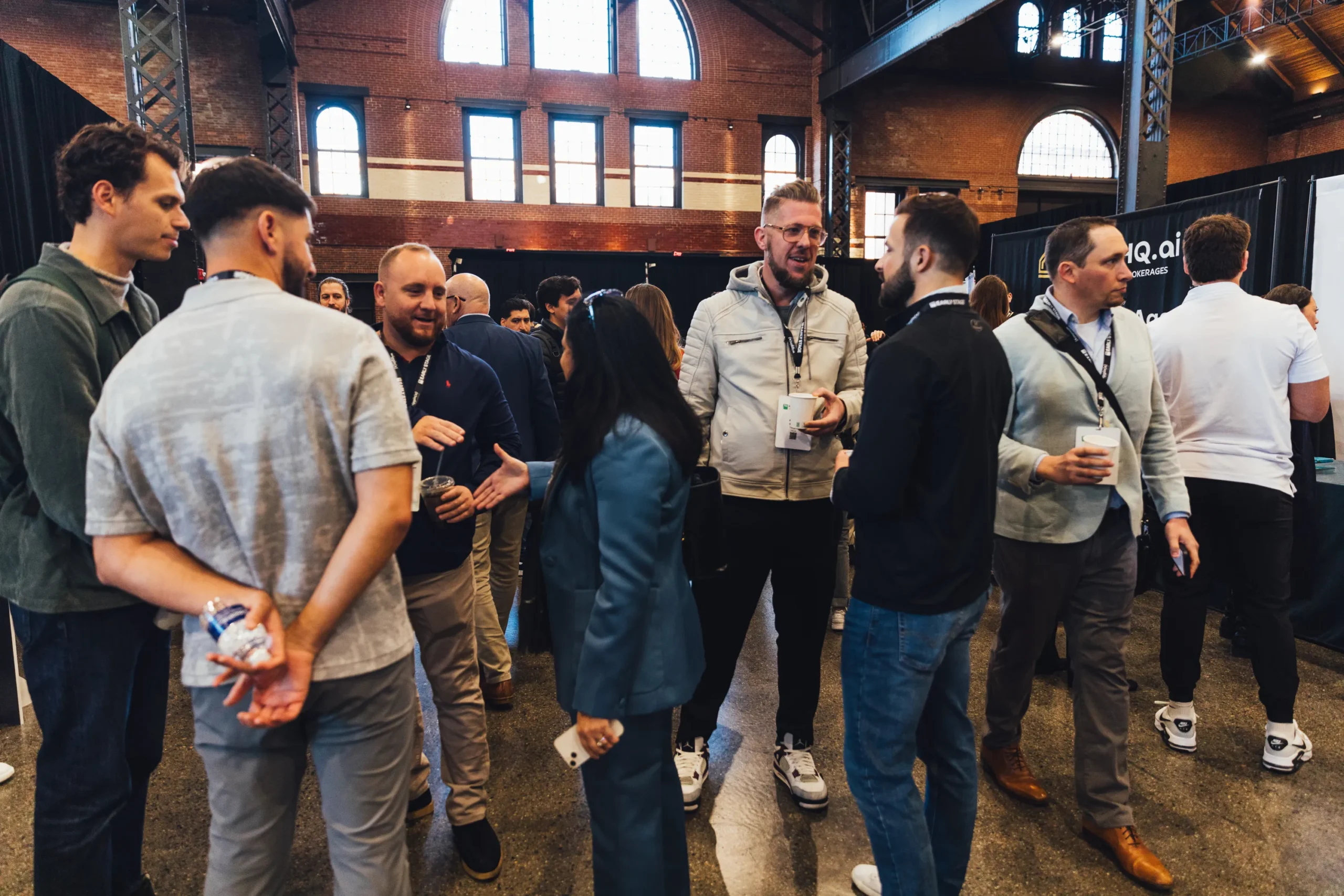
You can learn a great deal from attending a stellar founder session led by industry veterans and seasoned investors. However, veteran entrepreneurs and startup operators will often tell you that the conversation that genuinely changes the trajectory of your business usually happens five minutes after the session concludes, in the hallway, or over a cup of coffee. With the TechCrunch Founder Summit 2026 taking place tomorrow, that dynamic is precisely what makes ensuring you are in the room so critical. The entire event format has been meticulously designed to help founders learn, adapt, and collaborate in diverse ways throughout a single, high-impact day.
On November 4, the TechCrunch Founder Summit 2026 brings together an ambitious cohort of early-stage founders, seasoned entrepreneurs, and top-tier investors at the historic SoWa Power Station in Boston. The one-day gathering is engineered for practical learning, candid conversations, live startup pitching, smaller roundtables, and targeted networking designed to address the real-world friction points of company building.
For founders looking to attend, registration offers specific incentives, including opportunities to save on individual passes alongside buy-one-get-one ticket offers and substantial discounts on group bundles.
All-day founder bootcamp
Start with the Build Stage: Practical lessons for building what comes next
The Build Stage serves as a foundational track for the summit, focusing intently on the critical decisions founders must make while they are still shaping, testing, and growing their businesses. These sessions dive deep into the fundamental mechanics behind building a sustainable company, spanning everything from customer distribution and capital raising to team construction and narrative framing.
Hunter Worland of NEA opens the conversation by examining why distribution can frequently become a startup’s definitive competitive advantage, particularly in market environments where having strong underlying technology alone is simply not enough to win and retain customers. Following this, Kristen Craft of Fidelity Private Shares delivers a contemporary, data-driven view of current fundraising trends. Craft’s insights help founders understand how the broader capital environment is shifting and what those macro changes mean for how startups should strategically approach their next raise.

The stage also gets deeply tactical regarding the human and communicative elements of early-stage growth, addressing how to build high-performing teams and sharpen the core story told to investors, customers, and prospective hires. Dave Balter of True Ventures and Edisyl tackles a deceptively simple yet high-stakes question: Does your pitch genuinely earn the next conversation? The overarching value of the Build Stage is straightforward and pragmatic: these are lessons that founders can take straight back to their companies and implement immediately.
Use the Impact Stage to think about what happens after something starts working
If the Build Stage is fundamentally about creating initial momentum, the Impact Stage is designed to address what happens once that momentum becomes undeniable and operational complexity sets in. This track provides a space for founders to step back from day-to-day firefighting and evaluate larger strategic decisions concerning product-market fit, scaling operations, enterprise relationships, executive leadership, and long-term enterprise growth.
Steve Fredette, president, co-founder, and director of Toast, brings the invaluable perspective of someone who has built and successfully scaled one of Boston’s most recognizable and enduring startup success stories. Alongside him, Rudina Seseri, founder and managing partner of Glasswing Ventures, explores the delicate tension that every successful founder eventually faces: knowing precisely when to aggressively scale and when hitting the brakes may actually protect the long-term health of the business.
Kent Bennett of Bessemer Venture Partners tackles the nuanced reality of product-market fit prior to enterprise scale, helping founders think more critically about whether the customer signals they are observing truly justify embarking on the next phase of growth. Meanwhile, Chase Garbarino, CEO and co-founder of HqO, brings the conversation home with the Boston Founder Playbook, offering a unique perspective on building ambitious, venture-backed companies outside of traditional tech hubs like the San Francisco Bay Area.
The Impact Stage creates vital space for founders to lift their heads out of the operational weeds and assess whether they are scaling the right things, in the right way, at the precise right moment.

Go deeper in the roundtables
While main stage sessions offer broad strategic perspective, the summit’s smaller roundtables provide the intimacy required to address highly specific challenges. These sessions are built around focused problems that many founders are actively trying to solve in real time, ranging from entering notoriously difficult industry verticals and building enterprise trust to creating lean operational teams and opening doors with major enterprise customers.
Chirag Shah of Define Ventures dives directly into what happens when a startup’s first target vertical is simultaneously one of the most difficult to penetrate. In a separate technical session, Shishir Tewari of Procore Technologies moves the artificial intelligence conversation away from broad industry hype and toward the practical, engineering-level challenge of reducing model hallucinations by providing better enterprise context.
Similarly, Merve Kitapci of ADIN.AI gets highly specific about enterprise sales execution, detailing what it genuinely takes to land major global customers even before securing a Series A round. Andy Tang of Draper Associates opens a different kind of founder dialogue, asking participants how to navigate building something for which the market does not yet even have an established name. Rounding out the roundtable tracks, Linden Tibbets of IFTTT explores how artificial intelligence may fundamentally alter the baseline assumptions founders make regarding team size, individual productivity, and what a lean company can realistically accomplish.
The primary value of these roundtables is active participation. Instead of simply listening to how an expert approached a problem, founders can bring their own situational questions, compare direct experiences with peers around the table, and leave with actionable solutions tailored to their actual businesses.
Watch the startup pitch advice get tested live
The Founder Summit also gives attendees a front-row seat to observe what happens when founders put their narratives to the test in front of professional investors in real time. During the popular interactive session "So You Think You Can Pitch?", brave founders make their cases directly to a panel of experienced investors, including Dave Balter, Chirag Shah, and Simran Suri of Maveron.

This segment stands out as one of the most engaging parts of the day because it transforms abstract advice about pitching into a live demonstration. Attendees can observe firsthand what captures an investor’s attention immediately, where a founder’s narrative loses momentum, and which difficult questions are raised under pressure. For any entrepreneur currently preparing to raise capital, close enterprise sales, recruit top-tier talent, or simply explain their company’s value proposition more clearly, witnessing these live reactions is an exceptionally useful educational tool.
Spark meaningful connections with Braindate networking
To ensure networking is intentional rather than accidental, the Networking Lounge powered by Braindate provides attendees with structured ways to connect throughout the day. Participants can schedule targeted one-on-one conversations, join small group discussions, or find peers who want to discuss the exact operational or strategic challenge they are currently working through.
The architecture of the day encourages immediate application: an attendee can listen to a session on product-market fit, and immediately find another founder wrestling with the exact same hurdle. They can watch the live pitch competition and then compare notes with someone preparing for their own upcoming fundraise. By bridging structured content with peer-to-peer conversation, Braindate helps turn ideas into lasting professional relationships.
Keep it going at the closing reception
The event wraps up with an official closing reception presented by Fidelity Private Shares, giving all attendees the necessary time and space to keep conversations going without the pressure of rushing to the next scheduled seminar. This downtime is critical, as many of the most valuable business connections and partnership opportunities at professional summits often materialize after participants have already shared a room, debated a question, or exchanged ideas earlier in the day.
Founder Summit is deliberately structured to avoid offering just one uniform conference experience. The Build Stage provides practical, day-one lessons; the Impact Stage opens up broader horizons for growth and leadership; the roundtables offer granular problem-solving; the live pitch competition tests theory against reality; Braindate facilitates purposeful networking; and the closing reception ensures those conversations have room to thrive.

Bring a partner and cover more ground
The TechCrunch Founder Summit 2026 takes place on November 4 at the SoWa Power Station in Boston. Current Founder Summit passes include full access to all breakout sessions, interactive roundtables, Braindate networking lounges, the Expo Hall, and comprehensive post-event access to session materials.
To maximize the experience, organizers are offering a special promotional structure: purchasing a single pass allows founders to bring a second attendee completely free of charge. Whether bringing a co-founder, a business partner, or the colleague you would otherwise be texting takeaways to all day long, the offer makes it easier to cover more ground.
Get your pass, bring someone with you at no additional cost, and join the broader startup and investor community in Boston for a day dedicated to building better companies.
| Source | : | Finance Poetry |
| Author | : | rifanmuazin |
| Editor | : | Finance Poetry Editorial Team |