
Supreme Court Clears Way for Trump Administration to Build Border Wall Through Big Bend National Park
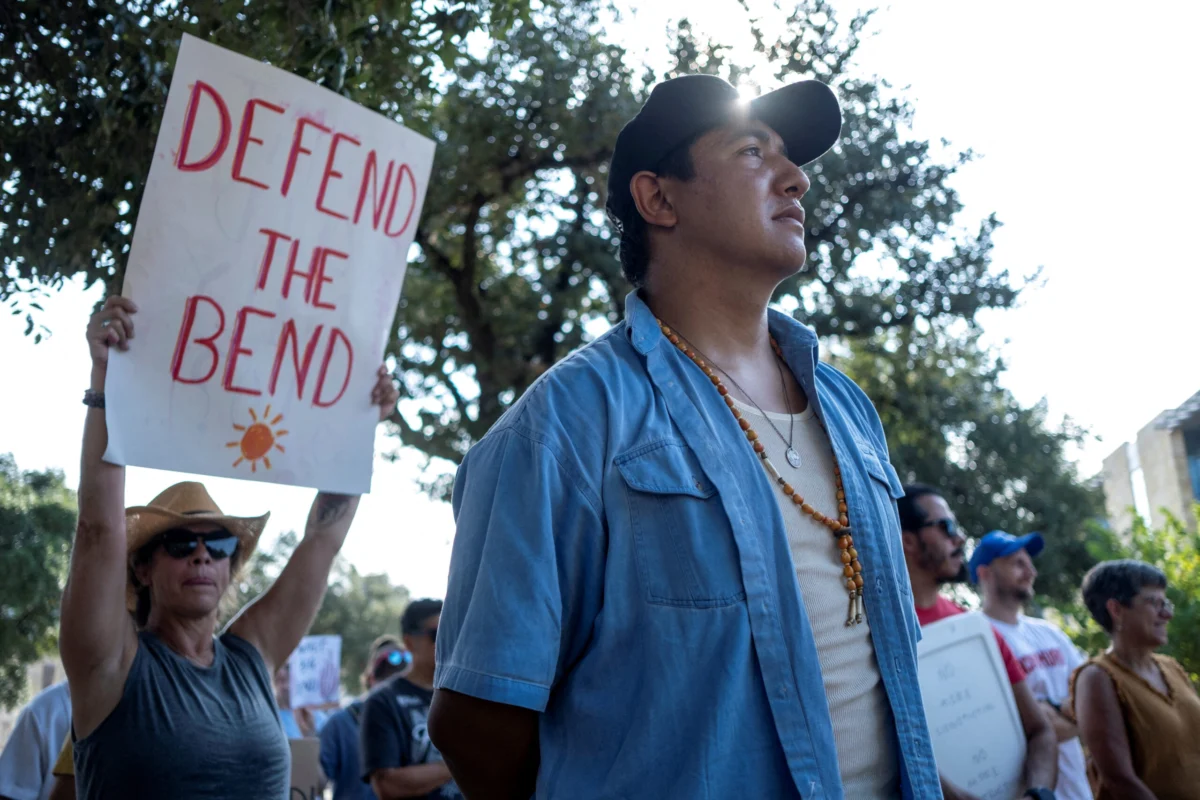
WASHINGTON — The United States Supreme Court has cleared the way for the administration of President Donald Trump to resume construction on a controversial border wall through a remote, ecologically fragile section of Big Bend National Park in West Texas.
In a decision issued on Monday, the nation’s highest court granted the federal government’s emergency request to lift a lower court injunction that had temporarily halted construction while a complex legal battle played out in the courts. The ruling removes the immediate judicial roadblocks that conservationists, local landowners, and regional officials had spent months establishing in an effort to protect the pristine desert and mountain landscape.
Writing in its decision, the Supreme Court stated that the lower court injunction unduly “impedes the Government from advancing its ‘compelling interests’ in border security and integrity.”
The border wall has remained a central and defining pillar of President Trump’s broader political platform aimed at restricting immigration into the United States. During his first successful campaign for the White House in 2016, Trump famously galvanized large crowds of supporters with thunderous chants of “Build the wall!” Since then, the physical barrier has symbolized his administration’s hardline approach to immigration enforcement, national sovereignty, and border management.
However, the administration’s aggressive push to extend the border barrier into the popular national park has sparked intense pushback. The project has drawn fierce opposition not only from environmental organizations and local residents, but also from some members of Trump’s own Republican Party who are concerned about federal overreach, the destruction of public lands, and the impact on local communities.
Big Bend National Park encompasses a sprawling, rugged terrain featuring dramatic mountain ranges and vast desert expanses. The region serves as a critical habitat for a wide array of vulnerable and endangered wildlife species, including the Mexican long-nosed bat. Opponents of the wall argue that pushing heavy construction equipment, concrete barriers, and permanent infrastructure through the park will permanently disrupt and scar an ecologically and culturally significant landscape that has long been protected for public enjoyment and conservation.
Despite these environmental concerns, the Trump administration has consistently depicted the Big Bend construction project as an urgent and indispensable priority for national security and immigration control. Federal officials have described the remote West Texas sector as a hidden artery utilized for irregular border crossings and illicit drug trafficking, arguing that sealing the border in this area is vital to national defense.
The legal battle over the project reached a critical juncture in October when US District Judge Kathleen Cardone issued an injunction blocking the construction. In her ruling, Judge Cardone cast doubt on the administration’s justifications for prioritizing the sector. She noted that while the Big Bend sector accounts for more than 25 percent of the total US-Mexico border, federal statistics show it accounts for only a minuscule fraction—specifically between 0.3 and 2.2 percent—of all migrant apprehensions nationwide.
“Therefore, if the Big Bend Sector is an area of high illegal entry, so is every other sector, and the waiver authority would apply to the entire US-Mexico border,” Judge Cardone wrote in her October decision, highlighting what she viewed as an overly broad application of federal emergency powers.
The Supreme Court, however, rejected that reasoning in Monday’s order, concluding that the government was “exceedingly likely to prevail” on its core legal argument. The justices determined that Judge Cardone lacked the proper jurisdiction to issue the injunction under the 1996 Illegal Immigration Reform and Immigrant Responsibility Act. That federal statute explicitly limits the authority of lower federal courts to review, pause, or rule on the construction of border barriers.
According to the high court’s interpretation of the 1996 law, district courts are restricted to hearing claims that allege a direct violation of the US Constitution. The Supreme Court found that the legal challenges brought forward by the plaintiffs did not meet this narrow constitutional threshold, noting in its opinion that “there is no such thing as a ‘constitutional’ major-questions claim.”
Justice Ketanji Brown Jackson stood alone as the sole member of the court to indicate she would have denied the government’s emergency request to lift the injunction. True to form in procedural orders of this nature, Justice Jackson did not provide a written explanation detailing her reasoning for dissenting from the majority.
The underlying lawsuit seeking to permanently block the wall was filed by a coalition of plaintiffs that included the Center for Biological Diversity, the Friends of the Ruidosa Church, and a local river guide who also owns property in the area.
At the heart of the litigation was a challenge against the federal government’s use of administrative waivers. The Department of Homeland Security has frequently utilized these statutory waivers to fast-track border wall construction projects across the southern border, allowing agencies to completely sidestep a litany of federal environmental, conservation, and historic preservation laws.
Without the deployment of those waivers, plaintiffs argued that the border wall construction would be legally required to comply with foundational federal statutes. These include the Endangered Species Act, the National Environmental Policy Act, and the National Historic Preservation Act. Plaintiffs maintained that forcing the government to abide by these laws is essential when attempting to alter the physical landscape in what they describe as “one of the most remote and ecologically and culturally significant landscapes in the United States.”
With the Supreme Court now lifting the lower court’s pause, the federal government is legally empowered to resume its construction efforts in the park, clearing the way for the barrier to advance through the remote West Texas terrain despite ongoing objections from conservationists and local advocates.
| Source | : | Finance Poetry |
| Author | : | rifanmuazin |
| Editor | : | Finance Poetry Editorial Team |