
Texas Appeals Court Cancels December Arguments After Voters Oust All Republican Justices, Handing High-Stakes Hemp and Tax Cases to Incoming Democrats
Days after voters completely swept the bench of the Texas 15th Court of Appeals, upending the political makeup of the state’s newly established specialized court, the judiciary has officially canceled oral arguments for four major pending cases. Attorneys involved in the litigation were notified that their scheduled hearings would not proceed as planned and would instead be reset at a later date, leaving the resolution of these critical disputes entirely in the hands of three incoming Democratic justices who are scheduled to take office in early January.
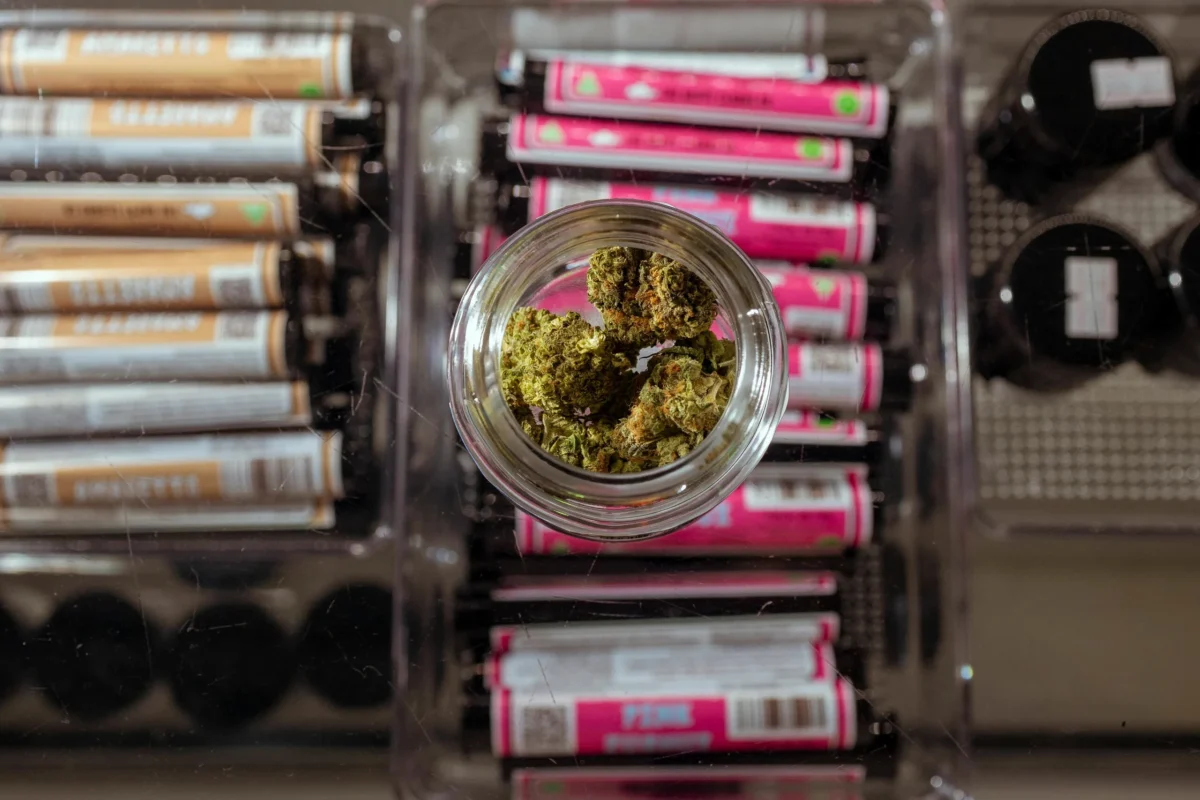
The abrupt cancellation marks a dramatic procedural shift for the appellate court, which was created by the Texas Legislature to hold statewide jurisdiction specifically over challenges to state laws and regulations. Among the high-profile disputes now delayed by the transition is a contentious legal battle challenging sweeping state rules that seek to restrict the sale and distribution of hemp-derived products containing THC.
The regulations governing hemp-derived THC products were originally slated to take effect at the end of March before getting caught in a web of litigation. The rules formulated by the Texas Department of State Health Services introduced a stringent array of requirements for the industry, including mandatory child-resistant packaging, comprehensive new labeling standards, rigorous product testing protocols, and detailed bookkeeping mandates. Furthermore, the regulatory framework formally codified the legal purchasing age for these products at 21 and imposed massive financial hikes on businesses operating in the sector. Specifically, licensing fees for manufacturers of hemp-derived THC were set to skyrocket from $258 to a staggering $10,000 per facility, while retail registrations were slated to jump from $155 to $5,000.
Industry leaders and business owners immediately sounded the alarm when the rules were announced, arguing that the astronomical fee increases and heavy-handed compliance requirements did not constitute ordinary regulation, but rather amounted to an effective de facto ban designed to force independent smoke shops and manufacturers out of business. The economic fallout began almost immediately after the regulations took effect, with numerous smoke shops and retailers across the state briefly pulling hemp-derived THC products entirely from their shelves to avoid noncompliance penalties as the enforcement window opened.
However, the retail blackout was short-lived. A Travis County district judge intervened on April 10, issuing a temporary injunction that blocked the Department of State Health Services from enforcing the controversial rules while a broader lawsuit brought by the hemp industry played out through the judicial system. With the legal battle escalating, the case eventually wound its way to the 15th Court of Appeals, which had scheduled the crucial oral arguments for December 8. That hearing is now among those wiped from the calendar, ensuring that the fate of the hemp industry’s regulations will not be decided by the outgoing judges.
Justice Scott Field explained the reasoning behind the cancellation in comments to Bloomberg Law, noting that the logistical realities of the judicial transition made proceeding with the hearings impractical. Field pointed out that the current panel of judges recognized they would not be able to author and release judicial opinions for cases that received oral arguments so close to the end of the year. Consequently, the court chose to scrap the December sessions to avoid wasting the time and resources of the participating lawyers, particularly given the strong likelihood that the incoming court would want to hear oral arguments anew before rendering a decision.
The incoming Democratic majority will inherit a substantial backlog. Currently, there are 39 active cases before the outgoing justices that have already undergone oral or written arguments and are awaiting the issuance of formal opinions.
The canceled December calendar affects far more than just the hemp industry, casting uncertainty over several other high-stakes legal battles involving state agencies, municipal governments, and prominent corporate entities. Oral arguments that had been formally scheduled for December 8 and 9 were entirely called off across multiple distinct dockets.
Among the delayed matters is a closely watched legal fight between the State of Texas and Sunrise Community Church Inc., centering around the operation of a homeless shelter located in South Austin. In that case, the Texas Attorney General’s office intervened and argued that the shelter’s physical proximity to an elementary school renders the facility a public nuisance under state law, setting up a major clash between state enforcement powers and local community services.
Another financial and political dispute removed from the December docket involves Comptroller Don Huffines and Attorney General Ken Paxton pitted against the City of Lancaster. That litigation revolves around a high-value dispute concerning approximately $3 million in contested sales taxes, drawing in key figures from the state’s executive branch over municipal revenue and tax distribution policies.
A third major corporate tax dispute also caught in the transition is a lawsuit filed by the entertainment and dining giant Dave & Buster’s against Comptroller Huffines and Attorney General Paxton. The company initiated the legal action to recover $2.58 million in payments that the corporation firmly believes qualified for specific tax exemptions, a dispute that now awaits review by the incoming judicial panel.
With the oral arguments canceled and the calendar cleared, the legal teams representing the state, municipalities, private businesses, and advocacy groups must now wait for the new year. When the three newly elected Democratic justices assume their positions on the 15th Court of Appeals in January, they will inherit these complex dockets and determine the ultimate trajectory for some of the most politically and economically sensitive regulatory battles in Texas.
| Source | : | Finance Poetry |
| Author | : | rifanmuazin |
| Editor | : | Finance Poetry Editorial Team |