
Las Vegas Housing Inventory Hits Record High in October, Yet Luxury Market Defies Cooldown
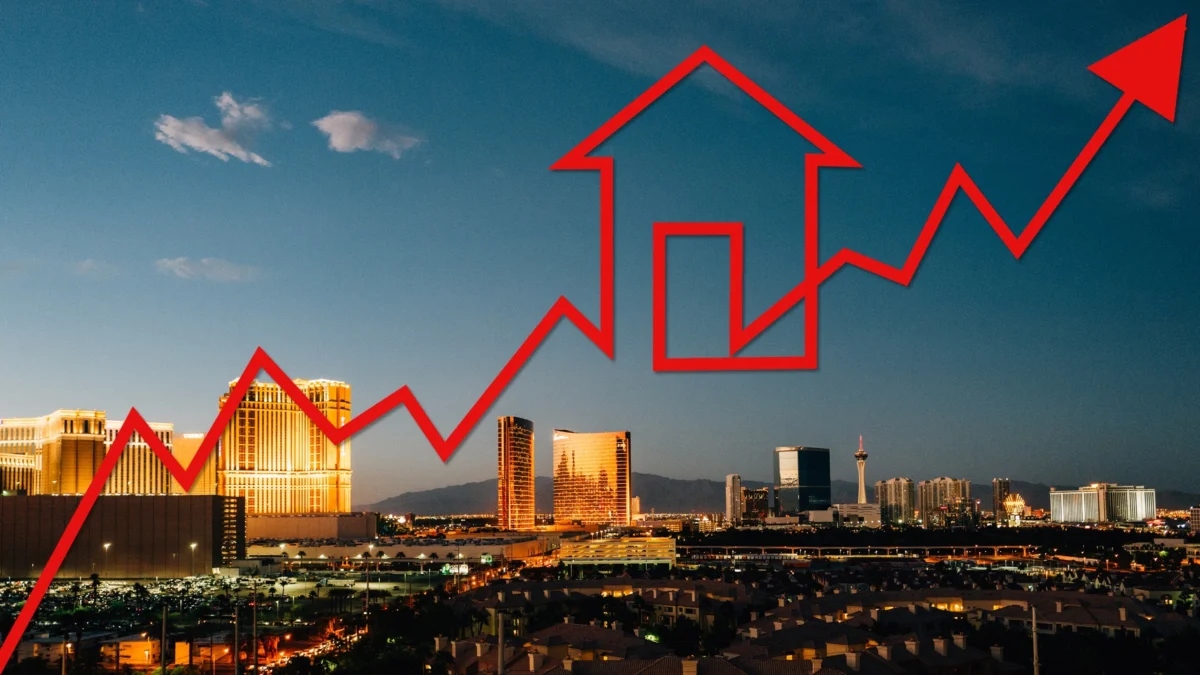
Housing inventory in Las Vegas surged to an all-time high this October, driven primarily by stubbornly high mortgage rates that have priced everyday buyers out of the market. However, even as the broader housing sector experiences a notable slowdown, the local luxury tier continues to buck the trend, remaining remarkably resilient and outperforming the rest of the metropolitan area.
Active listings across Nevada’s largest metropolitan area jumped nearly 10% compared to the same time last year, hitting a total of 11,447 units. According to the October housing market report from Realtor.com®, this marks the highest inventory level on record for the platform’s data, which dates back to July 2016.
Tania Jhayem, a real estate agent at Keller Williams The Marketplace’s luxury division in Las Vegas, notes that mortgage rates exceeding 7%—coupled with broader macroeconomic affordability headwinds—have fundamentally altered consumer behavior, encouraging everyday house hunters to exercise far greater caution and selectivity.
After several years of navigating an intensely competitive and fast-paced housing market, local participants are finally experiencing a shift toward more balanced conditions. In this evolving environment, buyers suddenly find themselves with additional choices, while sellers are forced to adjust to a vastly different, more deliberate pace of transactions.
At the same time, new listings—which measure the influx of fresh homes entering the market—plunged by 10.5% compared to the previous year, further underscoring the wider market cooldown. Realtor.com senior economist Jake Krimmel points out that new listings accounted for less than a quarter of the overall inventory in October, a steep drop from the 30.4% recorded just a year prior. Consequently, the available inventory is growing increasingly stale as fewer fresh properties enter the pipeline to replace those that linger.
The typical for-sale home in Las Vegas spent 59 days on the market last month, representing an increase of two days compared to the same period in 2025. While the selection of available homes this fall may lack freshness—with half of all listings sitting idle for nearly two months—the overall buildup of inventory offers prospective buyers a distinct and valuable advantage: time.
Buyers who previously felt entirely priced out of the market or pressured into making rushed, high-stakes decisions now have ample opportunity to thoroughly explore their options. For sellers, however, proper pricing, sharp presentation, and strategic marketing have become more critical than ever. Ultimately, the current market climate reflects an environment where both buyers and sellers are acting with heightened deliberation.
Properties lingering on the market present well-prepared shoppers with genuine opportunities to negotiate favorable terms. Depending on the seller’s motivation, these negotiations can include direct price cuts, closing-cost assistance, credits for necessary repairs, or financing incentives such as mortgage rate buydowns.
This fall, active house hunters have the luxury of taking their time to carefully evaluate properties, review comparable sales data, and make informed financial decisions without feeling the intense psychological pressure that characterized the market in recent years.
Nevertheless, experts caution that a prolonged listing history does not automatically translate into a bargain. Some homes languish because they require major, expensive updates, feature unconventional layouts that appeal to only a very small pool of buyers, or are simply overvalued by stubborn sellers.
A Shift Months in the Making
The record-setting inventory buildup in Las Vegas was not an overnight development or a sudden shock to the system. A detailed analysis of real estate data reveals that active listings across the valley have climbed steadily month after month since January.
This sustained accumulation is a massive part of what is currently driving market dynamics in places like Las Vegas. The trend has unfolded not just in October, but consistently over the last several months as interest rates have risen, effectively erasing the financing advantage that everyday buyers had enjoyed for much of the year compared to the year prior.
The median asking price for a home in Las Vegas stood at $459,900 in October. While this figure represents a 2.6% decline year over year, local home prices remain nearly $45,000 higher than the national median. Meanwhile, contract signings plummeted by more than 25% year over year, outpacing the 17% decline recorded nationally and highlighting a localized cooling in buyer demand.
Despite the broader market slowdown, local sellers are maintaining their composure rather than panicking. Roughly 24% of all active listings in Las Vegas saw price reductions in October, a modest decrease of 1.4 percentage points from the previous year. Mirroring national trends, this minimal dip suggests that everyday homeowners are in no rush to slash prices or hand out steep concessions simply to offload their properties quickly.
Many of the homeowners choosing to list their properties today are doing so because of important, immutable life transitions rather than a mere reaction to fluctuating market conditions. Common motivations for selling now include job relocations, growing families, retirees looking to downsize, the settlement of estates, and a desire among homeowners to find properties that better suit their current lifestyles.
A crucial difference between today’s market environment and previous historical downturns is that many local homeowners have accumulated substantial equity over the years. This financial cushion provides them with greater flexibility, enabling them to make strategic, unhurried decisions regarding when and how to sell their properties.
Homeowners sitting on favorable mortgage rates and without an immediate, pressing need to move can comfortably choose to stay put, while those who are genuinely ready for their next chapter continue to move forward with their plans.
Luxury Tier Defies the Trend
While the broader residential housing market in Las Vegas experienced a noticeable cooling phase, the upper tier of the market moved in the opposite direction.
The entry threshold required to break into the top 10% of the metro’s housing market reached $1.2 million in October, representing a 2.2% increase from a year ago. This growth rate marks the 10th-biggest price jump among the 43 largest metropolitan areas in the United States, according to the latest Realtor.com luxury housing report.
According to Krimmel, this sharp divergence stems from two distinct market dynamics: robust, continuous demand from wealthy, well-capitalized buyers who remain largely insulated from high mortgage rates, and the inherent resilience of luxury sellers who possess the financial staying power to wait patiently for their target sale price.
Natalia Harris, a global real estate adviser with Las Vegas Sotheby’s International Realty, observes that the high-end market shows no signs of slowing down. While the general market has softened, the ultra-luxury tier continues to push forward without missing a beat.
Harris notes that so far this year, Las Vegas has recorded 23 property sales exceeding the $10 million mark, with an additional two homes currently sitting under contract. This represents a significant increase from the 18 properties sold in that exclusive price bracket during the entirety of the previous year.
The adviser attributes this ongoing luxury boom in part to Nevada’s notoriously tax-friendly climate and pro-business policies. These factors continue to attract a steady stream of affluent transplants—whom she humorously refers to as "refugees"—fleeing higher-taxation markets in states like California and Washington.
The second part of the equation, according to Harris, involves the broader transformation of Las Vegas itself. The city has successfully evolved from a traditional weekend gambling getaway into a prestigious, year-round sports, entertainment, and cultural capital.
Tania Jhayem echoes this sentiment, emphasizing that Las Vegas consistently demonstrates its enduring appeal as a premier luxury destination. The city successfully attracts deep-pocketed buyers who are relocating specifically for lifestyle upgrades, favorable tax considerations, and long-term investment opportunities.
The local market offers an exceptional combination of high-end luxury living, world-class entertainment, fine dining, outdoor recreation, and relative financial value when compared directly against many other major metropolitan areas across the country.
Even so, rising luxury asking-price thresholds are accompanied by longer transaction timelines. High-end properties are currently taking significantly longer to sell than standard residential homes. In October, the median days on the market for a luxury listing reached 73 days, which is a full week slower than what was recorded a year prior.
According to Jhayem, these extended wait times are a direct result of high-net-worth buyers being exceptionally selective, placing a much heavier emphasis on architectural quality, prime location, and true intrinsic value before committing their capital.
Ultimately, Las Vegas is transitioning toward a more balanced, opportunity-driven real estate landscape. Buyers enjoy greater choice and restored negotiating power, while sellers who approach the market with a well-planned, strategic mindset are still able to achieve successful outcomes. Today’s market is no longer driven by frantic urgency, but rather by deliberate, informed decision-making from all parties involved.
| Source | : | Finance Poetry |
| Author | : | rifanmuazin |
| Editor | : | Finance Poetry Editorial Team |