
Vessels on Fire After Naval Mine Hit in Hormuz Strait, Iran Says
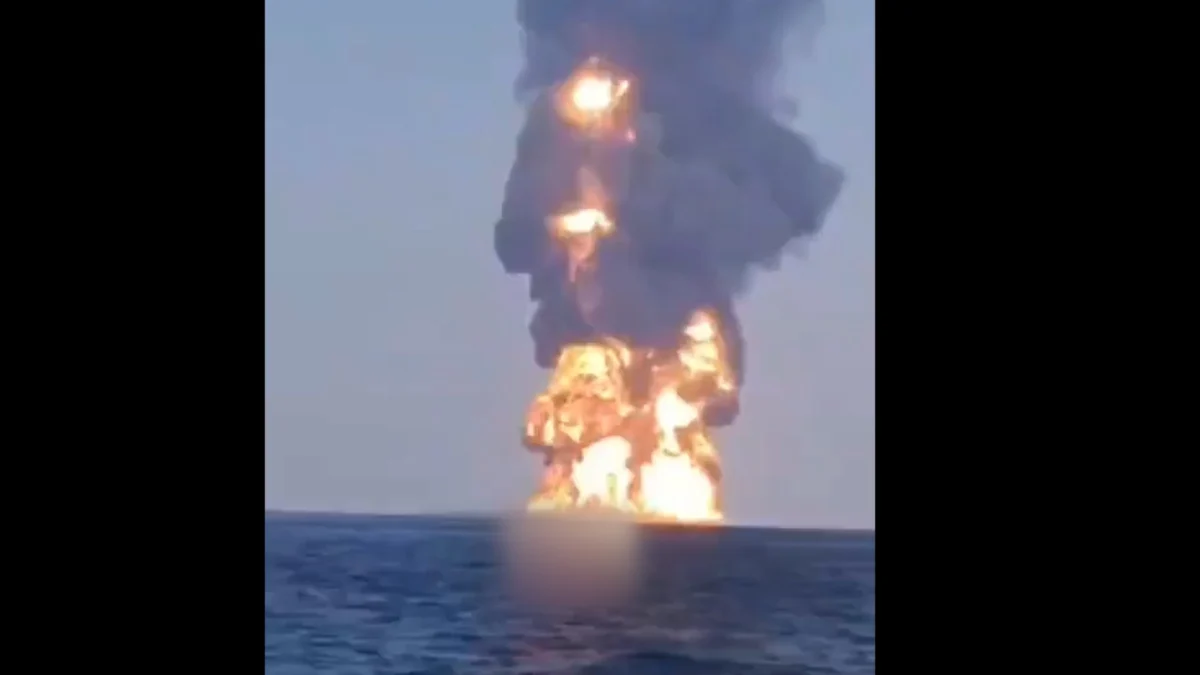
Two vessels have caught fire following a violent explosion triggered by a naval mine in the strategically vital Strait of Hormuz, according to a statement released by Iran’s Islamic Revolutionary Guard Corps. The incident has immediately escalated concerns regarding maritime security, regional stability, and the uninterrupted flow of global energy supplies through one of the world’s most critical shipping choke points. Among the affected vessels is a massive supertanker reportedly carrying a staggering two million barrels of crude oil, raising the specter of a severe environmental catastrophe alongside immediate disruptions to international petroleum markets.
The developing situation unfolded in the narrow waters connecting the Persian Gulf to the Gulf of Oman, an aquatic corridor through which a significant fraction of the world’s liquefied natural gas and petroleum passes daily. According to initial reports attributed to the Islamic Revolutionary Guard Corps, the explosions occurred unexpectedly as the ships navigated the busy maritime route. The impact of the naval mine caused immediate structural damage, igniting fierce fires aboard both vessels and prompting urgent emergency responses from maritime authorities and nearby rescue assets.
Details regarding the precise identities of the stricken vessels, the nationalities of their crews, and the extent of any injuries or casualties remain scarce as operations continue in the area. However, the confirmation that one of the burning ships was transporting two million barrels of crude oil has sent immediate shockwaves through global energy and financial markets. A cargo of that magnitude represents a substantial portion of a daily supertanker transport, making any threat to its integrity a matter of intense international scrutiny and economic anxiety.
The Strait of Hormuz has long been recognized as a geopolitical flashpoint. Flanked by Iran to the north and the United Arab Emirates and Oman to the south, the waterway is barely 21 miles wide at its narrowest point, with the inbound and outbound shipping lanes each only two miles wide. This geographic constriction makes commercial vessels highly vulnerable to maritime threats, including naval mines, asymmetric attacks, and regional military escalations. Over the decades, tensions involving state and non-state actors in the region have periodically threatened commercial shipping, forcing international naval coalitions to maintain a continuous presence to safeguard maritime trade.
The revelation that a naval mine was responsible for the explosions adds a particularly dangerous dimension to the incident. Naval mines are indiscriminate weapons designed to inflict catastrophic damage on the hull of any vessel that encounters them, regardless of whether the ship is military or commercial. The deployment of such ordnance in a heavily trafficked international commercial lane violates established norms of freedom of navigation and poses an indiscriminate hazard to civilian mariners from across the globe.
Energy markets reacted swiftly to the news of the explosions and the subsequent fires. Traders and shipping insurers immediately reassessed the risk profile of transiting the Persian Gulf, with potential implications for freight rates, war-risk insurance premiums, and overall tanker availability. Even temporary disruptions or perceived increases in danger within the Strait of Hormuz historically exert upward pressure on global crude prices, as buyers factor in the possibility of delayed shipments and constrained supplies.
As authorities work to contain the fires and assess the full environmental and structural damage to the vessels, regional and international stakeholders are closely monitoring developments for any signs of further escalation. The incident underscores the fragility of security architecture in the Middle East’s vital waterways and highlights the persistent vulnerabilities facing commercial fleets operating in close proximity to ongoing regional tensions. Further updates regarding the condition of the crews, the success of firefighting efforts, and the broader maritime response are expected as emergency services continue their work in the affected zone.
| Source | : | Finance Poetry |
| Author | : | rifanmuazin |
| Editor | : | Finance Poetry Editorial Team |