
Rural Communities Push Back as Ohio Data Center Boom Collides With Local Schools and Power Grids
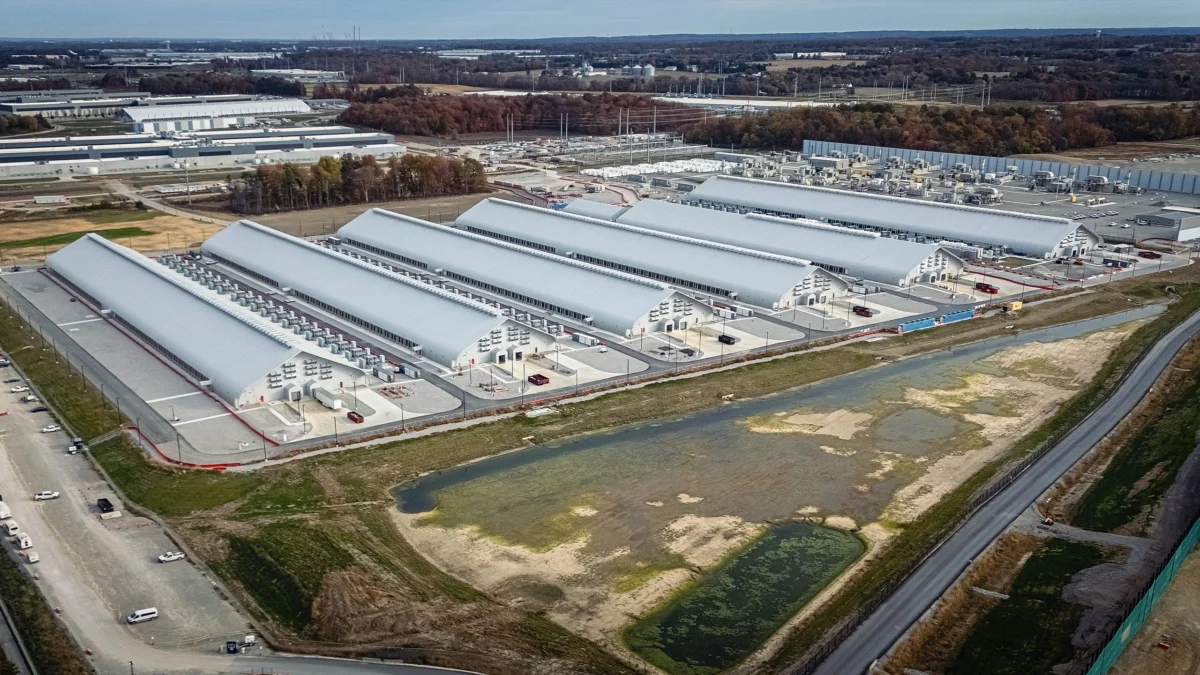
Angela Huffman knows the rhythm of rural life intimately. As a sixth-generation farmer operating a sheep farm near Wharton, Ohio, she spent a decade and a half immersed in agriculture policy across Columbus and Washington, D.C. Yet, her most intense political battle in recent months has unfolded just 10 miles from her own pastures, driven by an industrial land rush that is reshaping rural landscapes across the American Heartland.
On June 4, Huffman picked up her local newspaper, the Daily Chief-Union, and saw an above-the-fold headline that instantly set her on edge. A developer was targeting nearby Upper Sandusky for a massive $900 million data center project. The proposal called for a sprawling 146-acre Smartland Energy data center campus on the northern edge of the 6,600-person town, complete with a dedicated natural gas power plant designed to feed the insatiable energy demands of modern artificial intelligence and digital infrastructure.
The headline stopped Huffman cold. Townsfolk were already on high alert following a separate recent proposal for a major soybean processing plant, fueling widespread anxiety over how rapidly industrial development was encroaching upon municipal resources and agricultural heritage.
"We were already worried about a big development coming in and extracting the town’s resources," Huffman tells Realtor.com®. "What does that do to the community?"
As the CEO of Farm Action, Huffman leveraged her advocacy background to organize concerned neighbors. Residents quickly flooded local planning commission meetings, peppering public officials with pointed questions about the long-term environmental, infrastructural, and economic impacts of the proposed development. Neighbors also questioned whether the project belonged on land zoned for industrial use in a region deeply tied to its rural identity. Opposition crystallized rapidly, culminating in a petition opposing the project that drew 1,100 signatures from residents worried about preserving their way of life.
Upper Sandusky was far from an isolated case. Across Ohio, a fierce grassroots resistance to the unchecked proliferation of data centers emerged as a defining flashpoint. Voters in 18 of Ohio’s 88 counties mobilized to place 21 separate bans or restrictions on data center developments on local ballots. In Upper Sandusky, that resistance translated directly into the ballot box, where voters overwhelmingly approved a charter amendment blocking large-scale data centers within municipal limits.
"They wanted to use about a third of the water the whole town uses today," Huffman notes. "I’m not against AI or development, but can a town of this size absorb a development like that?"
Data Center Tax Breaks Come Into View
While rural communities organized to protect their water supplies and agricultural land, the broader financial footprint of the data center industry began to face intense state-level scrutiny. Ohio already hosts dozens of massive facilities, but the economic math behind the state’s aggressive recruitment strategy has triggered a profound backlash among educators, local leaders, and taxpayers.
A comprehensive study released by Good Jobs First and Policy Matters Ohio revealed that the state’s lucrative data center tax breaks deprived public schools of nearly $374 million in revenue during 2025 alone. The political fallout prompted Republican Gov. Mike DeWine to slam the brakes on new tax exemptions in May, after state analysts discovered that developers had been exempted from a staggering $2.1 billion in taxes across 2024 and 2025—far exceeding initial projections. Governor-elect Amy Acton has since pledged to subject these massive economic incentives to even more rigorous oversight.
The missing tax dollars trace directly to Ohio’s complex fiscal structures. Under the state’s Fair School Funding Plan, a portion of general sales tax revenue is earmarked for public education. By exempting data center developers from the state’s 5.75% sales tax on equipment, construction, and operations, lawmakers inadvertently created a massive funding shortfall for local school districts already struggling to balance their books.
"Ohio lawmakers made a choice to give data center companies a blank check, and now Ohio’s schools are paying the price," said Hannah Halbert, executive director of Policy Matters Ohio. "In 2025 alone, the state gave up enough revenue from this single tax break to fully update the Fair School Funding plan and close the gap."
The timing could not have been worse for local property taxpayers, who were increasingly asked to make up the difference through local ballot levies. School districts across Ohio turned to property tax levies to keep classrooms open, but voter fatigue and economic pressures caused most to fail. According to the Ohio Policy Education Institute, only 24 of 66 school levies placed on the May 2026 ballot managed to pass.
Upper Sandusky’s school district was among the casualties, missing out on an estimated $383,000 in revenue, according to the report. Although local voters had previously approved school levies in 2015, 2018, and 2023, the district was still forced to cancel classes due to an inability to install air conditioning in century-old buildings that proved too expensive to renovate or rebuild.
"Our schools were struggling," Huffman says. "It tells you a lot about when these big tech companies come along, and if they are paying their fair share."
Wider Backlash and Political Fallout
Public frustration over data center tax subsidies, surging utility bills, and the rapid consumption of prime agricultural land has transformed tech infrastructure into a potent political issue. NBC exit polls from the midterms revealed that 76% of voters opposed data center construction in their local communities, with a clear majority indicating that the issue played a crucial role in shaping their votes.
Polls underscore widespread anxieties that the breakneck pace of data center construction risks driving up local power costs, inflating land values, and triggering severe environmental and infrastructure strains. Recent research from Realtor.com highlights a distinct trend of major tech developments increasingly pushing out of traditional suburban tech hubs and into rural and semi-rural areas.
This grassroots resistance pushed back against an unprecedented wave of corporate spending. According to an analysis by the Pew Research Center, Ohio was inundated with $1.8 million in data center advertising during the fall campaign season—surpassing spending levels in heavyweights like Texas and Wisconsin. Political action committees backed by artificial intelligence and cryptocurrency interests poured an estimated $65 million into supporting Republican Sen. John Husted, who ultimately lost his reelection bid to Democrat Sherrod Brown on November 3.
Despite the mounting political headwinds, developers maintain massive ambitions in the state, having previously pitched an astonishing $168.7 billion in new capital investment projects across Ohio. The clash over regulatory oversight and environmental standards for AI infrastructure emerged as a defining theme for incoming leadership in both Columbus and Washington, D.C. Sensing a shifting political landscape, major tech stocks experienced a sharp correction following the election results.
Governor-elect Acton has signaled that she supports placing a conditional moratorium on new data center developments. Her platform calls for strict requirements ensuring that developers cover their own utility upgrade costs, utilize union labor, adhere to rigorous environmental standards, and face a substantial scaling back of government tax incentives.
AI Companies Address Future Scrutiny
In the wake of the midterms, major artificial intelligence and technology firms have scrambled to address mounting public skepticism, promising closer collaboration with municipal governments and local residents. OpenAI released a formal blueprint for responsible infrastructure development aimed at slowing the technology’s footprint and addressing community concerns.
Meta spokesperson Andy Stone highlighted the company’s ongoing commitments via social media, emphasizing a pledge "to pay our own energy and water costs so they’re not passed onto consumers, fund new and upgraded grid infrastructure, and support local communities."
Ohio is far from alone in grappling with these growth pains. Virginia, long considered the nation’s premier data center hub, has doled out over $4 billion in tax incentives over the past decade, according to a state legislative report. That state, alongside other primary markets like California and Texas, has also faced rising political pressure to implement stricter regulatory curbs on digital infrastructure.
A recent study published by the Wharton School indicates that the massive electrical demand generated by data centers has measurably increased industrial electricity prices nationwide, though residential ratepayers have thus far absorbed relatively modest price increases.
Meanwhile, Ohio’s broader housing affordability crisis has deepened over the past several years. Data from the National Housing Conference ranks the state first in the nation for the speed at which middle-income earners have been priced out of the housing market. The share of local jobs capable of supporting the purchase of a median-priced home with a 10% down payment dropped by approximately 41% between 2020 and 2025, leaving essential workers such as teachers, firefighters, and retail supervisors struggling to secure housing.
Proponents of the industry argue that large-scale digital infrastructure remains an economic imperative for the modern economy. Speaking before the Ohio Tax Credit Authority, Dan Diorio, vice president for public policy at the Data Center Coalition, argued that these facilities provide foundational utility that benefits the entire economy rather than isolated tech firms.
"This is a far more efficient way of doing all the computing, processing, and storage that we need to facilitate our daily lives in the 21st century economy," Diorio told state officials during a hearing in Columbus. "The need for connectivity, for the internet, is driving the digital infrastructure that supports that."
| Source | : | Finance Poetry |
| Author | : | rifanmuazin |
| Editor | : | Finance Poetry Editorial Team |