
The Tax Planning Imperative: Ed Slott on the Future of Financial Advisory

The landscape of financial advisory is undergoing a seismic shift, one that is rapidly separating the industry into two distinct tiers: those who proactively embrace tax planning as a cornerstone of their value proposition and those who will eventually find themselves regretting their omission of it. This critical observation comes from Ed Slott, the founder and CEO of Ed Slott & Company, who recently sat down for an in-depth conversation during the Horizons Conference hosted by The American College in Orlando, Florida.
Speaking with host Chuck on the floor of the conference, Slott emphasized that the traditional model of financial planning—often centered exclusively on investment management and asset allocation—is no longer sufficient to meet the evolving needs of modern clients. As tax complexities continue to mount and the regulatory environment shifts, the ability to navigate the intersection of wealth management and tax strategy has become the definitive marker of a high-value advisor.
The Emerging Divide in Advisory Services
For years, the financial services industry has focused heavily on market returns, portfolio diversification, and long-term accumulation strategies. While these remain fundamental, Slott’s commentary suggests that the "investment-only" mindset is rapidly approaching an expiration date. According to Slott, clients are increasingly aware of the erosive power of taxes on their retirement nest eggs. Consequently, they are demanding more comprehensive guidance that looks beyond the ticker symbol and addresses the bottom-line reality of what they get to keep after the government takes its share.
This shift creates a clear delineation in the marketplace. On one side are the forward-thinking advisors who have integrated sophisticated tax planning into their core service offerings. These professionals view tax strategy not as a peripheral service to be outsourced to a CPA, but as an essential, year-round conversation that dictates how assets are positioned, how withdrawals are structured, and how legacies are transitioned. On the other side are the advisors who remain anchored to a purely investment-centric approach. Slott’s warning is stark: for this latter group, the future holds a significant risk of obsolescence as clients migrate toward those who offer a more holistic, tax-efficient experience.

Why Tax Planning Has Become Paramount
The necessity of this shift is driven by a confluence of factors, ranging from the aging of the baby boomer generation to the changing dynamics of federal tax policy. As more Americans transition into the distribution phase of their financial lives, the primary challenge is no longer just how to grow money, but how to distribute it without triggering unnecessary tax liabilities.
Retirement accounts, such as IRAs and 401(k)s, represent a massive portion of household wealth in the United States. However, these vehicles are essentially tax-deferred, not tax-free. Every dollar withdrawn is typically subject to ordinary income tax rates, and the required minimum distribution (RMD) rules mandate that the government will eventually get its due. Advisors who lack the expertise to manage these distributions strategically—by utilizing techniques such as Roth conversions, multi-year withdrawal planning, or charitable tax-efficient strategies—are effectively allowing their clients to pay a "tax premium" that could have been mitigated or avoided entirely.
Furthermore, the complexity of the tax code means that small decisions made early in the retirement journey can have outsized consequences decades later. A lack of coordination between investment accounts and tax filings can result in higher Medicare premiums, increased taxation on Social Security benefits, and a diminished legacy for heirs. By positioning themselves as tax-savvy advisors, professionals can provide a layer of protection that is often far more valuable to a client than a few percentage points of extra market return.
The Role of The American College and Industry Education
The setting of this discussion—The American College’s Horizons Conference—underscores the industry’s commitment to raising the bar for financial professionals. The conference serves as a hub for practitioners seeking to sharpen their technical skills and understand the broader trends shaping the future of wealth management. By bringing together experts like Slott, The American College facilitates a necessary dialogue about the professional standards required to serve clients effectively in a high-complexity environment.
The message delivered by Slott resonates with the broader mission of professional development: the financial advisor of the future must be a generalist who acts as a quarterback for the client’s entire financial life. This requires not necessarily becoming a tax accountant, but developing a deep enough understanding of tax law to identify opportunities and risks before they become problems. It involves knowing when to collaborate with CPAs and tax attorneys, and how to translate complex tax concepts into actionable, understandable advice for the client.
Moving Beyond the "Investment-Only" Model
For many advisors, the transition toward tax-focused planning represents a fundamental change in their business model. It requires moving away from a transactional relationship, where the advisor is merely a conduit for investment products, to a relationship-based model defined by ongoing, comprehensive oversight. This evolution is not without its challenges; it demands a significant investment in continuing education and a willingness to integrate new technologies that can model tax outcomes under various scenarios.
However, the benefits of this transition are substantial. Advisors who offer robust tax planning often report higher levels of client satisfaction, improved retention rates, and the ability to attract high-net-worth individuals who have complex financial lives. In an era where investment products have become increasingly commoditized and fees have faced downward pressure, tax planning offers a tangible, quantifiable value proposition that is difficult to replicate through automated platforms.
As the industry continues to evolve, the distinction highlighted by Slott will likely become even more pronounced. The advisors who thrive will be those who recognize that they are not just managing assets, but managing the total financial well-being of their clients, of which tax efficiency is a primary driver. The warning is clear: the future belongs to those who view the tax code not as a barrier, but as a strategic tool to be leveraged for the long-term benefit of their clients.

A Broader Context of Financial Expertise
The discussions at the Horizons Conference extend beyond tax planning, touching on a variety of critical topics that impact the financial advice community. Throughout the event, guest experts and industry leaders have explored the intersection of technology, behavioral finance, and the evolving regulatory framework that governs how advisors interact with the public.
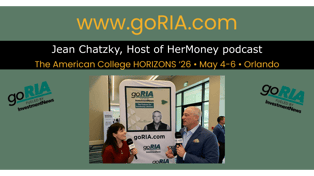
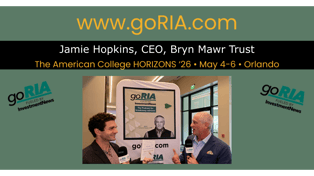
For example, sessions featuring voices like Jean Chatzky, the host of the HerMoney podcast, highlight the importance of communication and financial literacy. In an increasingly digital world, the ability to convey complex financial strategies in a way that resonates with diverse audiences is just as vital as the technical knowledge required to construct a portfolio. Similarly, discussions with experts like Eric Ludwig from The American College and Jamie Hopkins of Bryn Mawr Trust underscore the importance of academic rigor and professional standards in maintaining the public’s trust.
These conversations, captured during the live recordings in Orlando, reflect a collective effort by the industry to move toward a higher standard of care. Whether the topic is the nuance of tax planning, the psychology of money, or the future of trust services, the common thread is the need for continuous learning and adaptation. As advisors look toward the remainder of 2026 and beyond, the insights shared by figures like Ed Slott serve as a compass for navigating the complexities of an ever-changing financial landscape.
For professionals committed to their craft, the path forward is clear. It involves a dedication to lifelong learning and a willingness to embrace the responsibilities that come with providing holistic financial guidance. As the industry continues to professionalize, the gap between those who adapt and those who remain static will only grow wider, making the choice to focus on tax planning and comprehensive advice a critical decision for any advisor looking to build a sustainable, client-centric practice.
The insights provided by Slott and his contemporaries at the Horizons Conference provide more than just commentary; they provide a blueprint for the next generation of financial advice. By synthesizing these perspectives, advisors can better prepare themselves to meet the challenges of tomorrow, ensuring they remain essential partners to their clients in an increasingly complex and tax-burdened world.
| Source | : | Finance Poetry |
| Author | : | rifanmuazin |
| Editor | : | Finance Poetry Editorial Team |