
Dead-Quiet Neighbors: Why More Homebuyers Are Overcoming the Stigma of Living Near a Cemetery
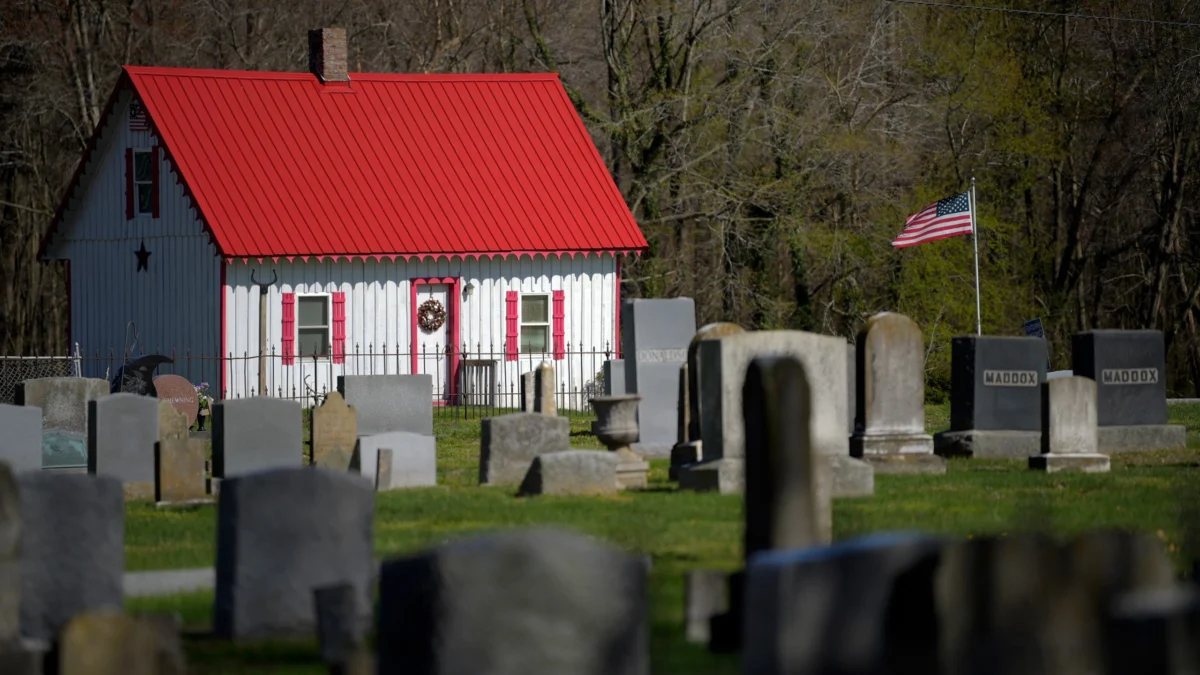
Living directly next to a cemetery is certainly not for everyone, but this spooky season, an increasing number of out-of-the-box home shoppers are looking past traditional superstitions to embrace the surprisingly peaceful benefits of having dead-quiet neighbors. With over 144,000 burial grounds scattered across the contiguous United States—ranging from modest, historic family plots to sprawling national cemeteries administered by the federal government—it is almost statistically certain that a notable share of American residential properties will end up situated adjacent to a final resting place.
Real estate agents who routinely handle listings situated directly next to graveyards note that, contrary to popular cultural beliefs, a somber neighboring property is rarely an automatic black mark against a home. More importantly, industry professionals emphasize that a cemetery adjacent to a property line rarely deprives a home of its long-term market value. For house hunters who expect to stumble upon a massive location-based price cut simply because of the views, the reality of the housing market can come as a surprise.
"Typically, you don’t see much of a discount for that sort of property," explains Nathan Weinberg, principal broker at MW Real Estate in Nashville, TN. "What I do think you would see is the one that wasn’t next to the cemetery would sell first. The demand is different for unencumbered property compared to a property that has that kind of a stigma attached to it, and so your pool of buyers is smaller."
Weinberg has represented several residential listings at Quail Creek Condominiums, a community directly adjacent to the Nashville National Cemetery. Spanning 64 acres, this prominent burial ground is administered by the Department of Veterans Affairs and contains approximately 34,000 interments, with the earliest graves dating back to the American Civil War era. While the historic and serene environment appeals to many, Weinberg readily admits that such a location can completely deter certain segments of the buying public before they even schedule a tour.
"It creeps them out and they never want to be there at that property, so they just never come," he notes. As a direct consequence of this psychological barrier, a home overlooking a cemetery will typically linger on the housing market about 10% longer than a completely comparable property located elsewhere in the metropolitan area.
However, the broker highlights that the buyers who do show up for showings and open houses are often able to look past the initial hesitation and recognize the clear, long-term upsides of the location. "There are always people that look at it from the perspective of: nothing will ever be developed there, and so it will always be this tranquil space," Weinberg says.
Real estate agents selling homes beside graveyards almost universally hear one specific punchline above all others: At least the neighbors are quiet. But for many residents and property experts, that sentiment is far more than just a seasonal joke. "A lot of people have grown to appreciate that cemeteries do, in fact, provide for tranquility in a neighborhood," Weinberg stresses.
Andrea Franden, an agent at Onward Real Estate, also based in Nashville, has heard that classic line about quiet neighbors countless times throughout her career. Last year, she represented a family that successfully purchased a home next to the very same vast national cemetery in Madison, Tennessee.
"My clients absolutely love it," Franden explains. "They know that it’s a property that’s going to be well-maintained, as most cemeteries are, and also because of the heritage of the fact that it is a veterans’ cemetery. It makes them feel good that they’re part of something that’s honoring our former soldiers."
Franden’s experience with cemetery-adjacent properties extends beyond major metropolitan burial grounds. She recently listed a well-preserved, 1918-built three-bedroom, two-bathroom cottage complete with a classic white picket fence. Located in Dickson, Tennessee, the charming home carries an asking price of $387,500—nearly $150,000 below the current median price for the broader Nashville metropolitan area. The property sits directly across the street from a historic graveyard dating back to the nineteenth century, yet feedback from prospective clients has remained overwhelmingly positive.
"It’s very charming, and there are a lot of historical monuments within the cemetery going back to the 1800s when the town was founded," Franden notes, adding that the adjacent graveyard "has not proven to be a difficult feature in selling the house."
Of course, agents occasionally encounter opportunistic shoppers attempting to use the location to their financial advantage. In one instance, Franden recalls a shrewd shopper who tried to leverage the cemetery proximity to secure a steep discount, though his negotiation strategy ultimately fell flat. "He was thinking he could maybe offer a lower price because of the cemetery, and I was just, ‘Look, you’ve got the best neighbors possible. No one’s making noise. No one’s going to bother you,’" she recalls telling the prospective buyer.
Who’s Buying Homes Near Graveyards?
According to industry professionals like Weinberg, buyers who actively purchase homes near burial grounds typically fall into two distinct demographic categories: first-time homebuyers looking for specific market opportunities, and "last-time" buyers, which include retirees and downsizers.
"They’re older… and so being next to something that’s quiet is important to them," Weinberg observes.
In Franden’s professional experience, however, the target market for cemetery-adjacent homes is considerably broader and more diverse than mere demographics might suggest. She points out that the historic cottage in Dickson—situated in a quaint, walkable small town featuring local bars, restaurants, and a popular yoga studio—was previously owned and enjoyed by a young family with children. Similarly, the condominium she sold in Madison last year was purchased by a young couple with a toddler and another baby on the way.
"It can be anyone. It really is not a limited product," she argues, pushing back against the notion that these homes only appeal to specific, niche buyers.
How to Sell an Encumbered Property
Selling residential real estate near a burial ground often requires agents to adopt creative marketing strategies to neutralize the psychological stigma associated with the location. Because the visual proximity of a graveyard can initially turn off casual buyers, brokers must proactively shift the narrative toward the unique structural and environmental advantages of the property.
"We have to work harder to highlight the things that are significantly better about being next to property like that," explains Weinberg. "And so we spend more time highlighting how quiet things are. We spend more time highlighting the quality of the building or the amenities in the building, rather than focusing so much on the neighborhood."
When prospective buyers arrive for an open house and visibly hesitate at the sight of a cemetery across the street, Weinberg makes it a point to directly address the situation rather than ignoring the obvious. "It’s quiet and nothing will ever be built there, and that will preserve the quality of life that you can experience in this house," he tells skeptical clients.
Conversely, Franden takes a more understated approach, choosing neither to artificially spotlight a listing’s proximity to a cemetery nor to conceal the reality of the surrounding geography. "It’s pretty self-evident," she notes. "Most buyers are savvy enough today that they may have done a street view."
And as for the inevitable, tongue-in-cheek question from prospective buyers wondering if the house might happen to be haunted by restless spirits, Weinberg keeps a ready, pragmatic response prepared for anyone who asks: "I don’t believe in ghosts."
| Source | : | Finance Poetry |
| Author | : | rifanmuazin |
| Editor | : | Finance Poetry Editorial Team |