
Escalating Threat: State-Sponsored Actors and Cybercriminals Deploy ARTEX AI Framework at Scale
The landscape of modern cyber warfare is undergoing a profound shift as the ARTEX AI offensive framework transitions from an experimental security tool into a primary weapon for global threat actors. Recent intelligence reports from leading cybersecurity entities confirm that the platform is being aggressively deployed across diverse cyber-attack campaigns, fundamentally altering the speed and efficiency with which both nation-state actors and opportunistic cybercriminals can breach secure networks.
Originally released as an open-source project on GitHub by a developer identified as “Autumn-27” in July 2026, ARTEX was designed as an autonomous, AI-model-driven penetration testing tool. However, what began as a utility for legitimate security assessment has, within mere months, been co-opted by some of the world’s most sophisticated digital adversaries. The framework, written in the Go programming language and featuring an embedded Next.js web console, serves as an offensive command-and-control platform capable of orchestrating complex attack chains by interfacing with various Large Language Models (LLMs).
The Proliferation of Agentic Offensive Frameworks
The gravity of the situation was underscored on November 25, 2026, when Microsoft released a detailed analysis documenting the integration of ARTEX into the operational toolkits of several prominent state-aligned threat groups. According to the tech giant, the framework is no longer a niche tool but a core component for multiple Chinese and North Korean actors.
The list of identified users is a “who’s who” of modern digital espionage. Chinese-nexus actors—specifically those tracked as Salt Typhoon, Crystal Typhoon, Storm-0940, and Storm-3358—have all been observed leveraging the framework. Simultaneously, groups with ties to the Democratic People’s Republic of Korea (DPRK), including the notorious Onyx Sleet and Pearl Sleet, have incorporated the tool to automate critical stages of their attack life cycles. These groups are utilizing ARTEX to streamline network reconnaissance, execute credential-harvesting attacks, and facilitate the exploitation of web applications with unprecedented speed.
This trend toward automation is further corroborated by the Cloud Security Alliance (CSA). In a report published simultaneously with Microsoft’s findings, the CSA categorized the rise of Agentic Offensive Frameworks (AOFs), such as ARTEX and the related tool Cairn, as the “third wave” of AI-driven cybersecurity threats. The alliance’s findings are stark: these frameworks have dramatically compressed the time required to move from initial access to a compromised state. In some observed instances, threat actors managed to reach privileged network access in under three hours.

The efficiency of these tools lies in their ability to systematically probe attack surfaces, chain together multiple vulnerabilities, and perform concurrent internal network pivots. By removing the need for human operators to manually navigate every step of an intrusion, ARTEX enables even low-resourced criminal organizations to execute operations that were previously the exclusive domain of well-funded, highly specialized nation-state teams. As the CSA report poignantly noted, these complex attack chains, while theoretically possible in the past, are now being deployed by threat actors at significant scale.
Analyzing the Surge in Wild Variants
The scale of the adoption is perhaps best illustrated by recent threat intelligence from Infrawatch. In an analysis published on November 24, 2026, the firm identified over 130 unique variants of ARTEX currently circulating in the wild. This proliferation reflects a rapid evolution of the framework, as users customize the tool to meet specific operational requirements.
Data indicates that the presence of ARTEX servers saw a sharp, dramatic rise in early November, following a broader surge in cyber intrusions throughout October. This correlation suggests that as the utility of the framework became widely known in underground forums, its deployment accelerated exponentially. The FBI has similarly raised alarms regarding the growing abuse of AI-driven pentesting frameworks, noting that the ease of access to these tools has lowered the barrier to entry for a wide spectrum of malicious actors.
Mechanics of the ARTEX Framework
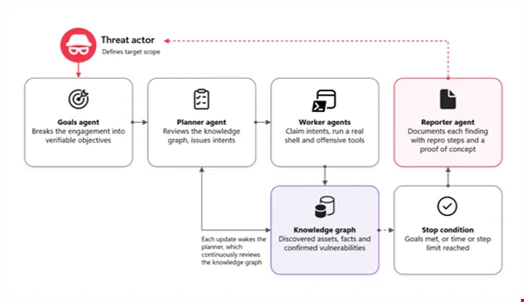
Despite its fearsome reputation, experts emphasize that ARTEX does not necessarily invent new offensive techniques. Instead, it acts as an intelligent orchestrator for established penetration testing methodologies. The power of the tool resides in its "agentic" architecture.
When an attacker deploys ARTEX, they begin by defining the target scope. From there, a sophisticated "goals model" breaks the broader mission into smaller, manageable objectives that the AI can verify. The framework employs a dual-agent system consisting of "planners" and "workers." The planner agent formulates the attack strategy, while worker agents execute the individual steps of the cycle based on real-time network reconnaissance. A third component, the reporter agent, maintains a constant feedback loop, providing the human operator with progress updates, reproduction steps, and a proof of concept for every successful phase of the attack.

The framework comes pre-configured with a suite of core capabilities, including network reconnaissance, web application mapping, web shell deployment, and various web browser-based attack vectors. Perhaps most concerning for security teams is the modularity of the tool. Microsoft noted that threat actors are not restricted to the pre-configured modules; they can easily integrate arbitrary, third-party tools—such as custom credential-stealing scripts—into the ARTEX environment.
Furthermore, ARTEX allows for the dynamic manipulation of network indicators. By programmatically varying source IP addresses and user-agent strings, attackers can often bypass static, signature-based detection systems that have long served as the first line of defense for corporate networks. Because the framework is constantly adjusting its behavior, it creates a "moving target" for security operations centers (SOCs) that rely on traditional detection methods.
Defending Against AI-Driven Intrusions
The emergence of ARTEX presents a significant challenge for defenders, as the speed and autonomy of the framework can overwhelm manual response procedures. Microsoft has outlined a series of strategic recommendations intended to help organizations harden their defenses against these automated campaigns.
The shift toward AI-driven threats requires a corresponding evolution in defensive posture. Organizations are being urged to move beyond static perimeter defenses and adopt a more proactive, behavioral-based approach to threat detection. Because ARTEX relies on common pentesting tools, focusing on the detection of anomalous tool behavior—rather than just the tools themselves—is paramount. Defenders must prioritize the monitoring of internal network pivots and unauthorized attempts to map web applications, as these are the primary indicators of an ARTEX-driven campaign in progress.
As the industry grapples with this new reality, the consensus among security researchers is that the "third wave" of AI-driven threats is only just beginning. The ability of frameworks like ARTEX to democratize high-level offensive capabilities means that organizations of all sizes, across every sector, must be prepared to face automated, intelligent, and highly persistent adversaries. The transition from human-led manual hacking to AI-orchestrated autonomous intrusion is not merely a change in tactics—it is a fundamental restructuring of the threat landscape that demands an equally advanced and automated response from the global security community. As these tools continue to evolve, the race between the developers of offensive AI and the architects of modern cybersecurity defenses will remain a defining feature of the digital age.
| Source | : | Finance Poetry |
| Author | : | rifanmuazin |
| Editor | : | Finance Poetry Editorial Team |