
How an Artsy Pennsylvania River Town Became an Architectural Powerhouse Where Old Meets New
a Tiny Pennsylvania River Town Became a Global Luxury Real Estate Powerhouse
At first glance, New Hope, Pennsylvania, presents itself as little more than a picturesque, upscale river town defined by a vibrant, long-standing arts scene and tranquil waterside views. Nestled quietly along the banks of the Delaware River, this historic borough spans roughly 1.42 square miles and is home to fewer than 3,000 year-round residents. Yet, beneath its sleepy, small-town exterior lies a distinct architectural DNA that shares more with Europe’s premier capitals than a typical American suburb.
Strategically located halfway between New York City and Philadelphia, New Hope boasts an outsized reputation as a beloved regional tourist destination. Visitors and locals alike flock to its eclectic mix of independent art galleries, high-end boutiques, and scenic riverside dining establishments. At the heart of its cultural identity is the iconic Bucks County Playhouse, a historic theatrical institution that has famously hosted a roster of legendary Hollywood stars over the decades, including Grace Kelly, Robert Redford, and Liza Minnelli.
However, beyond its cultural heritage and scenic appeal, New Hope has quietly transformed into one of the most competitive and dynamic luxury housing markets in the United States. In this specialized enclave, centuries-old history and cutting-edge modernity blend seamlessly. Eighteenth-century structures are routinely reimagined for the 21st century, outfitted with bold architectural additions and state-of-the-art amenities while fiercely guarding their historic character.
"A lot of the homes around here, especially some of the larger homes, all started off as an old stone farmhouse, so incorporating some of that character while building the big steel and glass additions is very much an architectural vibe that is done here," explains Nicholas Esser, managing partner at Addison Wolfe Real Estate.
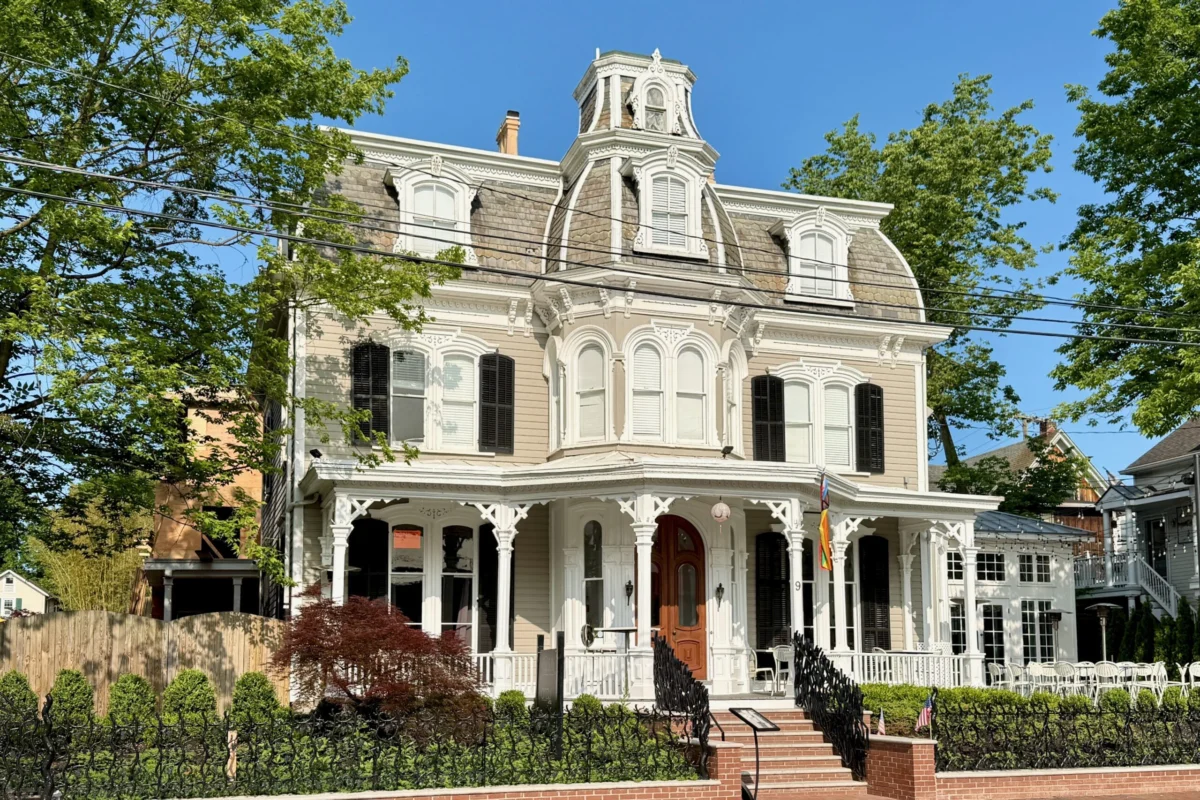
The market’s remarkably varied housing stock reflects this dynamic synthesis. Prospective buyers browsing the local inventory will find stately Colonial and Victorian homes sitting comfortably alongside sprawling legacy estates and cutting-edge new constructions that would look entirely at home in the heart of Silicon Valley.
According to architect Ralph Fey of Ralph C. Fey Architects, based in nearby Doylestown, Pennsylvania, New Hope’s signature aesthetic is largely rooted in regulatory necessity. More than half of the borough falls within a strictly regulated historic district, an administrative boundary that rarely permits older buildings to be torn down to make room for generic new construction. Rather than viewing these local zoning laws and historic preservation mandates as a creative roadblock, visionary architects have embraced the limitations, utilizing them to shape a distinct architectural philosophy.
"Some of the best architecture is born out of constraints," Fey notes. "The goal, the fun, the challenge is how to maintain that historic feel, meet the guidelines of the historic district, but provide the amenities that we now want to have as we live on the water."
Maureen Reynolds, a luxury real estate agent with Serhant in New Hope, understands this unique dynamic from both a professional and personal standpoint. She lives locally in an 1832-built converted horse barn characterized by soaring ceilings and rugged, hand-hewn wooden beams. Thanks to thoughtful architectural integration, her historic home effortlessly accommodates modern living. "I have all the modern amenities because of Ralph," she says.
Fey draws a direct comparison between New Hope’s eclectic streetscapes and the urban fabric of major European cultural hubs. While the Pennsylvania borough naturally lacks the sprawling urban density and sheer wealth of major metropolises, its architectural style evokes cities like London. In London, contemporary structures stand directly adjacent to historic properties, creating a layered visual tapestry that generates perpetual architectural excitement.
From Mills to Art Colony
The foundations of New Hope’s rich history date back to the 18th century, long before it became a haven for upscale real estate. Originally established on the banks of the Delaware River under the names Wells Ferry and later Coryell’s Ferry, the settlement underwent a pivotal transformation following a devastating fire in 1790. The blaze destroyed several local mills owned by businessman Benjamin Parry. Undeterred, Parry rebuilt the industrial operations under the moniker New Hope Mills, inspiring the town’s optimistic and enduring new name.
By the late 19th century, the borough’s trajectory shifted from industrial manufacturing to creative sanctuary. New Hope gained widespread recognition as a prominent art colony, ultimately emerging as a major epicenter for American and Pennsylvania Impressionists. Celebrated painters such as William Langson Lathrop, Edward Willis Redfield, and Daniel Garber were drawn to the area’s natural light and dramatic river landscapes, permanently embedding a creative spirit into the local culture.
"New Hope definitely has an architectural richness that’s been developed over centuries," Reynolds observes. "Its historic buildings’ relationship to the river and surrounding landscape give it a character that cannot be created overnight. And the challenge and opportunity for the architects, for Realtors, and for developers is to respect that history while designing homes that accommodate the way people live today."
Fey echoes this sentiment, emphasizing that the town’s ongoing prosperity as a premier housing market is inextricably linked to its past and the community’s fierce dedication to protecting it. He points out that neighboring river towns situated just a few miles away—which lacked historic districts and permitted wholesale demolition of older properties—failed to retain the classic charm and timeless atmosphere that makes New Hope so uniquely desirable. Protecting that heritage, he argues, is the very bedrock of the town’s enduring appeal.
Building in Harmony With the Past
Even when undertaking entirely new construction projects, builders and designers in New Hope place a premium on creating structures that remain in absolute harmony with the surrounding environment. Fey and Reynolds routinely collaborate with clients to select natural building materials—such as locally sourced fieldstone, rich cedar wood, and authentic slate roof tiles—that complement, rather than clash with, centuries-old neighborhood aesthetics.
"Most of my clients are very in love with the feel of the historic New Hope and also would like to see some of the amenities of slightly more glass, slightly higher ceilings," Fey explains. "So when we are doing additions on the traditional homes or existing historic housing stock, our goal is to contribute to the street."
This meticulous attention to detail has helped foster a remarkably broad demographic of prospective buyers. Local real estate professionals note that the buyer pool spans local residents looking to upgrade within the community, affluent urban transplants from neighboring New York City, Philadelphia, and New Jersey seeking primary residences or weekend pied-à-terre retreats, and retirees drawn to Pennsylvania’s favorable state tax climate.
Yet, the borough’s reputation extends far beyond the tri-state area. Reynolds reports working with international clientele hailing from destinations as far-flung as the South of France, Sweden, Canada, and Japan, cementing New Hope’s status as a real estate market that punches significantly above its weight class.
The market’s extraordinary momentum was highlighted recently when the Philadelphia Business Journal ranked New Hope as the nation’s second-hottest luxury housing market during the second quarter of the year among more than 300 analyzed regions nationwide. "That’s an extraordinary distinction for a community of this size," Reynolds notes.
A Surging Luxury Market
As demand has intensified, local property values have escalated accordingly. Reynolds recalls a time when townhomes were readily available between $1.4 million and $1.8 million, a price bracket that quickly shifted to a baseline of $2 million to $3.2 million in less than three years.
Recent real estate housing data underscores this trajectory, showing that the median listing price in New Hope has climbed past $2 million, marking a double-digit percentage increase compared to the previous year. Meanwhile, the luxury-tier threshold—representing the top 10% of properties in the local market—sits comfortably above the $5 million mark.
While local housing inventory has experienced modest year-over-year gains, housing economists point out that overall supply remains severely constrained compared to pre-pandemic baselines. Demand continues to be driven largely by cash-rich buyers originating from the broader regional corridor, including a surging share of purchasers from northern New Jersey and the New York metropolitan area who remain largely insulated from fluctuating mortgage interest rates.
In a market defined by its unique geographic and architectural constraints, prime positioning remains the ultimate commodity. Waterfront properties, in particular, command immediate attention from eager buyers, frequently moving within days of listing, even when properties require substantial interior renovation.
Ultimately, what continues to draw prospective homeowners to New Hope from across the globe is the rare combination of dense architectural variety and preserved historic integrity packed into a remarkably small footprint. As Esser concludes, the true beauty of the borough lies in its harmonious coexistence of contrasting styles, proving that modern high-ceilinged glass-and-steel construction and centuries-old stone farmhouses can not only coexist, but elevate one another in one of Pennsylvania’s most treasured settings.
| Source | : | Finance Poetry |
| Author | : | rifanmuazin |
| Editor | : | Finance Poetry Editorial Team |