
How One Author’s Personal Loss and Zoning Battles Inspired a New Novel on the Housing Affordability Crisis
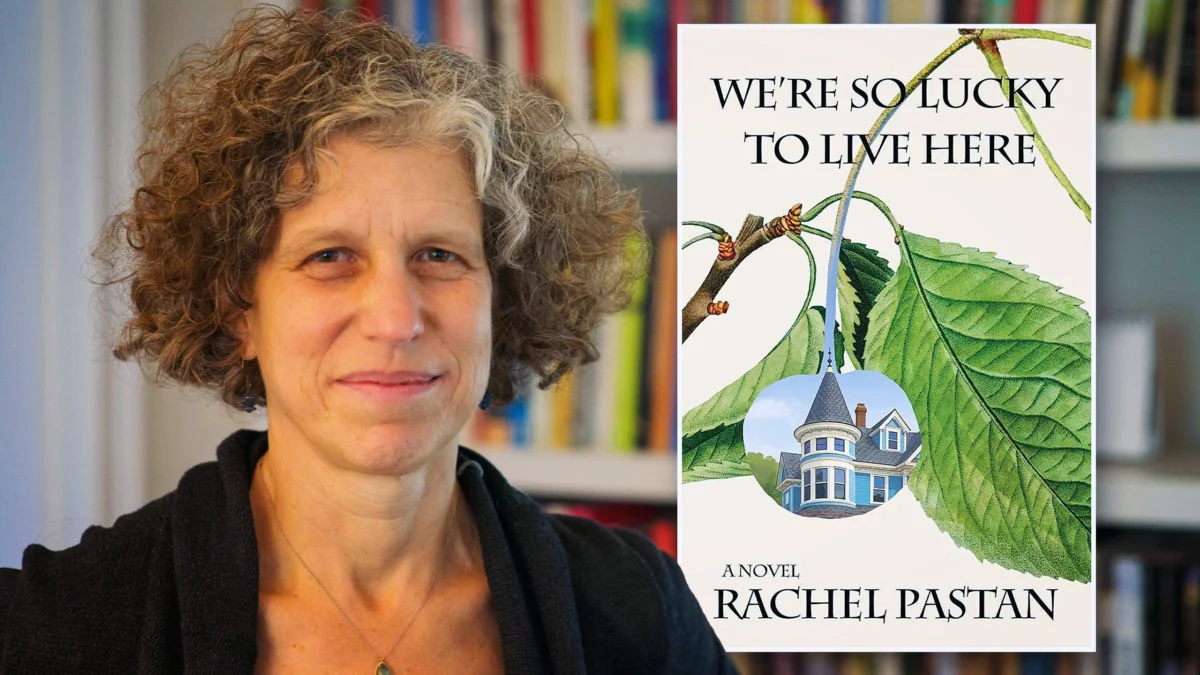
Novelist Rachel Pastan has long been attuned to the subtle shifts in her community, but nothing brought the nationwide housing crisis quite as close to home as watching a good friend get priced out of town. That personal displacement served as the primary catalyst for her latest book, “We’re So Lucky To Live Here,” a contemporary novel that examines the complex intersection of housing affordability, generational needs, local politics, and rigid municipal regulations.
Pastan drew heavily on both her creative instincts and her real-world civic experience to craft the story. For years, she chaired a housing affordability task force in Swarthmore, PA, immersing herself in the dry, often contentious details of local zoning codes, municipal master plans, and community resistance. That dual perspective—as a resident and a municipal advocate—infuses her fiction with a sharp, grounded authenticity that reflects the real-world struggles playing out in charming suburbs across the United States.
The novel is set in a fictional Philadelphia suburb closely modeled after Swarthmore, the quaint Pennsylvania borough where Pastan has made her home since 2000. Characterized by its tree-lined streets, historic charm, and a tight-knit population of roughly 6,000 residents centered around the prestigious liberal arts college of the same name, Swarthmore is predominantly defined by its stock of single-family homes. It is the kind of idyllic, walkable community that many families dream of putting down roots in, yet it has increasingly become economically exclusionary.
Reflecting on her own arrival in the town more than two decades ago, Pastan notes that she and her husband were able to purchase a modest single-family house on the combined, modest salaries of an author and a professor. Today, she readily acknowledges that such a milestone would be entirely out of reach for a couple in a similar financial position entering the housing market in the 2020s. According to Realtor.com data, the median listing price in Swarthmore hovered around $499,000 as of October, illustrating how dramatically housing costs have outpaced traditional wage growth for middle-income earners.
The stark reality of this economic shift hit home for Pastan when a longtime friend, who had been living in a local apartment with her husband and four children while steadily saving for a permanent home in town, realized the goal had become mathematically impossible. This financial wall was hit squarely during the COVID-19 pandemic, a period when remote work flexibility and demographic shifts caused home prices in small towns and suburban enclaves to skyrocket to unprecedented premiums. Unable to bridge the gap between their savings and local home values, Pastan’s friend and her family made the painful decision to relocate all the way to North Carolina to finally realize their dream of homeownership.
For Pastan, losing friends and neighbors to out-of-state migration due to housing costs is more than just a personal disappointment; it represents a fundamental degradation of community health. She argues that when a town becomes so expensive that young families, working-class professionals, and individuals in the arts can no longer afford to live there, the community loses a vital element of socioeconomic diversity. In her view, that diversity is not merely a nice-to-have amenity, but an absolute necessity for maintaining a vibrant, well-rounded, and resilient society.
Recognizing that the crisis demanded broader cultural attention, Pastan knew her next literary project needed to confront housing affordability head-on. That creative imperative is how the character of Gwen and the narrative arc of “We’re So Lucky To Live Here” came into existence.
The novel centers on a young woman in her late 20s who unexpectedly inherits her mother’s home. Suddenly faced with the burdens of homeownership on the modest salary generated by a career in the arts, Gwen must find creative, pragmatic ways to sustain her new housing situation rather than immediately selling the property and leaving the community behind.
Pastan explains that choosing a protagonist in her late 20s was a deliberate choice designed to explore how younger generations are uniquely impacted by—and adapting to—the modern economic landscape. She notes a distinct trend among younger adults who are increasingly interested in pooling resources, building non-traditional households, and bringing extended networks of people together under a single roof to share expenses and build community.
At the same time, Pastan is quick to emphasize that the housing affordability crisis is far from an isolated problem affecting only young people trying to crack open the door to homeownership for the first time. In her view, the systemic pressures rippling through the housing market touch individuals at every stage of the life cycle. It is an urgent problem for people in their 30s trying to raise children, as well as for older adults and retirees living on fixed incomes who find themselves desperately trying to hold onto the homes they have lived in for decades. The affordability crunch, she observes, affects everybody at all levels of society.
In the narrative world of her novel, Pastan points to a surprising antagonist: local zoning codes. Throughout the book, the protagonist Gwen attempts to enact a series of practical, self-reliant plans to make her inherited home financially viable. She considers taking on roommates to share mounting expenses and explores the possibility of constructing an accessory dwelling unit in the backyard to generate supplemental income and house a loved one. Yet, at every turn, her resourceful plans are systematically blocked by restrictive local municipal codes.
This fictional frustration mirrors Pastan’s own real-world advocacy. For five years, she has actively campaigned to legalize accessory dwelling units, commonly known as ADUs, as part of her civic work on the Swarthmore housing task force. She views ADUs, alongside the thoughtful conversion of larger single-family homes into multiunit buildings, as essential, common-sense pathways to opening up towns like Swarthmore to a broader demographic of residents.
The real-world friction between modern economic reality and antiquated municipal rules is starkly evident in Swarthmore’s existing regulatory framework. Current local zoning codes strictly limit who is legally permitted to live together within a single-family residential structure, mandating that residents must be related by blood, marriage, or adoption, while permitting the addition of no more than two unrelated tenants.
This tension explodes into the narrative of the novel when Gwen’s elderly neighbors lash out at her for having too many roommates in the house, citing local ordinances that strictly prohibit such living arrangements. Through these conflicts, the book highlights the generational friction surrounding housing norms and demonstrates how economic necessity constantly forces communities to challenge entrenched legal boundaries.
Ultimately, Pastan’s work reflects a deep understanding that the physical spaces people inhabit are inextricably linked to their social and emotional well-being. As she points out, housing policy touches on virtually every aspect of daily life, and her novel serves as an exploration of how affordability and regulation ripple outward to shape the character of a community at every single level.
| Source | : | Finance Poetry |
| Author | : | rifanmuazin |
| Editor | : | Finance Poetry Editorial Team |