
Inside America’s Only State-Owned Bank: A Century-Old Socialist Experiment That Now Delights Deep-Red Conservatives
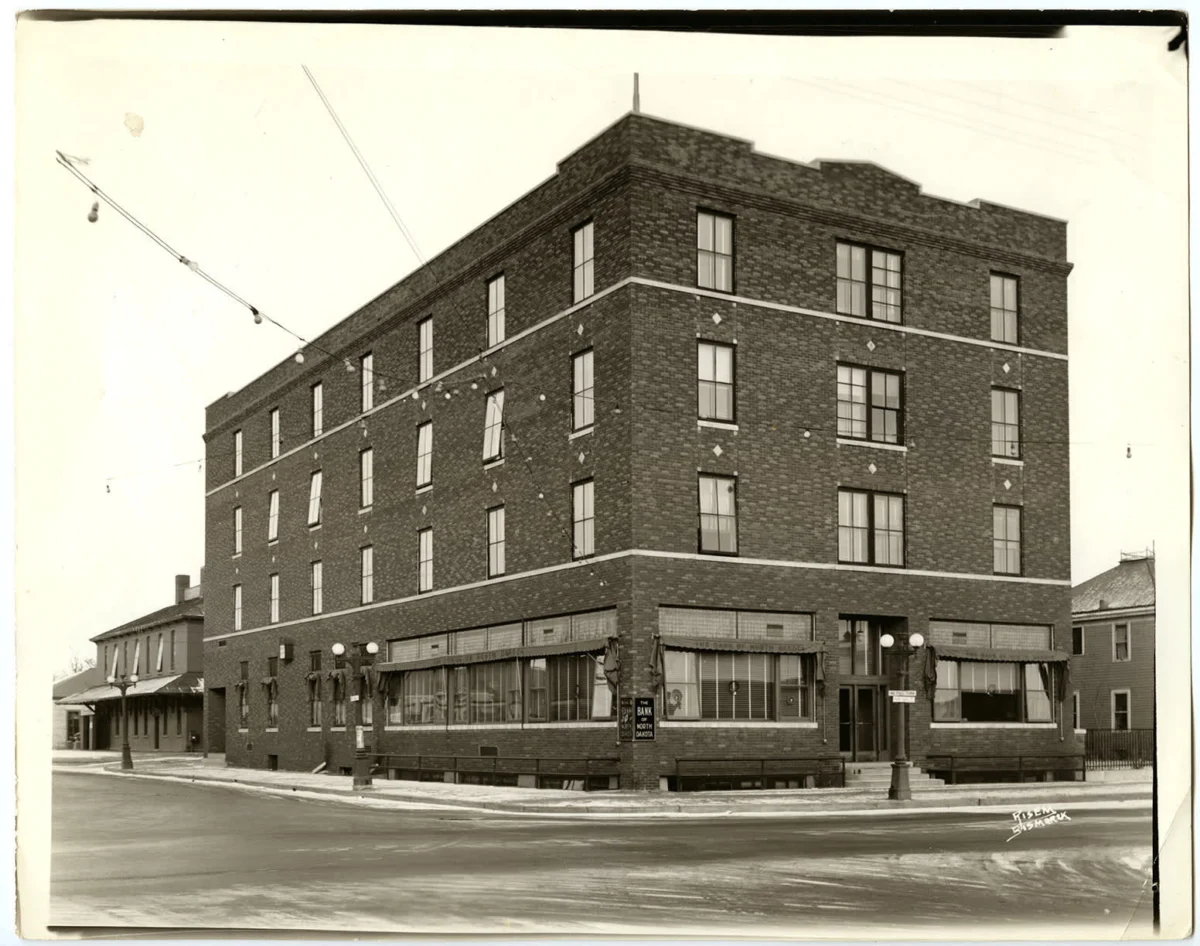
BISMARCK, N.D. — In 1918, an offshoot of the progressive farmer-labor movement known as the Nonpartisan League swept into power in North Dakota, riding a populist groundswell of anger directed squarely at big banks and industry barons in Minneapolis and Chicago.
The group was organized by former Socialist Party member Arthur C. Townley, a failed flax farmer who barnstormed the state in a borrowed Ford Model T calling for public ownership of key industries, including banks, grain mills, and manufacturing factories. By 1919, the state legislature officially authorized a state-owned and -operated bank to protect local farmers and businesses from out-of-state financial exploitation.
Over a century later, the Bank of North Dakota still stands, and the state continues to reap the financial benefits.
The Bank of North Dakota remains the nation’s only surviving state-owned and -operated bank. It has persisted as Great Plains politics has shifted dramatically from prairie progressivism to deep-red conservatism, and it now manages about $11 billion in assets while enjoying broad, bipartisan support from the state’s current political leaders.
"I think it’s weird, right? We’re one of the most conservative states in the union, and we have this state-run bank that was started by first-generation Norwegian immigrants," North Dakota Gov. Kelly Armstrong, a Republican, told CNBC. "I don’t think we could set one up now, but I’m sure glad we have it."
In addition to Armstrong, the bank’s present-day boosters include the state’s U.S. senators, Kevin Cramer and John Hoeven—the latter of whom is a former president of the bank—alongside former North Dakota governor and current Interior Secretary Doug Burgum. All are prominent Republicans in a political climate where the label "socialist" is frequently used as a pejorative weapon on the campaign trail.
At its core, the Bank of North Dakota is a traditional financial institution. It maintains a formal governance structure, holds the state’s public deposits, and provides loans. But it is also a singular institution that melds the political and financial arenas to actively advance the state’s industrial and economic goals. Those efforts can range from rescuing a coal-fired power plant on the verge of going belly-up to buying down interest rates on loans for agriculture, energy, or housing projects.
"I’ve always said it’s a very interesting concept; obviously it’s a successful one up here," Don Morgan, the Bank of North Dakota president and CEO, told CNBC. "It’s one that if you use it wrong, it could be a little bit dangerous. But if you use it right, it can be a really powerful financial tool."
The bank also stands as a distinct vestige of the country’s last major populist socialist uprising, just as the United States is gripped by a new wave of populism ahead of the upcoming midterm elections. The bank—located in a state that President Donald Trump won by more than 36 percentage points in 2024—has been cited as a successful model by Democratic, progressive, and democratic socialist candidates and lawmakers from across the country who are trying to expand public banking frameworks.
CNBC traveled to North Dakota to talk with leaders of the bank, which rarely grants such access to national media, as well as state political officials and business leaders to learn how the country’s only state-owned bank operates, how it interacts with the state it serves, and whether its century-old idea could successfully support a new national groundswell of state-run banks.
"For a long time people have scoffed at it—’Oh, that’s their experiment with socialism over there’—but I think it’s important to note that we live in an era of populism," Cramer said. "Others have looked at it a little bit skeptically, but more recently they’ve looked at it and gone, ‘You know, we could use a tool like that.’"
A Foundation of Populism
Roughly a dozen states have experimented with state-run banks in the past, but the Bank of North Dakota is the only one still operating today. Most early state-run banks failed by 1900, following the enactment of federal laws allowing private banks to issue notes backed by Treasury bonds, or due to turbulent regional economic downturns.
Still, some modern politicians hope to use the Bank of North Dakota as a working blueprint to bring public banking back to the national conversation. A rising wave of progressive populism could create a political environment where policymakers return to public banks as a viable solution for a litany of stubborn economic ills.
Most public banking supporters are Democrats, including progressive democratic socialists who have surged in popularity following the election of New York City Mayor Zohran Mamdani in 2025.
Mamdani, who served as a New York State Assembly member from 2021 to 2025, cosponsored a bill in the assembly that would have allowed municipalities and local governments to establish their own public banks. Wisconsin gubernatorial candidate Francesca Hong, who narrowly lost to Democratic nominee David Crowley, included a call for a state bank modeled explicitly on the Bank of North Dakota in her official platform. Rep. Alexandria Ocasio-Cortez, D-N.Y., a potential 2028 presidential contender, led a bill in Congress with Rep. Rashida Tlaib, D-Mich., to make it significantly easier for states to create public banking entities.
"We’re populists, whereas in other parts of the country Republicans aren’t as populist as they are conservative," Cramer said, addressing the irony of one of the nation’s most conservative states being emulated by democratic socialists. "It’s somewhat natural that a more liberal political bent is attracted to this sort of experiment that’s been going for 108 years in North Dakota that looks more appealing on the surface to the left than it might to the right."
Several Democratic-led states, meanwhile, have already taken concrete steps to give public banking a try. Among them is Washington, where an official work group is set to deliver a comprehensive implementation plan to the legislature.
"I think the people deserve to be in control of their own tax dollars that they’re putting forward," said Washington state Sen. Bob Hasegawa, a member of the work group who has spent years pushing for a state bank. Hasegawa noted that he began advocating for the idea in the wake of the 2008 financial crisis.
"We’re allowing big Wall Street banks to use our tax dollars, leverage it, and make tons of money for their shareholders and themselves," he said. "And in the meantime, if we want to do anything like build a bridge or water system or whatever, we have to go back and sell bonds. So we’re essentially borrowing what otherwise would be our own dollars back just so we can build infrastructure or finance other programs."
Massachusetts, New Mexico, and California are also actively pursuing their own proposals to create public banking systems.
Monetary experts argue that public banking makes fundamental sense in the design of a modern monetary system.
"For me, it came from a design perspective. Why don’t we do this obvious thing? Why doesn’t the public use the same power of banking that private institutions use?" said Christine Desan, the Leo Gottlieb Professor of Law at Harvard University, who teaches about the political economy of capitalism and the monetary system.
"The reason banks are such great lenders is that they operate in a network," Desan explained. "In effect, the way a public bank would operate is it would be saying, we’re just going to join the network; the public, the state of Massachusetts, will join the network, and then we’ll have the same advantages in lending."
Skepticism From Commercial Banks
Major players in the traditional banking industry remain unconvinced by the public banking concept.
The American Bankers Association strongly opposed the eventual laws enacted in California that allowed municipalities to set up public banks and establish state checking accounts for individual citizens. The trade group also opposed a ballot measure in Los Angeles that would have permitted the creation of a municipal public bank.
"History has shown that public banks are a solution in search of a problem and present significant risks to taxpayers," ABA spokesman Josh Britton told CNBC. "America’s banks are already highly regulated and well-capitalized and reliably serve communities, businesses, and state and local governments across the country, and misguided political interference would only harm consumers and the economy."
The prospect of state governments involving themselves directly in lending and financial decisions represents one of the greatest political risks facing public banking advocates. A public bank could theoretically pick economic winners and losers based on the political leanings of elected officials, unfairly disadvantaging certain industries while advantaging others.
Morgan noted that strict prohibitions against competing with local financial institutions, paired with a sound governance structure, have helped North Dakota avoid these pitfalls and could serve as a guide for other states.
"Our founding documents stating that we’re never to compete with [North Dakota financial institutions] is a very powerful statement, because I’ve always said the minute we start competing with them, then our model falls apart," he said. "I believe any state can do it. But how you found it originally is critically important. That original governance framework is critically important."
Morgan emphasized that the bank serves at the pleasure of the North Dakota Industrial Commission and the legislature, and will follow their direction "as long as it does not jeopardize and move against our founding documents or jeopardize the safety and soundness of the bank."
Running the institution first and foremost as a traditional financial entity rather than a pure government agency provides a vital safety net. At the end of the day, Morgan stressed, management must protect the bank because it safeguards the state’s public deposits.
Morgan, who frequently travels across the country to speak with public banking advocates, said a public bank can serve its home state in any capacity the legislature desires, provided it remains a healthy bank first. Other states have proposed using public banks to fund affordable housing, finance critical infrastructure, and reduce economic inequality.
"Your bank can do whatever your state wants it to do, as long as it does not get in the way of being a healthy bank," he said. "And then when you’re ready, you can do those things that strategically align with your state, which will be different in every state of the Union."
A Bankers’ Bank
Today, the Bank of North Dakota functions primarily as a "bankers’ bank," backing small community banks by helping them finance large projects they might otherwise be too small to handle independently.

The bank is helmed by the Industrial Commission, a governing body created by the bank’s original founding statutes. The governor, attorney general, and agriculture commissioner make up the commission, functioning collectively as a board of directors. The bank also utilizes an advisory board and an executive committee to manage day-to-day operations.
"I really attribute that governance framework to the 107-year history and why we’re still around, [while] many other public banks have failed out up to this point," Morgan told CNBC at the bank’s Bismarck headquarters.
Morgan explained that the bank’s core business consists of participation loans, commercial real estate loans, and agricultural loans. The bank also engages in areas where the state’s privately owned banks do not typically compete, such as offering direct student loans at low interest rates for North Dakotans pursuing higher education.
Additionally, the institution moves quickly to establish disaster relief programs when crises strike. The bank pumped $100 million in additional loan support to farmers in 2026 amid ongoing challenges from tariffs, low commodity prices, and high operational costs. In decades past, it took even more dramatic steps—selling foreclosed farmland back to struggling families below asking price following the Dust Bowl and ensuring public school teachers received full pay during the depths of the Great Depression.
Unlike retail institutions, the bank does not maintain a traditional deposit base of individual consumers stashing their personal cash. In fact, the bank actively discourages individual consumer deposits so as not to compete directly with the state’s community banks.
Instead, the bank serves as the primary depository of state public funds. Morgan noted that it draws its core deposit base from the general fund, which is a mix of state tax revenues and collected fees. The state legislature can then appropriate bank profits back into the general fund to support the state budget, or those profits can be reinvested into the bank’s initiatives to benefit local industries.
"We take that average balance of about $6.6 billion—that’s our deposit base, our core deposit base," Morgan said. "We use those deposits [for the bank’s operations], work through our 91 financial institutions in the state, do our participation loans, do our disaster loans, do our student lending, and then we make a nice healthy profit back to the general fund."
North Dakota’s commercial banks do not view the Bank of North Dakota as a rival, according to Rick Clayburgh, president and CEO of the North Dakota Bankers Association. Instead, they view it as an essential tool that allows local community banks to punch well above their weight class.
"I think if we were trying to create a state bank here in North Dakota today, our association would probably be opposed to it," Clayburgh said. "But the fact that we know what it is now and that it’s developed over the 107 years, it is a wonderful tool for institutions."
Coal and Data Center Funding
A clear example of the bank’s active investment strategy—and one that progressives might approach differently—can be found in McLean County.
There, on the rolling plains between Underwood and Washburn, the Rainbow Energy Center’s Coal Creek Station burns lignite coal to generate 1,151 megawatts of electricity per hour for roughly 1.7 million customers in Minnesota via a massive transmission line. The plant employs about 200 people directly, while the adjacent coal mine supports hundreds more jobs.
In 2020, however, the plant faced an entirely different fate. Its former owner, Great River Energy, announced that the facility was losing money and that it planned to retire the plant by the end of 2022, replacing its generation capacity with wind farms and natural gas.
Then-Gov. Burgum, a vocal supporter of the coal industry, alongside Cramer and Hoeven, immediately demanded that Great River find a buyer for the plant and its accompanying transmission line—a daunting task as the nation shifted rapidly toward renewable energy and coal’s economic viability declined.
"It would have been a huge detrimental impact to this area," said Ethan Vaagene, the plant’s director. "It was probably the worst feeling I’ve had in my life … I still remember this day when the prior owner announced to all the employees that they were going to be closing the facility. It was a complete shock to all of us."
Burgum spearheaded an all-of-government effort to find a viable buyer. While a buyer ultimately emerged, executing the complex financing of the acquisition would have been nearly impossible without the direct intervention of the Bank of North Dakota.
Morgan said the bank was able to quarterback the intricate sale of the plant and its transmission line from Great River to Rainbow Energy. Rainbow Energy Center acquired the coal plant, while Nexus Line purchased the transmission line that moves the power to Minnesota. Both companies operate as affiliates of Rainbow Energy Marketing Corporation.
The deal included a complex financing package in which the North Dakota Transmission Authority sold bonds for the first time, netting $150 million in proceeds to fund a loan for Nexus Line to purchase the transmission infrastructure. The Bank of North Dakota purchased the bonds through a $150 million Match Program loan, utilizing its dedicated vehicle for supporting large-scale economic diversification projects.
The CEO of the company that acquired the power plant acknowledged that without the Bank of North Dakota, the transaction would never have materialized.
"I start all our meetings with the Bank of North Dakota [by saying] that we wouldn’t be here today without you," Rainbow CEO Stacy Tschider told CNBC from the roof of the coal plant. "If I was going to go outside the state, it would be more difficult to basically get other banks’ understanding because … with prior administrations, there has been a war on coal."
Following the bank’s investment, Rainbow began expanding the facility’s operational use.
During a tour of the plant, Tschider outlined his vision for the facility as a futuristic "energy park." Underneath the towering spires releasing steam from electricity generation, computers mining cryptocurrency hum away. Coal Creek now redirects a portion of its on-site electricity generation to mine bitcoin during periods of low grid demand, helping offset lost market profits.
Tschider revealed that the plant is also in active talks with artificial intelligence hyperscalers to construct a massive data center directly adjacent to the facility to generate additional revenue. While a scattering of anti-data center yard signs dot the rural roads near Coal Creek—reflecting local opposition similar to resistance seen across the nation during the AI infrastructure build-out—Tschider remains optimistic.
"We’re in the process right now of working with several hyperscalers," Tschider said, adding that he expects construction to begin within the next six months.
A Stablecoin for the Original Populist
At the Theodore Roosevelt Presidential Library, nestled in the scenic canyons of the badlands in Medora, North Dakota, architecture mirrors the rugged geography. The structure juts from the land where a young Roosevelt sought solace after the tragic deaths of his wife and mother on the exact same day.
On the day CNBC visited the library, the Bank of North Dakota—which extended a $70 million line of credit to help launch construction while the institution awaited private fundraising, allowing it to open in time for the nation’s 250th anniversary—was celebrating the launch of its first stablecoin. Dubbed the Roughrider Coin, the digital currency will enable North Dakota’s network of community banks to execute near real-time bank-to-bank transfers.
The ethos of Theodore Roosevelt looms large across North Dakota, and the presidential library harbors ambitious goals: hosting a future presidential debate and serving as a premier national hub for conservation efforts. Roosevelt also holds the unique distinction of being a favorite historical figure for modern political figures on both sides of the aisle, lauded for his populist appeal, trust-busting legacy, and staunch nationalism.
In many ways, the Bank of North Dakota itself was a direct product of the broader political reform movement that Roosevelt helped usher into American public life.
"The Bank of North Dakota has very deep roots in the state of North Dakota; [it’s] very much tied to the prairie populist movement," said Robbie Lauf, the library’s interim CEO. "That kind of happened after the Progressive Era, of which Theodore Roosevelt was one of the most important characters of a fundamental piece of American history."
Lauf, who previously served in Burgum’s gubernatorial administration and in the office of former Federal Reserve Chair Jerome Powell, rejected the notion that the bank conflicts with free-market principles simply because it originated from a prairie populist, progressive movement.
"Anywhere where agriculture and rural communities are formed, there’s a deep populist heritage, and there’s a misunderstanding of what populism means, as well," Lauf said. "What it really is trying to do is help us achieve self-determination as a region."
"It is anything but an embrace of any type of state ownership of means; it’s a partnership with private enterprise," he added. "This institution does not work without private enterprises and private banks … For me, that’s deeply free market."
Asked about the bank’s early socialist roots, Morgan reiterated that the institution, regardless of its ideological origins, has proven to be a sound and enduring idea.
"There’s good ideas on all sides of the political spectrum," Morgan said. "We get so hung up in the debate or the letter by your name or the title assigned to you. There are good ideas."
| Source | : | Finance Poetry |
| Author | : | rifanmuazin |
| Editor | : | Finance Poetry Editorial Team |