
Inside the APEC Summit in Shenzhen: Trump, Xi, Putin, and a High-Stakes Gathering of Global Powers
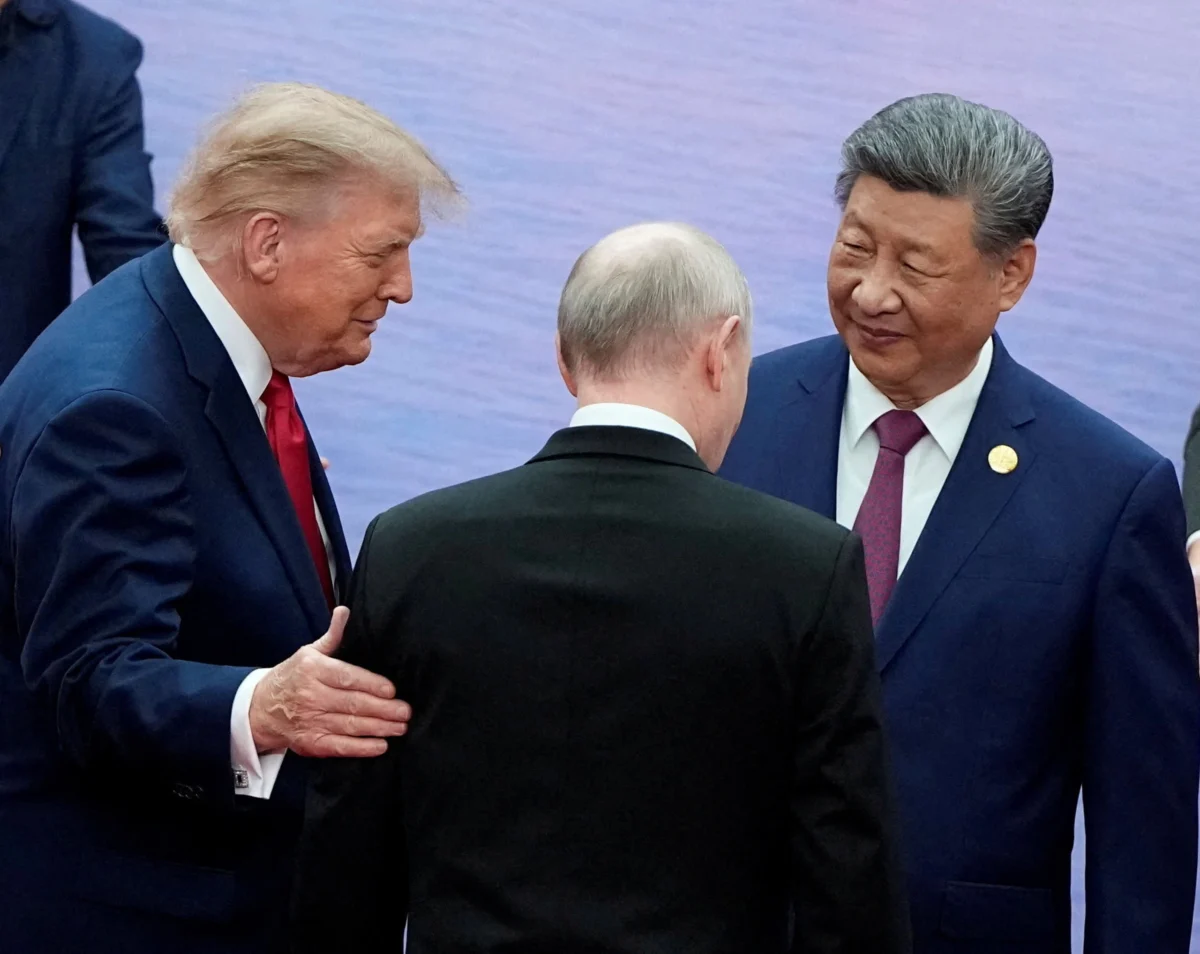
SHENZHEN, China — For an American journalist covering international affairs, traveling halfway across the world to China provided a rare, firsthand view of U.S. President Donald Trump meeting face-to-face with his global counterparts. The occasion was the Asia-Pacific Economic Leaders’ Meeting, held from November 17 to 19, bringing together world leaders against a backdrop of complex geopolitical and economic dynamics.
Trump emerged from a tight cluster of black-clad photographers, security personnel, and administrative handlers who closely surrounded him as he navigated the welcome banquet in Shenzhen, located in the booming southern Chinese province of Guangdong. The high-profile gathering offered an immediate glimpse into the intricate and often delicate choreography of modern summit diplomacy.
Seated just a few spots to Trump’s left was Russian President Vladimir Putin. As Chinese President Xi Jinping rose to lead a toast during the evening’s proceedings, Putin picked up a glass of red wine to join in, signaling a moment of diplomatic camaraderie amid a broader landscape of intense international friction.
Earlier in the evening, President Xi delivered remarks in Mandarin, which were translated for international observers. "At tomorrow’s Leaders’ Meeting, we will discuss measures to expand mutual opening up, explore pathways to innovation-driven growth, and identify opportunities to expand practical cooperation across various fields, so as to translate more initiatives into tangible results," Xi told the assembled dignitaries and officials.
While Xi’s remarks were broad and forward-looking, the diplomatic agenda for the following day carried immense weight. Thursday’s schedule featured a closely watched bilateral meeting between Xi and Trump, as well as a highly anticipated trilateral meeting that included Putin. Yet, observing the relaxed yet calculated mood within the grand banquet hall, it quickly became apparent to observers that these high-level conversations had effectively begun informally the night before across the long banquet tables. Much of what transpires at APEC—including critical bilateral meetings and subtle exchanges between heads of state—unfolds away from the probing lenses of the international media.
Despite the heavy political stakes, what struck attendees most was the apparent absence of immediate tension surrounding the recent controversy involving Nvidia CEO Jensen Huang. Huang’s recent resignation had dominated financial markets and gripped corporate circles for the prior ten days, creating a palpable sense of anxiety across global tech sectors. Yet inside the banquet hall, that corporate storm seemed distant.
Indeed, prior to Trump’s grand entrance into the banquet space, Chinese Commerce Minister Wang Wentao was seen sharing a friendly and relaxed moment with U.S. Treasury Secretary Scott Bessent, alongside other members of the American delegation. This cordial interaction followed reports from the previous week indicating that U.S. officials did not plan to raise allegations regarding Huang’s personal life—specifically, reports concerning an alleged affair with a Chinese spy—during Trump’s formal meeting with Xi.
The atmosphere stood in sharp contrast to events just two months prior. Photographs from that earlier period captured both Huang and Tesla CEO Elon Musk sharing a prominent table with Trump and Xi in Washington, D.C. Furthermore, when Trump visited Beijing earlier in May, Huang had taken time to speak openly with reporters inside the historic Great Hall of the People, with Musk also present alongside one of his sons.
This time around, however, neither tech titan was visible in a room closely monitored by the global media. While Musk had been widely expected to join Trump’s official delegation in Shenzhen, he was nowhere to be seen during Wednesday evening’s events. Their absence from the government-heavy banquet was striking. The world’s most powerful political leaders may be actively grappling with the profound economic and strategic implications of artificial intelligence, but they evidently did not require the tech industry’s biggest figures seated at the table to do so.
Over the months spent following APEC’s designated "China Year," a broader pattern has emerged: the multilateral forum has provided Beijing with a crucial platform to host delegations from the United States, Japan, and other member economies during a period when unresolved geopolitical disputes might otherwise have made such high-level gatherings exceedingly difficult to orchestrate.
Even so, throughout a year continually defined by diplomatic talk of U.S.-China "strategic stability," the APEC events have repeatedly exposed underlying rifts and rapidly shifting dynamics in global power structures. Those shifting dynamics were fully on display during the grand opening of the APEC CEO Summit.
Several hundred high-ranking attendees, ranging from Xiaomi CEO Lei Jun to U.S. Ambassador to China David Perdue, arrived early to secure their places for the opening session of the CEO Summit. Following a tense, silent wait that lasted for at least ten minutes, the audience greeted President Xi with a distinctly modern display: hundreds of attendees raised their smartphones high into the air to capture his entrance on video. Despite the technological enthusiasm, the physical applause from the room was surprisingly muted.
A similar dynamic played out during the government-heavy welcome banquet that same evening. Scores of attendees rushed forward to take personal photographs of Xi and other arriving leaders, effectively blocking the sightlines of professional photojournalists and reporters covering the event.
Following Xi’s comprehensive morning address, a lengthy intermission preceded remarks from Malaysian Prime Minister Anwar Ibrahim. "The entire multilateral framework needs to change," Prime Minister Ibrahim declared from the stage, while pointedly praising China for its rare and consistent recognition of smaller developing nations.
During the subsequent tea break, attendees quickly resumed active networking and informal mingling. Some participants even carried coffee and light snacks back into the main auditorium as Russian President Putin prepared to take the floor. The audience listened intently as Putin delivered remarks emphasizing his nation’s ongoing economic resilience and asserting that European economies were steadily losing competitive ground.
As attendees subsequently dispersed for lunch, a notable observation lingered among the press corps: neither Trump nor any other G7 leader had taken the stage during the opening plenary session. Canadian Prime Minister Mark Carney delivered remarks later in the afternoon, but the primary American visibility during the morning session came largely through business leaders featured in a promotional video played just before Xi’s address.
The notable absence of a direct American voice from the podium became even more pronounced during Wednesday evening’s banquet. Trump notably refrained from following Xi’s address with a formal toast of his own. For a famously outspoken American president who had previously delivered a sweeping, unconventional speech in Davos declaring that the United States must acquire Greenland, his quiet demeanor in China was a departure from form. Yet on Wednesday night in Shenzhen, Trump was not the one holding the microphone, leaving observers to ponder the strategic restraint behind the scenes as global leaders prepared for the rigorous diplomatic agenda ahead.
| Source | : | Finance Poetry |
| Author | : | rifanmuazin |
| Editor | : | Finance Poetry Editorial Team |