
Rising Prices, Sinking Fortunes: How Economic Strain and Withdrawn Aid Push Northern Yemen to the Brink
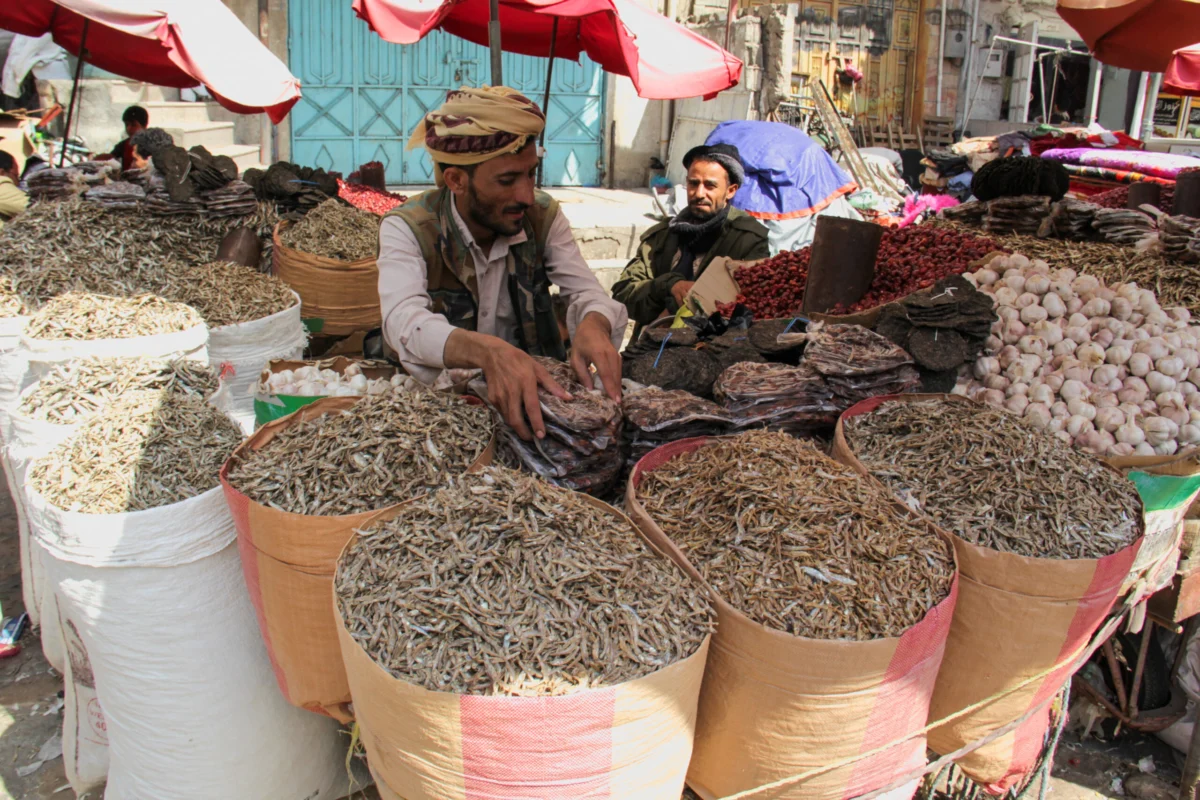
HODEIDAH, Yemen — For Umm Sami, a widowed mother of four living in the Red Sea port city of Hodeidah, the daily routine of survival has been reduced to desperate fractions. To feed her children, she sells small household goods and takes on occasional domestic work, scraping together whatever income she can find. But spiraling inflation has fundamentally altered how she shops, forcing her to abandon any concept of monthly or even weekly budgeting.
“Sometimes we buy a little flour or oil that lasts just one day because we cannot afford a whole bag,” she told Al Jazeera.
Her dilemma reflects a grim reality playing out across northern Yemen. Food remains physically present on the shelves—it was visibly available in the markets monitored by humanitarian assessments as recently as September—yet the purchasing power of ordinary families has evaporated. According to the Yemen Joint Monitoring Report, a collaborative humanitarian and food security assessment, a basket of basic foods in Houthi-controlled areas like Hodeidah cost about 7 percent more in September than it did the previous month, translating to an increase of $91 and hitting its highest level in a year.
While families on both sides of the front lines are struggling with economic degradation, data from the Famine Early Warning Systems Network (FEWS NET) indicates that while prices are rising faster in the government-held south, the Houthi-controlled north is uniquely crippled by extreme income scarcity and a near-total collapse of international aid.
Most households in and around northern towns can now secure only five to 10 days of paid work a month, according to FEWS NET reporting from October. Compounding this labor shortage is the suspension of the UN World Food Programme’s (WFP) food assistance in Houthi-held areas, which has been frozen since September 2025. By contrast, WFP began a distribution round in mid-September 2026 in government-held areas with the goal of reaching roughly 1.7 million people.
The consequences of this widening safety-net gap are severe. In the last comprehensive nationwide hunger analysis published by UN agencies and their partners in mid-2025, the only populations projected to face catastrophic levels of hunger—totaling roughly 41,000 individuals—were located within four specific districts across the Amran, Hodeidah, and Hajjah governorates. All of these districts remain under Houthi control.
Addressing this escalating crisis, the WFP and the UN Food and Agriculture Organization (FAO) formally designated Yemen among the hunger hotspots of highest concern for the six-month period ending in May 2027. As fighting spreads and humanitarian aid continues to dry up, a closer look at northern Yemen reveals why food filling the market stalls is rapidly slipping entirely out of reach for the families who need it most.
Why are some families in Hodeidah buying food one day at a time?
The fundamental crisis facing northern Yemen is that a day’s labor—when work can be found at all—no longer pays for a day’s worth of food.
Ahmed Arjash supports a family of six by driving a rented motorcycle taxi near Hodeidah’s busy Othman market. However, as economic hardship deepens, many of his former regular customers have chosen to walk rather than pay transport fares. “Now, my daily earnings barely cover the fuel or the rent for the motorcycle,” he told Al Jazeera.
Similarly, Saleh, a construction worker reliant on daily wages, reported that entire days pass without a single offer of employment. “If I work one day, the wage is not enough to cover the family’s needs for several days with prices this high,” he explained.
The fishing industry, once a cornerstone of the local coastal economy, offers little refuge. Salem, a fisherman in his 30s, noted that the operational costs of fuel, boat maintenance, and fishing equipment have surged, while the number of local customers capable of affording fresh fish has plummeted. “Many families no longer buy fish as they used to,” he said, adding that on some trips, his earnings barely cover the expenses required to venture out to sea.
With income streams severely depressed, households are implementing drastic coping mechanisms. In Hodeidah’s poorest neighborhoods, families routinely skip meals entirely or cut out expensive nutritional staples such as meat, fish, milk, and fruit.
FEWS NET reported that in Houthi-held areas, increased taxation on street vendors and local shops had already suppressed labor demand by September. Looking ahead through May 2027, the network projects additional small business closures and warns that surviving enterprises will be forced to hire even fewer workers.
How does food reach shops in northern Yemen, and what makes the journey more expensive?
Virtually all commercial food imports into Yemen arrive by sea, with approximately 90 percent of the country’s food supply coming from abroad, according to WFP figures. Hodeidah serves as the primary maritime gateway supplying the Houthi-held north, including the capital, Sanaa.
Data indicates that food has continued to arrive. Imports into Houthi-held areas rose by 10 percent between June and August compared with the preceding three months, and doubled on a year-on-year basis. However, fuel imports have experienced no comparable stability.
Fuel imports plummeted by about 85 percent year-on-year in August, with northern ports recording zero arrivals of diesel or petrol, according to the FAO. In response to the shortage, Houthi authorities raised petrol prices by roughly 10 percent in September—the first such increase in four years, as reported by Al Jazeera. Consequently, bread prices across Houthi-held areas jumped by 25 percent that same month, according to FEWS NET data.
Compounding the supply chain crisis, the ports themselves have increasingly become targets of military activity. On November 2, Houthi-run Al Masirah TV reported that Saudi aircraft had struck a commercial pier and a vessel at Ras Isa port, situated north of Hodeidah, according to the Agence France-Presse. Days later, the Saudi-led coalition stated it had targeted operational capabilities in Hodeidah, prompting Houthi threats of retaliation against Saudi Red Sea ports. While Hodeidah port remains officially open, the long-term impact of these strikes on continuous import deliveries remains uncertain.
Moving imported goods from the coast to inland markets has likewise become significantly slower and more expensive. Saleh Abdullah, a shopkeeper in Sanaa, noted in September that a truck traveling between the southern regions and the north now takes up to a week to reach its final destination, compared to three days or less prior to the recent escalation in fighting.
“Whether it is the flour, the baby milk, the fruits, the vegetables, or anything else,” Abdullah explained, consumers ultimately absorb the inflated transport and fuel costs embedded in every step of the supply chain.
When families cannot afford food, what stops aid from reaching them?
While skyrocketing prices and dwindling wages squeeze households from the market side, the primary institutional safety net in the north has been dismantled.
The WFP suspended its food assistance operations in Houthi-controlled areas in September 2025 following the detention of UN personnel by the group. Last month, the WFP confirmed that 73 UN personnel, including 38 of its own staff members, remained in detention.
While other international and local aid organizations continue to operate in the north, severe funding cuts and operational restrictions severely constrain their capacity. The Norwegian Refugee Council (NRC) warned that a small cadre of overstretched and underfunded Yemeni and international organizations constitutes the final lifeline remaining for millions of vulnerable residents.
The NRC added that funding cuts, international sanctions, and the ongoing UN suspension have precipitated a broader collapse of the humanitarian response. According to the organization, international donors have provided a mere 16 percent of the financial resources requested for food security initiatives across Yemen this year.
What does the UN’s new hunger warning tell us about northern Yemen?
The latest early warning report published by the FAO and the WFP cautions that ongoing conflict and deepening economic hardship threaten to exacerbate acute food insecurity through May 2027. While the report highlights economic instability as a primary driver, the lack of data access prevents agencies from quantifying the exact population currently suffering from extreme hunger in the north. The agencies note that conflict, population displacement, economic shocks, and extreme weather are driving severe risks across the five global hunger hotspots of highest concern.
The Integrated Food Security Phase Classification (IPC)—the internationally recognized, UN-backed system for measuring food security severity—has not published a recent analysis covering Houthi-held territories. Its most recent comprehensive figures, which estimate that 5.4 million people are facing crisis levels of hunger or worse between October and December, including 1.8 million experiencing severe emergency conditions, apply strictly to government-held areas.
A broader nationwide analysis published in June 2025 projected that 18.1 million people across Yemen would experience crisis levels of hunger or worse between September 2025 and February 2026, representing roughly 52 percent of the population evaluated in the study.
FEWS NET projects that emergency levels of hunger will persist in Hodeidah and Hajjah through May 2027. Under these conditions, families face extreme nutritional consumption gaps or are forced to sell off essential livelihood assets simply to purchase basic daily calories. The network’s most severe alert focuses on Taiz, a government-held city encircled by a prolonged Houthi siege, where analysts warn of a credible risk of famine between February and May if the blockade is maintained and tightened.
Back in Hodeidah, bags of flour remain visible on merchant shelves. For families like Umm Sami’s, however, the central crisis is no longer availability, but the shrinking fraction of food they can afford to buy.
“Even bread has become a burden,” she said.
| Source | : | Finance Poetry |
| Author | : | rifanmuazin |
| Editor | : | Finance Poetry Editorial Team |