
Natural Gas Futures Rally on Chilly Forecasts, Strong LNG Demand and Light Production
Natural gas futures advanced on Wednesday, marking a firm upward push that captured the attention of commodities traders across the energy sector. The market’s latest gains underscored a shifting sentiment on trading floors as participants weighed a convergence of bullish fundamental drivers. According to market reports from the Daily Gas Price Index, natural gas futures rallied for the third time in four sessions during the week, finding robust support as traders digested a mix of weather outlooks, industrial demand metrics, and domestic supply constraints.
The mid-week momentum was fueled heavily by a combination of chilly near-term weather forecasts hinting at early-season heating demand, persistently strong international interest in liquefied natural gas (LNG), a continuing trend of light domestic production, and resilient physical cash market strength across major trading hubs. Together, these elements created a supportive backdrop for futures contracts, allowing buyers to step in and push values higher even as the broader macroeconomic landscape presented competing pressures for energy commodities.
At a Glance: Market Drivers and Fundamental Support
The driving forces behind the recent rally reflect a delicate balance between shifting meteorological trends and fundamental supply-and-demand metrics that typically dictate market direction as the heating season approaches.
Chief among the catalysts inspiring buying interest are updated weather models pointing toward colder temperatures in key consuming regions. As forecasts begin to project a more sustained push of chilly air across parts of the United States, market participants are increasingly pricing in the anticipated uptick in residential and commercial natural gas consumption for space heating. Even minor deviations in weather projections can trigger swift re-evaluations among futures traders, and the recent sequence of chilly near-term outlooks has provided a tangible floor for prices.
Compounding the supportive weather narrative is the sustained strength of LNG demand. U.S. export facilities continue to run at high utilization rates to supply international markets, particularly in Europe and Asia where global energy security and inventory replenishment remain top priorities. The steady pull of domestic natural gas feedgas toward coastal liquefaction terminals ensures that a substantial share of daily production is continuously funneled away from domestic storage injections and directed toward overseas shipments. This robust export channel acts as a persistent pillar of support for U.S. natural gas values, helping to insulate the market from localized oversupply conditions.
At the same time, supply-side fundamentals have remained relatively constrained. Recent reports indicate that domestic natural gas production has hovered at relatively light levels, frustrating expectations of a swift rebound in output that might otherwise have eased market tightness. Upstream operators have largely maintained disciplined capital allocation strategies, focusing on value and capital returns rather than aggressive volume growth. This restraint in production, combined with steady declines or moderated growth in available inventories compared to historical peaks, has kept the market sensitive to any sudden shifts in consumption patterns.
Adding to the bullish momentum is the performance of the physical cash markets. Regional pricing hubs have exhibited notable strength, with spot prices reflecting tight local balances and steady demand from utilities and industrial users. When cash markets trade with underlying strength and basis differentials remain firm, it often translates into renewed confidence among futures traders, encouraging long positions and discouraging aggressive short-selling.
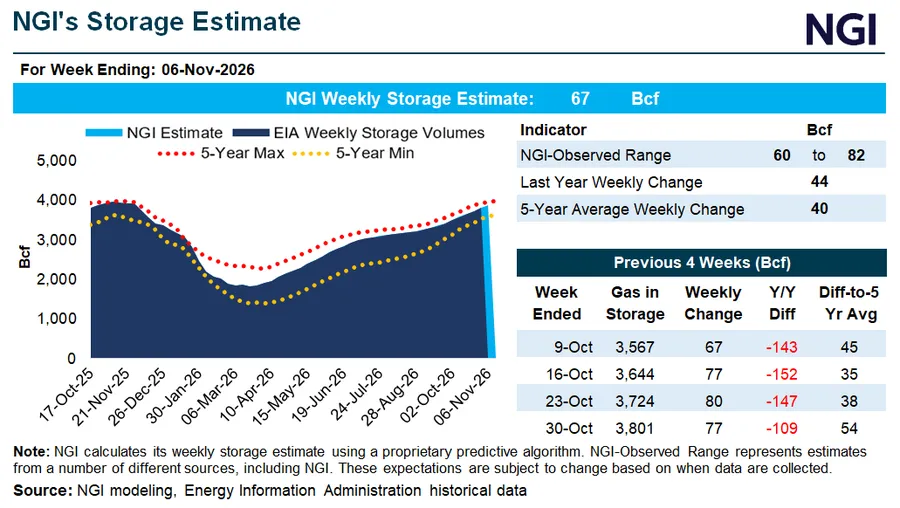
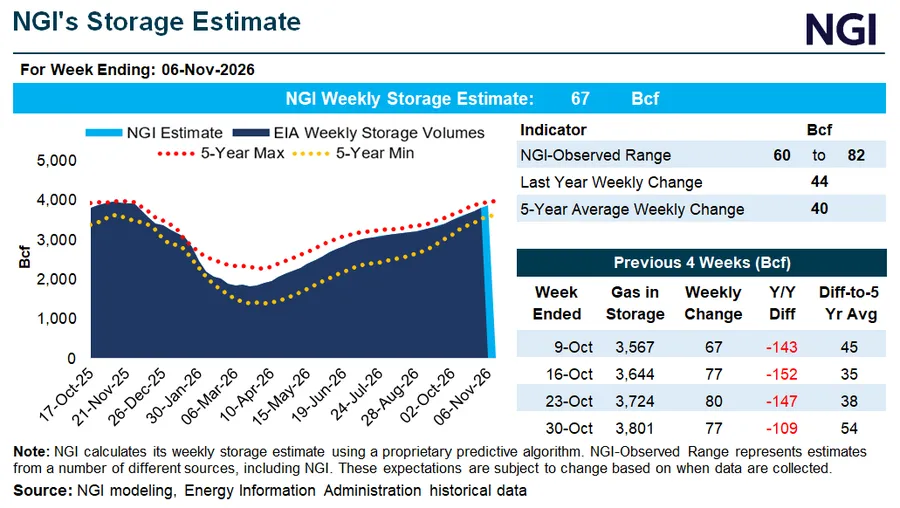
The interplay between these varied factors was clearly illustrated in recent market evaluations, including data tracking inventory projections. For instance, market analysts at NGI previously estimated a notable U.S. natural gas storage injection for the week ended November 6, coming in notably above the historical five-year average. While storage builds of that magnitude might under different circumstances be viewed as bearish, the current market environment has shown a remarkable ability to look past isolated inventory figures when near-term weather, export dynamics, and production constraints command the narrative.
As trading progresses through the remainder of the week, market participants will continue to monitor incoming meteorological data, pipeline flow reports, and daily updates from export terminals to gauge whether the current bullish momentum can be sustained. With production remaining subdued and international buyers competing aggressively for U.S. supplies, the natural gas complex remains finely tuned to any new developments on the horizon.
| Source | : | Finance Poetry |
| Author | : | rifanmuazin |
| Editor | : | Finance Poetry Editorial Team |