
Unsiloed AI Secures $7.5M in Seed Funding to Make Complex Enterprise Documents Accessible to AI Agents
As modern businesses increasingly turn to automated artificial intelligence agents to streamline operations and handle complex workflows, they frequently run into a stubborn bottleneck: the vast oceans of valuable information locked away inside messy, unstructured enterprise documents. While standard documents like plain text emails are easy for algorithms to digest, real-world business paperwork is rarely straightforward. Financial statements, legal contracts, medical records, and technical blueprints
are typically filled with intricate tables, multi-column layouts, embedded charts, and dense figures that traditional large language models struggle to interpret accurately.
To tackle this persistent enterprise challenge, Unsiloed AI has successfully raised $7.5 million in a seed funding round led by Silicon Valley venture capital firm Felicis. The capital injection is designed to help the startup further develop its specialized document-processing technology, which is engineered to bridge the gap between messy enterprise paperwork and the automated AI agents that need to read and act upon it.
The freshly closed seed round drew strong participation from several prominent institutional investors, including Y Combinator, Orange Collective, and Uncorrelated Ventures. In addition to these institutional backers, the funding round also saw contributions from notable angel investors Aarthi Ramamurthy and Beth Turner, reflecting growing venture capital interest in foundational infrastructure that supports enterprise AI adoption.
The stakes for getting document interpretation right are exceptionally high in corporate environments. When an AI system misreads a number in a financial spreadsheet, misinterprets a liability clause in a legal contract, or overlooks a critical dosage note in a medical chart, the resulting mistakes can be extremely costly. For industries like banking, healthcare, and legal services—sectors that rely entirely on the meticulous review of document trails to conduct their daily business—even a minor error can have severe operational, financial, and regulatory consequences.
Unsiloed AI was created to eliminate these risks by deploying specialized software that systematically breaks down complex documents. The technology extracts precise information from tricky elements like tables and charts, transforming unstructured visual layouts into clean, structured data that AI agents can seamlessly consume and reason over. Crucially, the platform also provides source-attribution capabilities, showing users precisely where every extracted piece of information originated within the original document. This allows enterprise workers to verify the AI’s findings against the source material rather than blindly trusting the output at face value.
The core challenge facing developers in this space stems from the underlying nature of modern artificial intelligence. Because large language models are inherently probabilistic, they are prone to making mistakes, introducing deviations, or generating hallucinations that can corrupt downstream business workflows. According to Unsiloed co-founder and CEO Aman Mishra, mitigating this unpredictability is vital for enterprise adoption. In an interview discussing the technical hurdles of document processing, Mishra noted that the probability of error in raw language models creates a massive negative impact further down the data pipeline, making specialized ingestion layers mandatory for serious enterprise deployments.
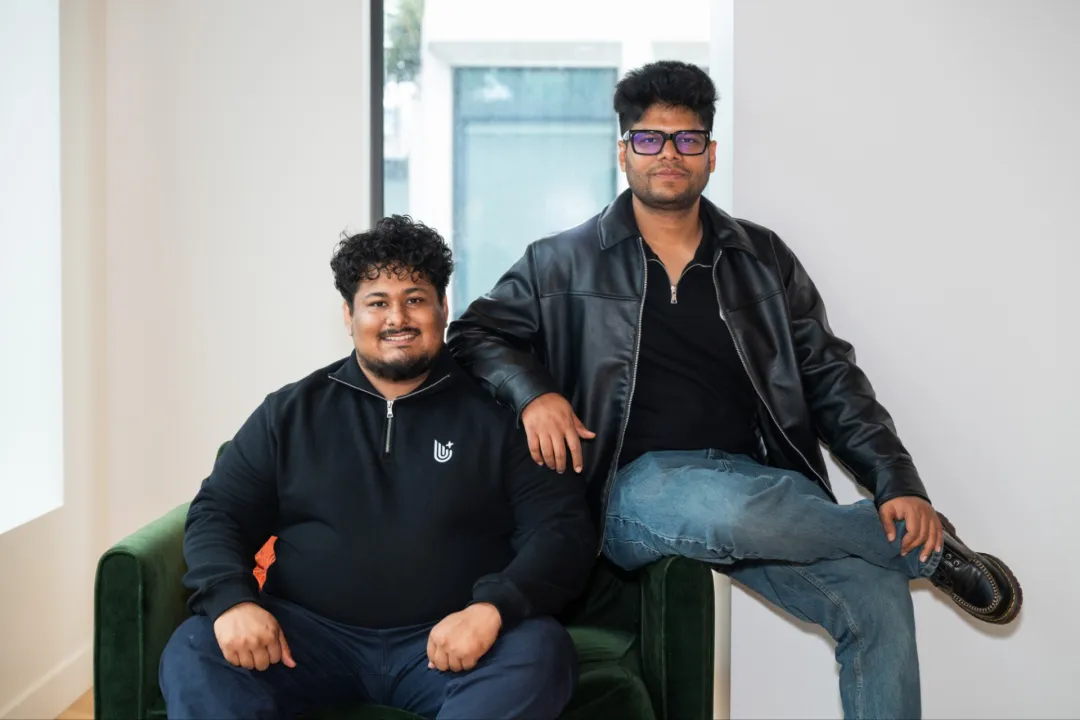
Mishra co-founded Unsiloed alongside Adnan Abbas, his former classmate from the prestigious Indian Institute of Technology (IIT) Kharagpur. After spending valuable time architecting and refining their core technology, the two founders joined Y Combinator’s Fall 2025 batch, a milestone that helped accelerate the startup’s market entry and connect it with early enterprise adopters.
Despite being a young company, Unsiloed has already gained traction across several high-stakes industries, including finance, legal services, and healthcare. Mishra shared that one major commercial bank is actively utilizing Unsiloed’s technology to process its document streams, while a prominent law firm has deployed the software on its own internal servers to manage large volumes of complex contracts and archival case files. Additionally, the startup is providing its infrastructure to other tech companies, counting voice AI startup Bolna AI as a customer that uses Unsiloed to ingest knowledge bases required for building conversational voice agents.
Entering the market, however, means competing in an increasingly crowded arena. Unsiloed is going up against a wave of specialized document-processing startups such as Reducto and Unstructured, as well as heavily funded enterprise offerings from major cloud and software giants like Microsoft and Amazon. Furthermore, businesses frequently attempt to use general-purpose foundational AI models directly for document extraction, presenting yet another competitive hurdle for the San Francisco-headquartered startup.
To carve out a defensible market advantage, Mishra explained that Unsiloed relies on a distinct architectural approach to handling complex documents. The startup utilizes what it describes as "dual-stream" vision models, which process text data and image data through completely separate processing streams. This architecture is paired with a proprietary technique known as "heat map-based chunking," which allows the system to intelligently identify and prioritize the most critical parts of a document rather than treating every page with uniform processing logic.
According to the startup’s engineering team, maintaining separate pathways for text tokens and exact image tokens allows the system to preserve spatial and visual context that is usually lost when documents are converted into plain text streams. This setup enables the technology to direct substantially more computing power toward high-density areas such as figures, financial numbers, and graphical charts. Furthermore, Unsiloed incorporates a specialized decoder that takes industry-specific terminology into account, helping the system accurately distinguish between terms that carry entirely different meanings depending on whether they are used in a legal, medical, or financial context.
To demonstrate the effectiveness of this approach, Mishra pointed to a rigorous test involving 542 financial documents provided by an enterprise customer. According to a technical brief shared by the startup, Unsiloed achieved an impressive 99.78% accuracy rate across approximately 84,000 individual extracted data points. The internal evaluation compared Unsiloed’s performance against several major general-purpose AI models, Microsoft’s Azure Document Intelligence, and the customer’s own proprietary in-house extraction tool. It is worth noting, however, that these results have not been independently verified by outside auditors.
In addition to internal benchmarks, Unsiloed claims to have outperformed competing document-processing tools on olmOCR-Bench, a public benchmark suite developed by Allen AI. In evaluations conducted by the startup, Unsiloed achieved a score of 88.0, significantly outpacing Reducto’s agentic system, which scored 66.0, and Unstructured, which scored 39.9. The benchmark specifically evaluated how well different systems handled difficult document features, including complex tables, intricate mathematical expressions, scanned paper documents, and non-standard visual layouts.
From a commercial perspective, Unsiloed is pricing its services to appeal to cost-conscious enterprise buyers, with rates starting at one cent per page. Mishra emphasized that the startup’s architectural strategy also contributes to internal cost savings. By directing heavier computing power only toward the specific sections of a document that require intense analysis rather than processing every single page uniformly, the company keeps its operational overhead manageable.
Currently operating with a lean team of just seven people, the San Francisco-based startup plans to use its newly secured $7.5 million seed capital to scale its operations. Mishra stated that the fresh funds will be channeled toward hiring additional engineering and research talent, expanding the company’s commercial sales and go-to-market efforts, and developing proprietary datasets designed to further refine and strengthen its underlying technology.
| Source | : | Finance Poetry |
| Author | : | rifanmuazin |
| Editor | : | Finance Poetry Editorial Team |